This is my father, Eddie Green and my mom, Norma, in about 1945-46. Progress had been made in Eddie’s life, as you can see by looking at that coat around mom’s shoulders. As I have mentioned before on this blog, Eddie did not start out with a lot of money. As a matter of fact, when Eddie left home at nine years of age he didn’t have any money. But he must of had a plan (excuse my English). Because he wound up quite well-known in the entertainment industry, and at one time, had a lot of money. When Eddie left home, He intended to progress.
Home in 1891 (when Eddie was born) was Baltimore. According to an old report from the Johns Hopkins Hospital, which was in the area where Eddie lived: Typhoid fever was then very prevalent in Baltimore, especially in the city’s outlying areas. Drinking water was obtained from public pumps connected to shallow wells, now mostly contaminated by the myriad of privies and cesspools located in backyards. Mortality from typhoid fever in the city during the years 1888-1892 averaged around 229 cases per year, disproportionately affecting poor Blacks. Things were not much better until after a 1904 fire that devastated a large portion of the city. After the fire, progress began in regard to the sewer issues.
By 1917, Eddie had progressed in regard to recognition when he wrote his first song: “A Good Man Is Hard To Find,” Words & Music by Eddie Green, which was recorded over the years by various artists, including Brenda Lee in 1967.
As a Black man making his way through the early 1900s, Eddie’s progress was steady, benefiting himself, those with whom he worked, his family and those who came after him. His progress was a good thing.
I read somewhere the other day that in some ways progress may not always seem good. For instance, when I was little, I loved to play Tiddly-winks:
I mean I loved it. All by myself. Take one big disc, press down on a smaller disc and launch the smaller disc into a cup, wow! Today kids do not play Tiddly-winks, not even babies play Tiddly-winks, unless it’s computerized:
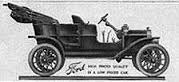
Or take cars, we started out with what we now think of as funny looking, A Model-T:
Thanks to progress, we now have all sorts of car models. We have electric cars and self-driving cars:
My point is, progress is about persevering and moving forward. I applaud my father for doing so, but, man, I really think little kids are missing something if they never play Tiddly-winks.
Thanks, for stopping by.
Typhoid Fever and Johns Hopkins Hospital, Baltimore, 1891
2015 has been a good year for me. I have written a book, my first ever. In the process of writing this book, I have increased my knowledge of show business, of people and of life in general. In order to write, I have had to read. Through careful reading, I have found helpful information that I would not have found otherwise.
I have met wonderful people who have provided me with great information, and hooked me up with other wonderful people, from the US to the UK. I have even met the family of a woman who was in one of my father’s (Eddie Green) movies from 1939.
I have enjoyed every minute of this experience, well, maybe not every minute, proofing my own work proved to be tiresome, after all, there is spellcheck, and one has to concentrate when proofreading, you can’t just skim through your manuscript. Anyhow, I do love it. I recommend biographical writing as a good way to learn history.
I have acquired a following. Haha, who would have thunk it! My brother told me it would happen. Keeps a smile on my face.
When I began this blog, I searched a certain site for images of my father and I could not find one picture. Now, I think there are three pictures of Eddie on the site and one of ME.
January will be the beginning of the proofing and editing of my book.
May you all have a glorious new year’s eve and a happy, prosperous 2016.
Happy Holidays to everyone!! My brother, Brad Beasley, has told me from the day I started writing a biography on my father, Eddie Green, that Eddie was just like Jay-Z, who is a hard-working man who has made a name for himself as a rapper and as an entrepreneur, and who is married to a gorgeous, talented woman. I put off mention of any similarities, cause I couldn’t figure out how to write a relevant post. At last I have found what I needed! A picture of Jay-Z and friends at a holiday charity.
This provided a link that I could work with, because, not only was my father, Eddie, also a hard-working man who made a name for himself as a songwriter, actor and as an entrepreneur, and who was married to a gorgeous, talented woman (my mother), Eddie was also involved in holiday charity work. Thanks to the research I have done, I just happened to have a newspaper article that covered Eddie’s act of charity on Christmas of 1940. Following is the article.
As per the New York Age, Saturday, December 21, 1940: Eddie Green to Play Host to 250 Poor Christmas Eve.
“Eddie Green will play host to 250 of New York City’s poor on Christmas eve morning. Along with Arthur Oliver, manager, and about a dozen of the girl employees of Eddie Green’s Bar-Bee-Q, they will assemble at the Eighth avenue link of this popular chain of restaurants where they will pack and hand out Christmas baskets containing roasting chicken and all of the fixings that go to make up a good dinner. Tickets for these baskets have been distributed among quite a few responsible persons who in turn are giving them to families that they know to be needy.”
Then and now these two gentlemen had and have the spirit of Christmas. Decades apart, yet similar in outlook. Role models.
I wish you a safe and happy holiday season. Thank you so much for stopping by!
*Jay-Z holiday picture courtesy http://www.fuse.tv and Google Advanced Images
I’m so excited, and I just can’t hide it
I’m about to lose control and I think I like it!
Hi, there! I have been working diligently on the biography of my father, Eddie Green, for the past couple of weeks, because I am so close to finishing and I want to get the manuscript sent out for proofreading before I send it to a publisher. One year ago I bought my first laptop and started this project. AND THEN, last week, out of the blue, I received a message from a lady whose 90-plus year old Grandmother, whose name is Millicent, had been in one of the movies my father directed, produced and starred in, “What Goes Up.” The movie was made in Fort Lee, New Jersey in 1939.
Evidently, Millicent had for years been telling the younger members of her family about those days, but no one really listened until one family member decided to investigate. She went on line and found my blog (yay!) after typing in Eddie’s name, and now I get to add a bit more information to my book, and I get to share a little of Millicent’s story (she played a chorus girl in the movie) with my readers. This is exactly the type of thing I wanted to happen, though I wasn’t sure it would.
Millicent is the shorter woman in the front in the black dress. I have had a copy of this photo for a long time, but had no idea who these women were. Now I know one of them. Millicent and I live in different cities and have never met, but, boy, am I glad her relative found me. (Laugh Jamboree was a Toddy Pictures production, though the movies, Dress Rehearsal, What Goes Up and Comes Midnight, were Eddie’s.)
Through her granddaughter, Millicent has provided me with more insight into Eddie as an entertainer and as a movie producer than she will ever know. For instance, she says that Eddie was “all business”. Well, in a Baltimore Newspaper article from around the same time that Millicent knew Eddie, the headline reads: ” As a Comedian, He’s Very Funny, As a Business Man, He’s Very Sensible and Comedy is a Business.” The article goes on to say “The fact that Eddie is so funny on the screen, stage and radio is due to the highly intelligent and efficient manner in which he conducts his work.”
The other thing about this contact with Millicent, is that, had my mother, Norma, still been alive today, she would have been 92 years old. For those that don’t know Eddie married my mom when he was 54 and mom was 22. So Millicent was a cast member in Eddie’s movie, about the same time Eddie first met my mom. I love Millicent, I don’t know her, but that’s ok. I have a few more tidbits to share (Millicent was a beauty contest winner), but I will save them for another post.
Being able to look back and “experience” the past through my book and this blog, brings me so much joy. I mean, just because its 2015 does not mean past times are inconsequential. Past times, older people, are extremely important to who we have become today, and well worth the attention, in my opinion.
Thank you, Sharon.
And, thank you, for stopping by.
Lyrics for “I’m So Excited” courtesy of The Pointer Sisters
The horn of plenty is a symbol of abundance and nourishment, commonly a large horn-shaped container overflowing with produce, flowers or nuts. The horn originates from classical antiquity, it has continued as a symbol in Western art, and it is particularly associated with the Thanksgiving holiday in North America and with harvest, prosperity and spiritual abundance.
This time last year, I had just started my blog. I was a bit discouraged about the world situation at the time, as I still am today, however, this year I am experiencing more hope. I have finished 90% of a goal that I set for myself, and I have stuck with this blog for a whole year.
My first post, Can’t is Not in My Vocabulary, explained how I came up with the bright idea to enlighten my grandson, in book form, on what a person can accomplish, by telling him about his grandfather, Eddie Green, a Black man born in poverty in 1891, who rose to prominence despite many obstacles, and, I discussed how I would use my posts as a way to chronicle the writing of the biography about my father.
While doing the research for my book and verifying information for my posts, I discovered way more than I expected, not just about my father’s rise, but also about what motivates people, and about determination and how much work actually goes into achieving one’s goals, and how that work can be extremely rewarding. What I hoped to impart to my grandson, morphed into a desire to share inspiration to any person who feels they “can’t”. I want the experience of reading my posts to be as uplifting and inspirational as possible to those who could use a boost.
In America, Thanksgiving is traditionally a celebration of the blessings of the year. I am celebrating the achievement of my goal. I am celebrating the friendships I have acquired over this past year. I am celebrating the fact that people “follow” me. Yee haw! I am celebrating the fact that I am still just as gung ho about the research and the writing, as I was when I began this project.
I have a vague memory of my mom putting out her yearly Horn of Plenty for the Thanksgiving season, way back when I was a child, and it seems to me that, though I could not articulate this, I knew then that her well-used bamboo horn signified a never-ending source of good things. May you experience an abundance of thanksgiving.
Hello Family: Personal, wordpress and FB. Yesterday I got a chance to attend a mini-fair and community gathering at the William Grant Still Community Arts Center in the West Adams District of Los Angeles, California. William Grant Still (May 11, 1895 – December 3, 1978) was an African-American classical composer who wrote more than 150 compositions. He was the first African-American to conduct a major American symphony orchestra, the first to have a symphony (his first symphony) performed by a leading orchestra, the first to have an opera performed by a major opera company, and the first to have an opera performed on national television.
The Art Center focuses on the artistic efforts of the community and has a variety of programming throughout the year reflecting the multicultural diversity of its neighborhood where Still resided for twenty years. It has been serving the Westside of Los Angeles since 1978.
My mom, pictured above, had aspirations to become an opera star, and I thought by attending this mini-fair I might be able to hook up with someone who remembered those days, the late 1930s through 1945. Well, I did. I also discovered a lot more information about the 1940s and 1950s and what was then a mostly Black neighborhood that was home to many entertainers, architects, doctors and lawyers.
I am focusing on entertainers in this post because that is what my mother and father did. I chose to go to the gathering at the William Grant Still Center because I also figured I would find people there who had an interest in opera. My mom used to sing at weddings at the Wilfandel Club on Adams Boulevard, and I found out yesterday that the club is still active. Possibly I will be able to find more information when I visit them.
I was actually able to provide some new information to the people I met, who were very interested in who Grandma Norma was. I forgot to mention while I was there that mom was Hattie McDaniel’s protege’, (Hattie McDaniel, first Black female to win an Academy Award,) though I did show them a picture with mom and Hattie, which a couple of people copied for themselves. I also had the following article, but I didn’t get a chance to share it yesterday. ” Representing Miss Hattie McDaniel as guest of Miss Lena Horne at her “after theatre,” party closing her Headline Orpheum appearance, was Miss Norma Anne Amato and her mother, Sinclaire White Amato, violinist and pedagog.” The Caifornial Eagle newspaper, June 22, 1944.
I was able to share information about mom’s mother, Sinclaire, who like Mr. Still, played the violin and was the sponsor of the Music Arts Association back in the day. 1931 to be exact. I was able to become acquainted with someone who would like to begin some type of Art Appreciation club here in L A. again for our kids.
Of course, I also took pictures of Eddie, my father, songwriter, producer, comedian, to share with the people I met. As I suspected, even though there were older people at this function, not one of them remembered Eddie. However, I found people who knew of people that Eddie worked with. So I was able to acquaint them with Eddie and I got a chance to exchange cards with other writers of black history.
Bringing Eddie’s accomplishments in the entertainment industry out of the shadows is my quest. I was able to accomplish that, somewhat, at yesterday’s event. I found one one-page article with information on it that I could connect to Eddie. Such as: The article mentioned Clarence Muse, actor, director, composer. I have this picture of Eddie and Clarence Courtesy of L. A. Public Library, donated by Attorney Walter L. Gordon, Jr., my godfather.
The article I saw yesterday also mentioned Lena Horne, I have an article from the Pittsburgh Courier, 1945, in which the columnist wrote: “Last Monday through the courtesy of the NBC broadcasting studios, I witnessed the second production of “Jubilee” to be sent to those fine fellows across the sea: Eddie Green did a comic script with Santa Claus (Whitman) and Lena Horne.”
This same one page article that I found yesterday mentioned Sydney P. Dones, former actor and producer, well I found an article from The California Eagle, March 20, 1947, that mentioned Eddie and my godfather being at the same function, as Mr. Dones.: “Dropped in on the candlelight introduction of Les Dames club Sunday evening, Atty. Walt Gordon seemed to be having a grand time greeting old friends, as did Norma and Eddie Green, Sidney Dones.”
The point here is that though Eddie was a visible, well-known figure in those days, it seem to me that he has faded from view. I hope to rectify that.
These folks lived near each other in the Adams Historical District in the 40s and 50s. Hattie McDaniel on Harvard, Sidney Dones, on Hobart, Clarence Muse on 24th Street, Rochester, a friend of the family lived off of 37th Street and we lived on Second Avenue, near 36th Street.
I got the chance yesterday to network and share Eddie’s history, and mom’s. And I will go to great lengths to do that. It took me 4 hours on the bus to get there, same to get back (MTA and Red Line), but I did it.
I will leave you with a few lines from the Eddie Green, Ernest Whitman, Lena Horne skit.
SANTA(Ernest Whitman): Well, my boy, I brought you something that you’ll like. This is your package.
EDDIE: I guess I’ll open it. Well, looka here, it’s a Lena Horne mamas doll, ain’t that nice. It’ll be good if when I squeeze it, it says mama.
LENA (seductively): Oh daddy.
EDDIE: Well, That’s good enough!
By folks, thanks for stopping by, and thank you Kristina, for giving me the idea to research Grandma Norma’s singing career.
Charlie Cantor, Eddie Green, Ed Gardner, Florence Halop, Alan Reed. Duffy’s Tavern Cast. 1942-1943
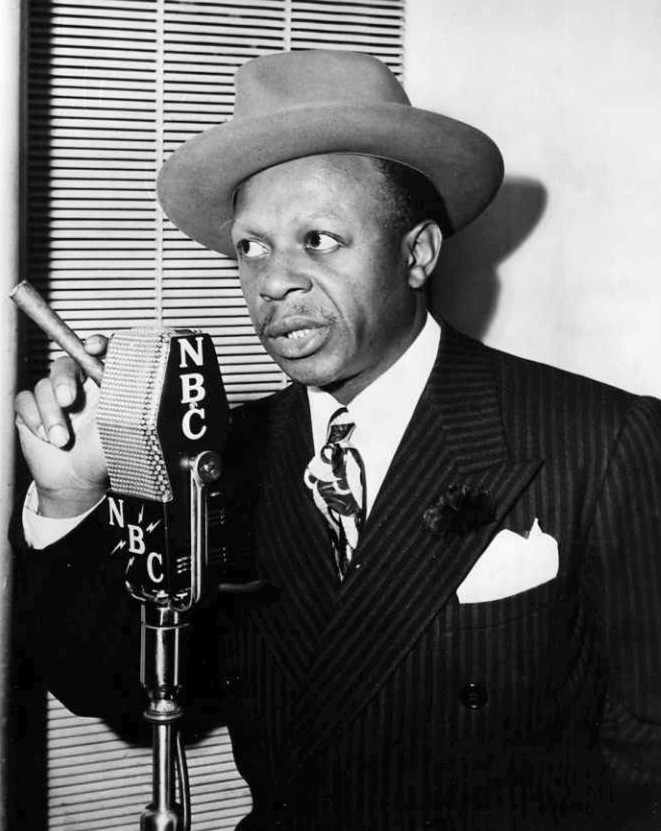
Hi. The picture at the top (I hope, WordPress may place it differently) of this post, is the cast of the Duffy’s Tavern radio program, in the early years. For those of you who may be too young to remember, Duffy’s Tavern ran on the radio from 1941 until 1950, once a week. Ed Gardner was the creator of the program and had been active in radio as a producer, writer and actor for many years. Ed portrayed “Archie”, the star of the program. My father, Eddie Green, who by this time was a well-known comedian, and movie producer, played “Eddie, the Waiter”. The others in the photo I will touch on in a separate post. Duffy’s Tavern always opened with the ringing of the phone, after which “Archie” would answer, “Hello, Duffy’s Tavern, where the elite meet to eat, Archie speakin’, Duffy ain’t here.” After which the half-hour program would proceed with funny banter between Archie and Eddie, the waiter, and their assorted bar patrons and their weekly celebrity guests.
It is said that Duffy’s Tavern has inspired references in popular culture formats, such as in the TV show, The Simpsons, where you see Moe’s Tavern and Moe answers the telephone with “Moe’s Tavern, where the elite meet to drink.”
And, Cheers, which was co-created by James Burrows, the son of Duffy’s Tavern co-creator Abe Burrows.
John Ratzenberger, Nicholas Colasanto, Rhea Pearlman, George Wendt, Ted Danson, Shelley Long
In 1948, Ed Gardner took his program, Duffy’s Tavern, to the stage. The New York Strand, to be exact,where the program received a mention in Walter Winchell’s Broadway column in the Albany New York Times, “Orchids to Ed (Archie) Gardner’s Duffy’s Tavern at the Strand.” My father, Eddie was showcased during the stage production, according to Martin Grams, Jr., in his book, Duffy’s Tavern, A History of Ed Gardner’s Radio Program, where he wrote, “Green was even given an opportunity to take the spotlight for a deftly contrived pantomime routine about poker playing.”
Sixty-Six years later, I found a picture of Eddie on stage at the Strand doing his pantomime. I cannot post it because I have to purchase it first because it belongs to a local museum. Evidently, someone asked Eddie to autograph a picture of himself and so he wrote: “May you never be as puzzled as I am here”. Seems like a strange thing to write, however, it gives me an insight into my father as a person and not just as an entertainer. And I don’t feel too bad when I become “puzzled”, about the process of writing a book and choosing the best pictures and marketing and networking.
My father was a man who chose the direction he wanted to go in life and stuck with it, despite the puzzling aspects, Inspiring, don’t you think?
Hi, there. Well, I would like to wish you a Happy Halloween, although the guy in the above photo would probably not agree with me as he doesn’t think Halloween should be a fun holiday like everyone else does. But since it’s the season, I chose Oogie Boogie to lead off this post. (Thank you, Mr. Burton.) I also chose Oogie because of his last name, Boogie.
My father, Eddie Green, was doing well in radio entertainment career in the 40s. According to the Syracuse New York Journal One of the radio programs Eddie appeared on was the Canada Lee show on WEAF, ” Eight to the Bar.” In the 1940s, the phrase “eight to the bar” was up-tempo slang meaning “a boogie beat.”
New York Post, Thursday, July 24, 1941, HIGH SPOTS OF THE DAY’S BROADCAST OFFERINGS
WEAF- Benny Goodman’s Orchestra. Joan Bennett.
8:15 WOR—Drama. Florence Reed in “An Englishman’s Home.”
8:30 WEAF—Drama. Canada Lee, Eddie Green in “Eight to the
Bar.”
WABC—Barber Shop Quartet Society.
There was a boogie-woogie dance:
In 1945, a person could buy a Two-piano Boogie Woogie album for Dancing for $2.50.
When I found the “Eight to the Bar” Canada Lee program in the Syracuse newspaper, I remembered that I have in my possession a DVD of a Jubilee radio program from 1943 with Mr. Lee and my father doing a comedy skit together. Being a good researcher, I looked up Mr. Lee, and I am so glad I did. Canada Lee is another of those famous, successful, Black pioneers, like Eddie, who seems to have been forgotten by the general public.
Canada Lee was born Lionel Cornelius Canegata in 1907. At one time he was a jockey, and then became a boxer, welterweight division, until he sustained an eye injury. Before he had his radio show, Mr. Lee began an acting career. He was cast in his first major role, that of Banquo, in the legendary Federal Theatre Project (a New Deal program started to help struggling writers, actors, directors, and theater workers) production of Macbeth (1936), adapted and directed by Orson Welles, with an all-black cast. Macbeth was sold out for ten weeks at the Lafayette Theatre. Mr. Lee played Banquo (When Macbeth kills the king and takes the throne, Banquo—the only one aware of this encounter with the witches—reserves judgment for God.) Having never read Macbeth, I had to read it to understand what the heck I was writing about in this post. Anyhow, The play debuted in 1936 at Harlem’s Lafayette Theater and was performed for segregated audiences. It was so popular that it exceeded its initial run, then toured the country, spending two weeks in Dallas at the Texas Centennial Exposition.
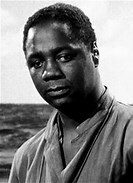
Canada Lee appeared on Broadway in Anna Lucasta. He also appeared in the movie Lifeboat in 1944, directed by Alfred Hitchcock:
There is much more information out there to be found on Canada Lee, if you care to look it up.
Below is the comedy skit I referred to earlier. Canada Lee and Eddie performed in 1943, on Jubilee, a radio program that was broadcast to the nations military to help ease the stress of war. The skit was titled “Boxing”, from January 5, 1943: I have heard this skit and Mr. Lee has a nice, strong voice, where my father’s voice was a tad higher which Eddie said himself in a newspaper article. Hattie McDaniel acted as Mistress of Ceremony:
MISS McDANIEL: The clock says it’s laughing time. And when it’s time to laugh, then it’s time to listen to Eddie Green and Canada Lee!
CANADA LEE: Remember some time ago, Eddie, I told you that I think you would make a good prize fighter?
EDDIE, laughing: .Yea, I member that, I do.
CANADA LEE: Well now, listen Eddie. Just like I told you. You’ve got the makings of a great fighter. I’m gonna build you up to be a champion.
EDDIE: No, is you?
CANADA LEE: Yea, I can see the whole thing.
EDDIE: You can.
CANADA LEE: Yea, First, I’ma have you fight some ham and eggers.
EDDIE: some what?
CANADA LEE: Some ham and eggers.
EDDIE: Oh, right away I get scrambled.
CANADA LEE: No, no. I mean these fights are free, see. We pay these fighters to lay down.
EDDIE: Well, why can’t they pay me to lay down?
CANADA LEE: Oh Eddie, don’t be silly, you’re honest. When it comes to fighting you’re upright.
EDDIE: Yea, but not for long.
I started this blogging project as a way to get noticed by publishers, as a writer, which would help me when I was ready to publish the first book that I have written about my father for my grandson, because the general consensus is publishers want to see something other than just one book. The blog is also a way for me to get over a fear of putting my writing out into the world. What I did not expect was the education I would get from this process, through research. Nor did I expect to have ideas about the possibility of continuing to write after this first book. But I do. Have ideas. But first, I must finish proofing my first endeavor.
I like to finish my posts with something that refers back to the beginning:
Hi there, welcome and welcome back. Today my brain is empty, well, almost. I have been focusing on which photos I want to put in the book I am writing and as I have a one track mind, I have not been able to come up with a post. My main issue is that some of the photos I want must be purchased from newspapers or museums before I can use them, so I have to spend my money wisely. Do I want ten photos or twenty? The photos will be sent to the publisher along with my manuscript., and I am shooting for a month or so from now. So, with this post I am going to cheat a little and let the newspapers do the talking.
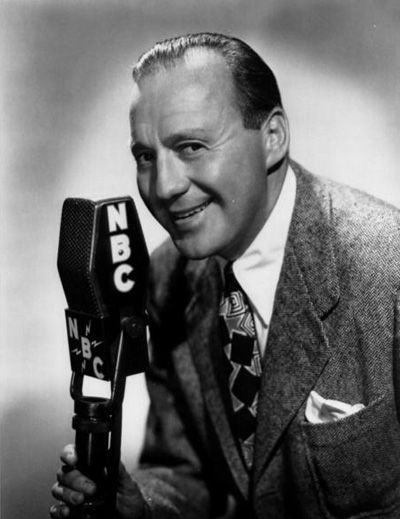
In 1943, Duffy’s Tavern and the Jack Benny programs were big hits. The two main stars were Ed Gardner and Jack Benny.
Ed Gardner
.
Jack Benny
However, the popularity of these shows was also due, in part to two other gentlemen: Eddie Green and Eddie “Rochester” Anderson:
Eddie GreenEddie “Rochester” Anderson
In 1943, both Eddie and Rochester appeared together on “Duffy’s Tavern”. The following article appeared in The Pittsburgh Courier, January 1943, with the title, “Rochester, Eddie Green Steal the Show” – Eddie “Rochester” Anderson and Eddie Green climaxed the season’s laugh riots with a battle of wits on the popular Blue Network show “Duffy’s” on Tuesday evening. The comedians, together for the first time, were featured prominently during the hilarious half-hour, contributing much to the success of the show. Although old friends since vaudeville days, when Rochester was a dancer and Eddie a comedian their opportunity to appear on the same entertainment bill did not come until Jack Benny’s show began a tour of service camps in the East. Rochester’s success in pictures has paralleled that of his work in radio, having been featured in “Jezebel,” “Gone With The Wind” and several Jack Benny films. Eddie Green is heard regularly with Ed “Archie” Gardner on the Duffy’s program; following a successful run on Broadway with Bill Robinson in “The Hot Mikado.” He started as a boy magician and now owns the Sepia-Art Pictures, film producing company, servicing over 500 theaters.” Pittsburgh Courier, January, 1943.
I am proud of Eddie and Rochester. Rochester remained a family friend after my father died and would visit us periodically. I have had the pleasure of having a conversation with Rochester’s son, during the past year, and I have also had the pleasure of communicating with Ed Gardner’s son.
Eddie Green, Ed Gardner, Eddie “Rochester” Anderson and Jack Benny were a show business family. They showed us how it can be done.
For the past week or so, my mission has been to get permission to use certain photos in the book I am writing, order the photos, re-read the book before I send it out for copy editing, and looking for a copy editor. And for some reason, it seems like these things have to be done right away. Which they don’t. I am not working on a schedule. I don’t have a contract that says 4 books in 4 weeks. I don’t HAVE a contract. I started this project because I had a goal. To bring my father, Eddie Green, out of obscurity to highlight his achievements as a Black man in the early 1900s, and to put the information in book form for my grandson. Which is what I have done and what I am doing. I shared in an earlier post that, I look forward to my day because I can see the goal, and I am working towards that goal. I am on track. I need to remember that.
As I get closer to my book being a finished product, I realized that I have put next to nothing in this blog about my mother, Norma, Eddie’s fourth, I think, wife. I have a chapter in the book on her, so I will just take from that for this post.
My mom, Norma, was born on November 17, 1923, Her mother, Sinclaire was a very light skinned Black woman who chose to live as something other than Black, so by the time my mom entered school, Sinclaire was listing herself as Spanish on my mom’s school records. My mom was born Norma Murcock, but by age sixteen, Sinclaire had remarried and mom’s last name became Amato. Norma began singing, violin and piano lessons very young, and began performing for audiences when she was seven, usually at the Second Baptist Church, or at the Murdock Music Arts Association, and as she got older, she would sing at weddings at the Wilfandel Club in the Historic Adams District in Los Angeles.
Norma Amato, about 17
When mom was 18, an article appeared in a Los Angeles newspaper which helped me verify my mother’s heritage. Here is a portion of the article: “An assistant highway surveying engineer in the business world, Norma Amato, who sings fluently in Italian, French and Spanish, will render a selection. Norma Anne Amato, 18 years old daughter of Mr. and Mrs. Guiseppe (Joseph) Amato, who majored in music and graduated from St. Cecilia and Romona Convents was the young lyric soprano soloist featured by the Daughters of the American Revolution at their National Convention banquet in Los Angeles.” Mom was studying to be an opera singer.
As time went on, Norma would appear in more articles: “Miss Norma Amato is the protégé of Miss McDaniel of Gone with the Wind fame.” The group picture here is Norma, Eddie, Louise Beavers, Miss Beaver’s dad, Hattie McDaniel and an unidentified woman,
In 1944 The California Eagle, printed this glowing tip: “Tip to Talent Scouts: Keep your ears on Norma Amato’s delightful thrushing. She has the kind of voice you hear only in a dream.”
“Only in a dream.” This was the path on which mom was working.
On November 17, 1944, Norma became 21 years old. At the time, she was still living with her mother, Sinclaire. One year later, she was married to Eddie.
I am realizing a dream in real time. Something anybody can do.






 I’m so excited, and I just can’t hide it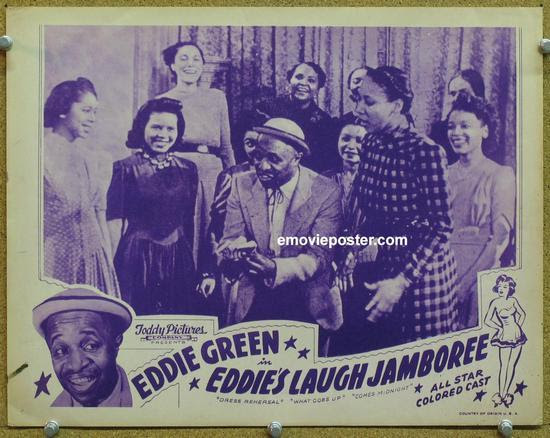


 Courtesy of L. A. Public Library, donated by Attorney Walter L. Gordon, Jr., my godfather.


 where the program received a mention in Walter Winchell’s Broadway column in the Albany New York Times, “Orchids to Ed (Archie) Gardner’s Duffy’s Tavern at the Strand.” My father, Eddie was showcased during the stage production, according to Martin Grams, Jr., in his book, Duffy’s Tavern, A History of Ed Gardner’s Radio Program, where he wrote, “Green was even given an opportunity to take the spotlight for a deftly contrived pantomime routine about poker playing.”










 pininthetush