WRITING FROM A DIFFERENT VIEW

books

I am a writer.  I am writing a book.  I have begun to think of myself as a writer.  A writer spends an enormous amount of time writing, and editing.  Writers spend a huge amount of time editing, one would hope.  Then re-writing.

It’s addicting.  this one Sitting at a desk can get really comfortable if you have the right cushions.  I have to pull myself away from the desk in order to get some exercise, and I have to pull myself away from the book in order to post to my blog.  It’s bad enough I have to leave my desk to shop for food (not really).  But when I am at my desk, I want to finish polishing my book, period.    When I remember that I have a blog to post to, and posts to read, I tell myself, ok, I’ll just finish proofing these next two pages, and before I know it, it’s an hour later.  I absolutely love what I am doing, though.  Love it.

Today, I want to veer slightly away from my normal subject. my father, star of stage, screen and radio, Eddie Green, to talk about a Mr. Joe Cook.  I found a blurb in a newspaper that said something like, “this week Eddie Green will appear on the Joe Cook show.”  Who the heck is Joe Cook?  I found out that Mr. Cook is another person, like Eddie, who became quite famous in the 1920s and 1930s, but, due to “circumstances”, is not widely remembered today.

I, myself, am not really a big fan of old time stuff, necessarily, like vaudeville, or burlesque.  My focus is basically on the fact that society tends to remember, and talk about, the same people, over and over.  Take Marilyn Monroe, for instance.

untitled (19)

Sure, she was gorgeous.  And men still wait for the wind to blow up some ladies dress.  My mom was sitting on the bus stop one day, next to a little old guy, mom was about 76 at the time, and she was dressed, as usual, in a skirt, and the wind started to blow.  Mom told me that the old man next to her started saying, out loud, “blow wind, blow.”

I mean, can we find someone else to talk about, for Heaven’s sake?

Like Joe Cook.

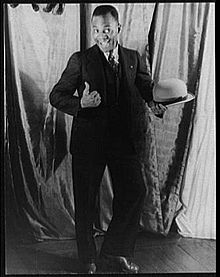
joe Cook 1930 cameo_thumb[2]
Joe Cook-Courtesy Google Advanced Search
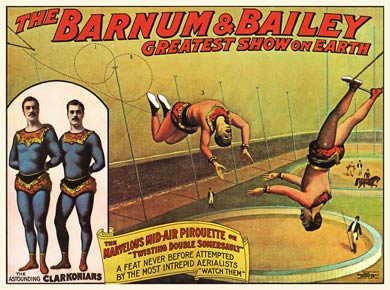
Mr. Joe Cook was born in 1890 as Joe Lopez.  Joe was orphaned at the age of three, and grew up an adoptee.  In 1909, Joe left home and joined the circus.

STCS1016,-Barnum-&-Bailey,-

Joe became a fantastic juggler, he could walk the tightrope, he was a mime, as a matter of fact, he became a major star in the circus.

Joe went on to prosper in Vaudeville, working the stage for fifteen years.  Joe’s nickname at the time was “one man vaudeville,” because he was so versatile.  He could play the piano, the ukulele and the violin.  He told hilarious stories.  The audiences loved him.

In the 1930s Joe became a Broadway musical comedy star.  And in the late 1930s, Joe had his own radio shows, one on which he chose Eddie to make an appearance, and, he was also constantly receiving requests to be a guest on shows other than his own.  He was quite popular.  Let’s not forget Joe Cook.

Neither Joe, nor Eddie, were beautiful girls with their skirts flying up in the air, but they did provide laughter, and that is something that is always welcome.

Thank you, for stopping by.
SINGING, DANCING, DRAMA, BLACK HISTORY

Eddie as KoKo
Eddie as KoKo

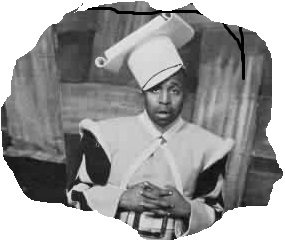
Hello there, this is so funny to me.  I was trying to crop a picture and this is what I got.  A hand-drawn cropping, almost looks like somebody’s profile.  Anyhow, my mom used to say, “You learn something new everyday.”  Here is something I learned while looking for information on my father, Eddie, from when he played “Koko” in the Hot Mikado in 1939.  I found this article from 1962, in the Philadelphia Inquirer.

“Tonight at 8:00, the esteemed Sir Arthur Sullivan would have rarely looked more dour . . . and Sir William Gilbert might have returned to his law practice were they alive to hear the liberties taken In the late 30s version of Mikado.  Tonight we take a second listen as “Ko-Ko”, “Nam-Poo”, “Yum-Yum”, “Katisha” and friends go modern in Hot Mikado with Bill Robinson and Eddie Green.”

A good little blurb to add to my book.

Bill “Bojangles” Robinson turned sixty-one while starring in the Mike Todd version of Hot Mikado as the Mikado.  A local newspaper ran this ad:

“A second negro production of “The Mikado” in modern swing tempo, entitled The Hot Mikado opens tonight at the Broadhurst with Bill Robinson, the tap dancer, in the lead role.”

Michael Todd, producer of the play sponsored an after-theater party on stage at the Broadhurst Theater, where the cast of the play, members of the Cotton Club and a bunch of friends drank a toast to Bill’s health and wished him many happy returns.

Bill Robinson-Wikipedia

According to the New York Age, “following the toastmaking, Eddie Green, “Koko” of Hot Mikado on behalf of the cast presented Mr. Robinson with a silver plaque on which was inscribed:  “Happy Birthday ‘Bill’ Robinson from the cast of the Hot Mikado Co. Broadhurst Theatre, May 28, 1939.” A silver stage crew, the onlv one of its kind in America, was another gift from the cast to its leading star.”

And here is an article from the Brooklyn Eagle, specifically about Eddie:

“Eddie Green, who has been funny all the time but has not quite seemed to get his teeth into anything, is singing “Titwillow” to Katisha and his “Titwillow” turns out to be completely delightful.  The song has, no doubt, been sung many times by better voices, but it could hardly be done more amusingly.  With it Mr. Green makes himself one of the jewels of the Hot Mikado.

In 1940, Eddie went on to appear on the Tommie Riggs radio program:

TONIGHT’S BEST RADIO BETS 7:50— “Blondie,” …Tommy Rlggs and Betty Lou. David Ross, Freddie Rich Orchestra. Eddie Green WEAF. 8:30— ..Brooklyn NY Eagle1940.

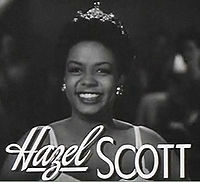
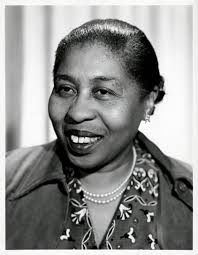
Eddie also found time to appear with Miss Hazel Scott on the dramatic mystery program The Bishop and The GargoyleimagesEHU5HJ1M

The show was about a former Bishop and an excon who teamed up to solve crimes.  It’s very gritty, I listened to about five minutes of one of the shows and here is a sample of the kinds of lines in the script: “Aw listen, man, don’t try to make a chest outta that stomach.”  So funny.

On the show, Eddie and Hazel did a skit titled “The Item of the Voodoo Doll”.  Miss Scott was a jazz and concert pianist, normally, who, according to the papers, put her own interpretation into Bach and Beethoven.  The reviews of her acting ability were good, and of course, Eddie was funny.

200px-Hazel_Scott_in_Rhapsody_in_Blue_trailer

Hazel Dorothy Scott, born in 1920 became a star in her own right and while she was at it, she married Adam Clayton Powell, Jr., who became the first person from New York of African-American descent to be elected to Congress, representing Harlem, New York, from 1945 to 1971. 200px-Adam_Clayon_Powell_Jr

Adam Clayton Powell, Jr. was also pastor of the Abyssinian Baptist Church and as such Rev. Powell christened me.  How’s that for a good ending?

Thank you so much, for stopping by.

.

A REAL LAUGH RIOT

61FklgttwBL._SY450_ (2)

Otay.  Comes Midnight is the third picture my father made.  It is a story about two men (played by Eddie and Jimmie Baskette) who will receive $100 if they stay in Old Man Mose’s deserted house overnight in order to dig up his body and get the gold that has been placed under his body, and return it to the rightful owner.

It’s got really corny jokes in it such as:  1st person:  You know, old man Mose had a million dollars in gold ore.  2nd person:  Gold or what?

Supposedly, Eddie filmed this movie in a real haunted house in New Jersey.  The older residents of the neighborhood said they had heard weird groans and had seen a pale face pressed against the window.  One of the original cast members bowed out because he was too afraid to enter the house.

The movie had a great cast, though.

imagesK6TQ86AOJimmie Baskette, who you might remember as “Uncle Remus” or the man who sang “Zip A Dee Doo Da”.

imagesC02DE8VNAnd Amanda Randolph.  She was the first African-American performer to star in a regularly scheduled network television show, appearing in DuMont’s The Laytons.  Miss Randolph also   starred in “Beulah” in 1953.   She also appeared in 71 episodes of “Make Room for Daddy” with Danny Thomas. (Anybody out there remember at least one of these shows?)  I found the following information on the net, and it kind of upsets me:  Amanda Randolph appeared in a few Oscar Micheaux films.  The reason I get upset is also one of the reasons I am writing a book about my father.  Eddie made movies with the current  stars of his day, the same stars who appeared in Micheaux films and films produced by Whites, yet as far as the media goes, it is as though Eddie and his work with these actors has simply dropped through the floor.  I am a champion for my father.

The movie was a short, only twenty-one minutes, but it was a “real laugh-riot.”

Eddie, “Harlem’s favorite Hollywood comedian”  was quoted as saying this about his movie making skills:

“The first thing I try for,” he said, “is naturalness.  I write my own stories, building them around some incident that has been interesting, but not offensive.  Then I select the actors that I think are best suited to the parts, so that they need only be themselves.”

untitled (17)The movie had its first showing at the Brooklyn Apollo Theater at 1531 Fulton Avenue. The theater closed in 1965.

On Tuesday afternoon of July 30, 1940, if anyone was looking for a good short movie, according to the Television column, of The New York Sun, you could catch “Comes Midnight” at 3:55 p.m. that afternoon, right after the 3:48 p.m. film “Tour of the World’s Fair.”

Just before Eddie started making “Comes Midnight”, he went to Hollywood from New York to audition for the part of “Pork” in Gone With the Wind. He did not get the part, but, hey, nothing beats a failure but a try, right?

The update on my first try at writing a book is that I now have a 48,061 word manuscript, including title sheet, TOC, dedication, introduction, appendices and bibliography.  I’m done, basically, I know I am.  I am sending it piecemeal to my brother, who is helping me with editing, and, of course I am proofing also.  I will be looking for a “real” editor any day now.

I am still having fun.  And I thank you effusively for stopping by and hanging in.

EDDIE GREEN, MOVIE MOGUL IN PALISADES, NEW JERSEY 1939-40

H3257-L74549107 Hi.  Welcome back to my on-going story about my book-writing adventure.  I have thrown out this, and added in that, and I remembered to place (photo) where photos should be instead of the photos themselves. To some people I have spoken with, this part of book-writing seems tedious, but I love it.

The poster I have placed on this post “What Goes Up”, is from Eddie’s second picture, which he wrote, directed, starred in and produced though his Sepia Art Pictures Company.

“What Goes Up” starred Babe Mathews, Dick Campbell, Ho// ney Boy Johnson, Sydney Easton and Carol Pertlow.

Babe Matthews was a singer, dancer and actress who was very popular in the 1930s.  She also appeared in “Paradise In Harlem”, written by Frank L. Wilson.  There is a Youtube video of Babe Mathews, but I have not been able to find any pictures.

Dick Campbel, a successful performer in his own right, as a theater producer and director, helped launch the careers of several black theater artists, including Ossie Davis.   He was also a co-founder of the Negro People’s Theatre in 1935.

Honey Boy Johnson was an actor who also acted in his own short “At the Mike”.

Sydney Easton was an actor, songwriter, composer and author who also appeared in “Paradise in Harlem.”

Carol Pertlow was a Sepia Art Pictures discovery, who had actually been crowned “Miss Sepia New Jersey” at New York’s Rockland Palace.

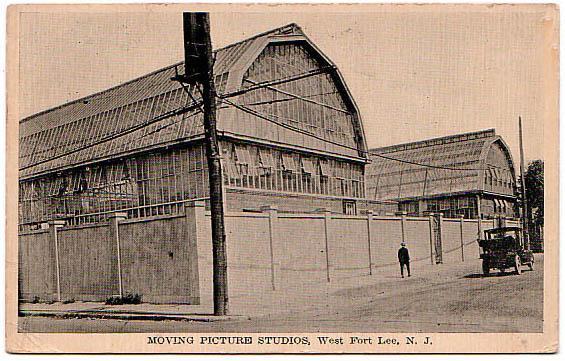
Eddie’s films were made at a studio lot in Palisades, New Jersey, while his office was in New York.  While trying to gather information on the studio lot, I learned all about Fort Lee, New Jersey.  Before Hollywood became the movie making capitol, there was Fort Lee.

fort-lee-studio

In the early days of the American movie industry, the Fort Lee–Coytesville area became New Jersey’s busiest production center. The first permanent film studio built there was the Champion Film Company.  Fort Lee is a borough at the eastern border of Bergen County, New Jersey, United States, in the New York City Metropolitan Area, situated atop the Hudson Palisades.

So, I got caught up in searching for “Sepia Art Pictures Company” in Fort Lee.  What I have found was that today, on-line, I could not find any information about Black-owned film companies in 1939, until I decided to query Oscar Micheaux.

I discovered that in 2008, Fort Lee High School celebrated black history month by showcasing the history of black filmmakers and the borough’s (Fort Lee) extensive role in independent film, and that the borough council were in the works to construct a Fort Lee style “Walk of Fame” celebrating figures like Alice Guy-Blache, the first female filmmaker and Oscar Micheaux, the first major African-American filmmaker, both of whom worked extensively in Fort Lee.

Eddie came along maybe ten years after Oscar’s last full length movie, and since I know his movie studio lot was in Fort Lee (aka Palisades), I am pretty sure Eddie walked in Oscar’s footsteps.  Of course, by the time Eddie got to Palisades, the big studios had moved on to Hollywood.

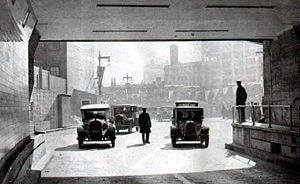
I found the script for Eddie’s second movie where he has a joke about being late to the set and he is speeding through the Holland Tunnel and gets pulled over by a cop:  The cop says “Didn’t you see me standing in the middle of the street?  And Eddie says “Yea, I saw you and said to myself, that man is going to get runned over standing out there!”

mbholland3

Money, or the lack thereof, was a big problem for blacks in the movie making business in the early 1900’s.  If you were not a Sennett or a Selznick or affiliated with someone like them. you had a hard row to hoe in trying to make an inroad into the business.  But Eddie was making a pretty good effort at realizing his dream.

Eddie was an independent.  When he worked in his craft on stage, on the radio and on early television, he worked with Whites and Blacks, but when he was making his own movies, he insisted on using only black people in every aspect of getting the movie made, in part so that more Black people could have jobs, and he believed that in order to make movies that appealed to Black people, who better to do it.  At his studio, Eddie had positions for scenario writers, photographers, lighting technicians and costume designers.

Eddie believed that Black people’s movie-making efforts were judged by Hollywood standards, the customary yardstick, which were high, and so, he always made sure he had young actors with fresh and interesting talent.

Thanks for visiting and hanging in with me.   Oh, and so far I have a 46,781 word manuscript, hoping for 50,000, we’ll see.

Thanks, Joe Malvasio 2008 Fort Lee School Project

CAMERAS, LIGHTS……..


untitled (14)


When trying to write a book and posts for a blog, I forget there are other things to attend to.  Like grocery shopping, washing, visiting friends, calling people, eating three meals a day (ha!).  So every now and then I have to do these things.  When I get back to my laptop, it takes a while for my brain to settle back into the writing process (where was I?, what did I do with my highlighter?), so I waste a few minutes getting back in the groove of writing, and I was wondering today how in the world my father could do everything he did as a comedian, businessman, a director and a writer?  Then I remembered, he had a wife.  I just have me.

Which brings me to an article I found written in 1940, about Eddie, after he had begun his movie making career.  This was a full page article discussing Eddie as a comedian (funny), and as a business man (sensible).  It begins:  “Everybody knows Eddie Green as Koko in the “Hot Mikado”, or as the chief characters in his skit on Christopher Columbus and on Jonah and the Whale, (which he did on the Rudy Valley radio show), but there is another Eddie Green who is akin to these characters, but who is also very different.  That is Eddie Green Himself.”

The article goes on to discuss Eddie’s comedic talent, the fact that he owns and operates two barbecue restaurants in New York,

“Eddie Green’s Bar-Bee-Q 2149 8th (near 116) Specializing in Southern Bar-Bee-Q.
Always Open. Finest South’n hospitality. E. Green, Host.”

and that he is a writer and producer of “what many people believe are the finest films being released about our people.”  This paper was the Baltimore Afro American.   The article includes this quote from Eddie:

“The first thing I try for is naturalness.  I write my own stories, building them around some incident that has been interesting, but not offensive.”

The article mentions, that although Eddie had already released three films, he had no picture scheduled that summer because he was concentrating on a beauty contest at the World’s Fair.

Towards the end of the article, they talk about Eddie’s typical day.  He is up at 8 and off to the office.  At lunch he has coffee with Mrs. Green, at home, or she comes to the office.  If he is broadcasting, he goes to rehearsal, if not, he goes back to his office until dinner, then he goes home to eat.  He likes ham and cabbage which he taught Mrs. Green to cook.  He tinkers with his ham radio, then at 10:00p.m. he goes to check on his restaurants till about 12:00, then goes back home.  Mrs. Green, (the wife before my mom), was an entertainer, but decided to become a stay-at-home wife.  I assume that she did all the shopping, and washing, and cleaning, so Eddie had only to concentrate on his career path, he didn’t have to worry about thing falling apart at home.

In 1939, Eddie began a new venture and opened his own motion picture company:

movie company formed
in harlem
NEW YORK, Aug. 24  With familiar theatrical figure Eddie Green as guiding light, a new motion picture company was formed this week, the “Sepia Arts Pictures Company.”  Los Angeles California Eagle, August 24, 1939

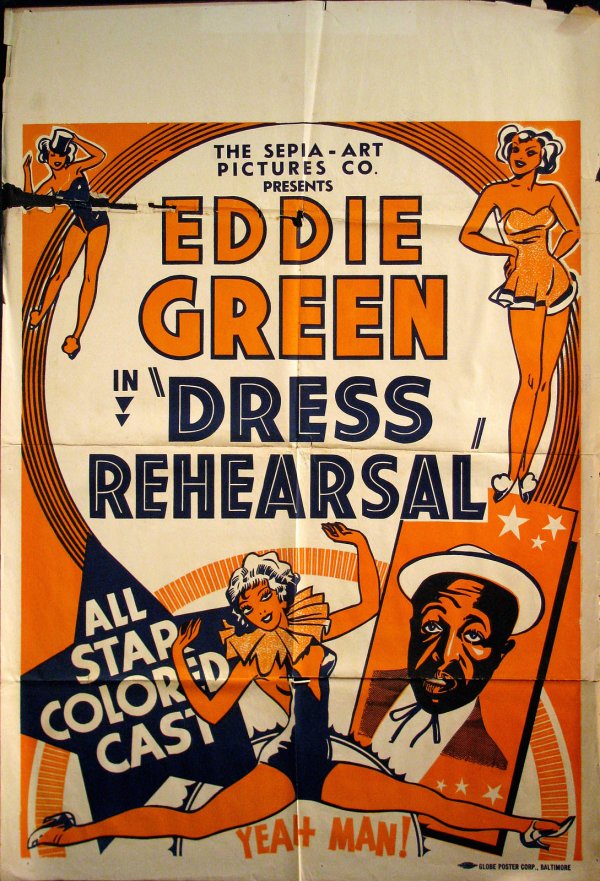
Eddie’s first film was:

courtesy live auctioneers

In my ongoing research I have actually seen my father’s original script for this movie.  Remarkable!  Though the script lists the cast members, it is difficult to tell which person was in which movie.  Anywho, “Dress Rehearsal” would have a long run, at theaters and on television, as noted below:

NEW YORK, Dec. 21.—History was made here Saturday
afternoon, Dec. 16, when the National Broadcasting Company picked the Sepia-Art Pictures Company’s featurette,”Dress Rehearsal,” featuring Eddie Green, to broadcast over their television station here in New York City. Not only is “Dress Rehearsal” the ” first ” Negro motion picture ever to be broadcast by television, Mr. Green breaks a precedent by staring in the first film of its kind ever to be sent over the air.  Pittsburgh Courier  12/23/39

AND, at the

Vogue  1905 Columbia
Edw. G. Robinson, “Destroyer”
Eddie Green, “Dress Rehearsal”   Dec 9, 1943

I do not have the rights yet, if ever, to post much information regarding scripts, but I did get a piece of a skit:  Eddie (who is the Director, the Writer and the Star of this featurette) is late getting to the set, so he is speeding and gets stopped by a policeman.  The policeman asks Eddie where he is coming from, Eddie says New Jersey, the policeman says “how did you ever get through the Harlem Tunnel?  Eddie says, “there’s a hole on both ends!”  Ba Dump Bump!

I hope that those reading these posts find inspiration for pursuing their own goals even though they may seem unattainable.  No matter the time period or the climate.  More action coming up!  Thanks for stopping by.


HAPPY FATHER’S DAY!!!!

Hello, it’s me.

fatherday2

THE PITTSBURGH COURIER

Eddie Green is A Proud Daddy

LOS ANGELES—It’s a girl for
Mr. and Mrs. Eddie Green (he’s of Duffy’s Tavern fame) and widely known in stage and screen, and she is the former Norma Amato, Los Angeles beauty.

The six-pound, seven-ounce infant, named Elva Diane, was born Sunday, June 22 at 11:15  P. M. at California Hospital.  Both mother and child are doing well.


HANGING OUT AT THE WORLD’S FAIR

Hotmikado

Hello.  In the on-going saga of my research into my father’s life, as far as the book is concerned, I have completed my first draft.  So emotional…..I had to come to the end.  I cried for three days after I finished.  Going so thoroughly into Eddie’s life was almost like being there.  Of course, I still need to edit, add-on, delete, clean up the manuscript.  And I need to add the TOC and a Bibliography, etc.  But it is really happening!

In this blog, after showing you Eddie’s television debut in my last post, and after having already mentioned that Eddie opened a restaurant in Harlem in 1937, I am now at 1939.

“The  Hot Mikado” was a 1939 musical theatre adaptation of Gilbert and Sullivan’s “The Mikado”, with an African-American cast. Mike Todd originally produced it after the Federal Theatre Project turned down his offer to manage the WPA production of “The Swing Mikado” (another all-black adaptation of “The Mikado”).  In this production, Eddie played, Koko, the High Executioner (formerly a tailor).

Eddie Green
Eddie Green

The musical was first produced at the Broadhurst Theatre from March 23, 1939 to June 3, 1939, running for 85 performances. The original cast included Bill “Bojangles” Robinson as The Mikado; Frances Brock as Pitti-Sing; Rosa Brown as Katisha; Maurice Ellis as Pooh-Bah; Eddie Green as Ko-Ko; Rosetta LeNoire as Peep-Bo; James A. Lilliard as Pish-Tush; Bob Parrish as Nanki-Poo; Gwendolyn Reyde as Yum-Yum; Freddie Robinson as Messenger Boy; and Vincent Shields as Red Cap.

The musical was then produced at the 1939–1940 New York World’s Fair for two seasons and was reportedly one of the most popular attractions at the fair.

The video below, which I found on-line and which is extremely rare, is a silent filming of portions of the performance at the World’s Fair.  Eddie enters first as Ko-Ko, the Lord High Executioner, and then you see him standing next to Bill “Bojangles” Robinson, the “Mikado”.  Eddie appears in a few more places in the film.  As Ko-ko, Eddie performed a number of songs, including “Titwillow”, though this was not caught in the film.

“Titwillow”  occurs in a scene with the love interest, Katisha.  “Katisha wonders why death refuses to come and bring peace to her broken heart (she sings “Alone and Yet Alive),  and Ko-Ko springs into action, telling her that he’ll die on the spot if she doesn’t accept his love. Katisha claims no one has ever died of a broken heart, so Ko-Ko responds with the tragic tale of TitWillow, a little bird who wasted away due to blighted affection.”

My mom, Norma, told me about Eddie singing this song in a play, but never did I think I would actually see a portion of this play with my own eyes.  Picturing Eddie singing “Titwillow”, is not easy to do, but according to the Brooklyn Eagle on July 9, 1939:  “Anyway, he gets a hilarious twist into Ko-Ko that Messrs. G. and S. never thought of, and when he swings “Titwillow” usually comes close to stopping the show.”

Eddie was living in Harlem, by now with wife number three, or four, and he already had a grown daughter.  He had met my mother, through friends in Hollywood as he travelled a lot by then from New York, to L. A., but his home at the time was 138th Street in New York.  After the “Hot Mikado” Eddie would begin making his own films.

I love sharing this information.  It may be too old-timey for a younger generation, but keeping the achievements of those who came before us alive, allows the younger generation a chance to see from whence they have come and, also, to see how far they can go, especially with the knowledge, technology, and, yes, opportunities available today.

Hey, comments are welcome, keep comin’ back, and thanks, for stopping by.


Wikipedia


YOU ARE UNIQUE, RUN WITH IT

imagesOB78BD5W

Today, first, I want to wish all those suffering from the devastating earthquakes in Nepal an eventual sense of peace and comfort through those who have been able to help, and I am sad that so many others are using their energy to hurt rather than to help.

Now, on to the purpose of this blog.  Inspiring those who would like to accomplish something specific, but are reluctant to do so, because of seeming obstacles.  My father, Eddie Green, has been a great example to me, of a person who started out with rags (in various senses of the word) and rose to riches.  Eddie’s rise was not rocket-like.  But it was steady and continual.

Eddie was born in 1891, he left home at about age nine, got work where he could performing as a child magician in churches and whatnot until he got work in various theaters, by 1909 he was married for the first time, 1917 he was drafted for WWI and wrote his first song, he spent the 20s on the Vaudevile and Burlesque stage, in the 30s he got married again and started his radio career.  By 1936 Eddie was 45 years old and still climbing.

untitled (5)No, this is not Eddie.

On April 18, 1936 Mr. Joe Bostic of Radiograph wrote an article about Eddie.  He chose Eddie’s performance on the Rudy Valley radio show as the “peak radio performance of the Week.”  It was the second time within a month that Eddie’s performance had been chosen.  He said that “Eddie Green, it seems to be, is more than a new star in the radio firmament, he is a symbol of what race artists might achieve if they have a distinctive and individual entertainment idea to offer.”  He also states “We doff our hat to a sterling performer and a great fellow.”  Hear Eddie Green Thursday night WEAF 8 p.m.

Eddie’s distinctive and individual entertainment idea was to perform skits, with scripts written by John Tucker Battle, of people from certain literature, such as, The Courtship of Miles Standish, which I have just learned, is a poem written by Henry Wadsworth Longfellow about a love triangle involving pilgrims who may have actually been real people; and Sir Galahad and the Knights of the Round Table, I guess these skits were sort of a “What if the Knights of the Round Table were Black” kind of thing.  The skits were part of a sketch called “Heroes Wuz People”.  Eddie acted out these skits with a Negro’s impression (according to the Daily Herald) and evidently they were so funny he kept getting called back to the show.

On September 3, 1936, The Daily Herald announced:  Rudy Vallee to Present Karloff, Eddie Green – Mr. Karloff was there to do a dramatic sketchkarloff2.

And Eddie was there to perform a humorous sketch titled “Adam and Eve”.  What if Adam and Eve were Black?

adam2

This same year, Eddie performed, on the Rudy Vallee radio program, “Jonah and the Whale” –  The general consensus was this was his funniest skit of all.

jonah

My very first set of books was bought for me by Eddie.  Moby Dick, The Last of the Mohicans, Sir Arthur and the Knights of the Round Table, The Count of Monte Cristo.  As a young child these books were a connection to my father, now I see they were a connection to his entertainment career.  The set of books  looked something like this:

my books

Unfortunately, sometime before I turned ten, we needed some cash, so mom sold the books.  I still consider those books a legacy from my father.  Eddie was obviously a reader.  He taught himself.

Those appearances on the Vallee show when Eddie portrayed these classic characters, were added rungs up Eddie’s  ladder to success.

Keep reading and thanks for stopping by.

YOU TOO CAN BE PRESIDENT

my brother

my brother

Here is a picture of my Brudder Brian (I love my brother.)  He is very happy for me.  Well, he would be if he knew what I am going to post about.  Since Sibling Day has just passed I will use his picture anyway, cause I know he will be happy for me when he learns about my latest find.

Research is a never-ending tool of non-fiction writing, I am finding.  And I am absolutely suited to spending hours pouring over maps and newspapers and searching websites.  I have had help, also.  From the folks who read my posts.  From people I have found on-line, and from one person who heard me on the radio.  I have received cd’s, an original portrait, lyrics to my father’s (Eddie Green) songs.

There is a gentleman who told me about a library in Beverly Hills, where I have found scripts for a couple of Eddie’s movies and even a contract Eddie had with Paramount Motion Pictures.  I found a letter  that was written by a censor about one of Eddie’s racier movies (he made five movies).  I even received a Press Sheet in regard to this comedy of Eddie’s from 1940:

EG in "One Round Jones"
EG in “One Round Jones”

Eddie is the one with his mouth wide open-I guess he is winning.

I have received messages of support for this blog and I even have a couple of people who want to read the book I am writing about my father.  This has become much more than a one woman project and helps keep a smile on my face.  But you know there are always things that just do not want to work out, at first.

At one point in 1922, Eddie made his first foray into the movie business, in Washington, D.C.  Over the past few years, I have not been able to find  anything more than a couple of two line articles about this business.   Very frustrating.  But today I found a listing  where I never before thought to look:

10th Annual Edition, 1922-23

THE FIRST COLORED

Professional, Clerical, Skilled and Business

DIRECTORY

OF BALTIMORE CITY

With Washington, Wilmington and Annapolis Annex

PRICE 5O CENTS

Sold at AFRO-AMERICAN OFFICE. Eutaw St. and Druid Hill Avenue
and R. W. COLEMAN. Publisher. 418 Federal St., Baltimore. Maryland

————————————————————————————-

DEANWOOD MOTION PICTURES CORP.

308 SOUTHERN AID BUILDING
WASHINGTON, D. C.

Capitalization $200,000 Stock $1.25 per share.

Edward Green, President.
Anything that you want to know about Moving Pictures, Write us.

Eddie’s business is the first listing on the page.  Not only do I now have the verification, I also have the address and money info.  I am sure more will be revealed, which can go into my second rough draft of the book.

So, everything is cool and life is good.  Thanks, for stopping by.
HANG IN THERE, KID.

imagesJZM1FW71

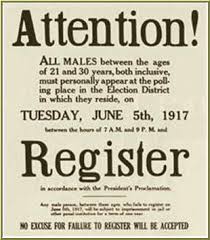
In my last post, I wrote about finding my father’s WWI Draft Registration Card and the added information I discovered on the card.  Eddie did in fact, show up on June 5.  Eddie had a small child at the time, and I have no idea if that made a difference in whether a man was sent off to the war. As a side note, the first training camp for black officers was set up in March, of 1917.

eddie green - amos n andy

In the meantime,  Eddie was working as an actor at the Standard Theater on 12th and South in Philadelphia.

Standard Theater (3 views)
Standard Theater (3

Eddie was 25 now and he was working and supporting a family, though times were difficult.

imagesLW7PVYDH

There was also a riot that year:  The city of East St. Louis, Illinois was the scene of one of the bloodiest race riots in the 20th century.  Racial tensions began to increase in February, 1917 when 470 African American workers were hired to replace white workers who had gone on strike against the Aluminum Ore Company.The violence started on May 28th, 1917, shortly after a city council meeting was called.

Life was happening, as always.  Some good, some bad.  It is difficult to write inspiring stories without including the “bad”.  But it does help to highlight the success stories.  Not everyone gets caught up in what is wrong in this world.  Even when it is difficult to stay out of the madness.  Hey, that sounds inspiring, doesn’t it?

On August 10, John Lee Hooker was born, and on December 18, Ossie Davis was born.  Good things were to come.

On December 28, Eddie copyrighted his first  song “A Good Man Is Hard To Find”, which would go on to become a  hit.  He wrote 29 more songs over the next 15 years, five of which are still under copyright.

What a year!

Thanks for stopping by.