PICTURE THIS ON A BOOK COVER

329
EDDIE GREEN

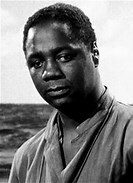
This is the picture I want to use on the cover of the biography I have written about my father.  This is the only picture that I own. Norma, my mother, gave me this picture in 1980, I think, as a birthday present.  It was the only picture she had. Eddie died in 1950 and over the years, the other pictures that she had were lost. Some in a house fire in the 70s. I saw the pictures, when I was a little girl.  There was a picture of Eddie and Frank Sinatra on a stage, there was a picture of me in my bassinet with Eddie and Mom standing over me, and there was a picture of Norma’s mother, Sinclaire, with her hair piled up on top of her head and staring stone faced at the camera.  Sinclaire had on a floor length, white dress with buttons all the way up to her chin. An old photo from the 1920s or 1930s. I was shocked when mom gave me this picture of Eddie. She loved this picture.

In the past almost six years that I have been doing the research on the book, I have discovered other pictures of Eddie. Eddie as a customer in a 1929 Vitaphone fifteen-minute movie, Eddie as Ko-ko, the High Executioner in the Hot Mikado on Broadway in 1939, Eddie as a boxer in his own movie One Round Jones, Eddie with Louis Armstrong preparing for their radio program in 1937, Eddie chatting with George Burns, Eddie on an advertisement for the Community Chest during the war years, Eddie and Mom with Adam Clayton Powell, Jr. at my christening.

None of these pictures belong to me. In order to use them in my book, I need to get permission from the copyright holders and pay a fee based on how many books I hope to sell, unless the pictures are in the public domain. Or a family member objects. It’s been so awesome discovering these pictures that I want to put them all in the book.  I am in the process of scanning the ones I can use, however, so that is a good thing.  The publisher may have a say-so on the book cover, but I think they will like Eddie’s “entrepreneurial, star quality” headshot.

Speaking of the publisher.  I have been in communication with a publisher.  Yes!  Soon I will have the pleasure of discussing the publishing side of this venture.  I haven’t exactly started jumping up and down yet, but I am so glad I started this journey. And I am not finished.  I am in the midst of what has become a serious learning process, that of going over my proofreader’s suggestions.

I think that there are many of us who have family members they would like to write about, be they movie stars or stay at home moms, or Uncle Jim, you know, the one who always makes you laugh.  I know there are people out here who are looking for good, uplifting stories. Share yours.


Thank you so much, for stopping by.

Totally Inspirational

meandedward
Me and My Grandson, Edward

A little over a year ago, I posted my first blog with these words:

Dean Koontz once said, “I really believe that everyone has a talent, ability or skill that he can mine to support himself and to succeed in life.”

I found this quote while doing research for a book I will eventually complete.  I began my research in about 1998 because my then small grandson’s favorite word seemed to be “I can’t.” Usually in regard to why he did not finish his homework. His homework was always too hard. I came up with the bright idea to enlighten him on what a person can accomplish, by telling him about, and by writing a book for him, about my father, his grandfather, Edward (Eddie) Green, who was a black man born in poverty in 1896 and who rose to prominence despite many obstacles.  


Today, as you can see from the above picture, my grandson is no longer small, and I have completed the book. I have to say that my bright idea has also been good for me, in that I have gained a bigger and better understanding myself, of just how hard Eddie had to work to get where he got. For instance, in the above paragraph I have 1896 as Eddie’s birthdate, well, just last year I discovered that Eddie was really born in 1891 (SS application), so I guess he figured the age thing was a factor in getting ahead. Especially in entertainment, which is where Eddie’s talents took him. We all have this ability in one way or another.

When I began this blog I said I wanted to inspire people. I thought I would post poetry from time to time. Totally got away from that idea, because sharing my father’s ups and downs became paramount. Unfortunately, though I have gotten to the point in my posting that I have to slow down on what I share about Eddie or there will be no point to writing the book.  My posts so far have touched on instances in Eddie’s life up until 1945 and he died in 1950. I will continue posting on Eddie and my book writing adventure, but today I am going to post a poem written by my brother, Brian.

Brian’s many talents include writing poetry. I asked Brian early on to write a poem for me, but he wanted to write on a religious theme. I told him that this was not a religious blog, that it was about inspiring people. Haha, don’t laugh. Anyhow, I have realized during my research that people are inspired in many different ways, through many different pathways. Brian is a  funny guy (we have different fathers, but his father was the “life of the party” kind of comedian), Brian has a passion for writing poetry. Give him a word and you’ve got a poem. He loves to read and will pull out his pocket bible, or his latest historical article, in a minute. Today, before he got interested in the Super Bowl, I asked him to give me a poem over the phone, and I got one. Interesting that today  just happens to be a Sunday.

UNTITLED

It’s so good to know that even in the midst of our experience in this mortal life, Thank you Jesus is our reply, cause everything’s going to be alright!

So many things going on in our lives, can’t wait to fret something in a hurry! Remember the Lord said, Calm down, do not worry!

I wrote this to say my message is all about him; all the loving ways he is, we can do nothing without him.

Poem by:  Brian Beasley

Thanks, for stopping by.

49,957 words

untitled (34)

49,957 words.

Need to cross some more tees and dot some more iiiis (eyes). I’m feeling a little silly, cause I’m nervous. It has come time for me to begin my search for readers to proof my manuscript. I could not, for the life of me, come up with an idea for a post, so I decided to post Chapter Two of my tentatively titled book:

 Eddie Green: Star of Stage, Screen, Radio and Television

A Biography

Chapter Two: A Good Man Is Hard To Find

While continuing to perform as a magician, in 1916, Eddie wrote a silent movie titled, Eddie Green’s Rehearsal, which gives an early indication of the direction in which Eddie was heading. This movie was directed, produced and distributed by Eddie, the cast was Eddie. The movie was about a man by the name of Eddie Green, who is desperate to get into show business. Eddie borrows a friend’s clothes and car, and goes to an audition. He tells jokes, sings and generally performs to an encore. This scenario proved to be prophetic.

The movie did not actually make it to the big screen, at least not in its original format, and not until 1939, but it had enough merit to warrant a mention, in the form of a “clipping,” which was placed in a folder at the Margaret Herrick Library, a non-circulating reference and research library devoted to the history and development of the motion picture as an art form, where I found it in 2015, sixty-five years later.

About a year after Eddie wrote his silent movie, The United States entered World War I. Eddie was twenty-six years old when he reported to his draft board. I have not found out yet, where he may have been stationed. However, the information on his draft registration card provided me a good source of information. Listed was Eddie’s address at the time, 1405 Ten Pin Alley, in Baltimore, Maryland. Research showed me that Ten Pin Alley was, literally, an alley, located in what was then Ward 5, a part of East Baltimore, which, though dirty and crowded, was basically the only place in which poor blacks were allowed to live. Noted also on the card, was his occupation, actor, his place of employment, the Standard Theatre in Philadelphia, Pennsylvania and the fact that he was married and had a child.

Eddie’s place of employment in 1917, the Standard Theater was owned by a Mr. John T. Gibson, a native of Baltimore, who also ran Gibson’s Auditorium Theatre on South Street and made good money booking Black vaudeville acts on the national “chitlin circuit.” Stars such as Bessie Smith and Ethel Waters, also performed at the Standard. Ticket sales at the Standard helped make Gibson the “richest black man in Philadelphia.”

While at the Standard, Eddie dropped the magic tricks from his act. After catching one of his shows, a stage manager told Eddie to, “Get rid of the paraphernalia and just do comedy, you are really funny.” Eddie took the man’s advice and began performing strictly as a comedian, eventually adding singing and”soft shoe” dancing to his routine.

It was during this time, that Eddie wrote the his first of his twenty-nine songs, “A Good Man is Hard to Find, “ which he copyrighted on December 28, 1917, in Chicago. “A Good Man is Hard to Find” is a bluesy type of song, explaining what a woman should do when she manages to get a “good” man. Six months later, Eddie sold his song and on June 2, 1918, the song was copyrighted by Pace and Handy Music Publishers (Home of the Blues), and went on sale as a piano roll in the Fort Wayne Gazette.

“A Good Man is Hard to Find” became a hit. January 4, 1919, Eddie got his first top billing as an entertainer, though his name, as the songwriter, was in tiny print. The name of the song was in big, bold letters right at the top of the Billboard page. The Billboard listed the song as “a 1,000,000 copy hit, sure fire applause getter for any singing act or combination on the stage.”

Marion Harris, a popular singer, most successful in the 1920s, the first widely known white singer to sing jazz and blues songs, recorded the song in 1919 for Victor Records. Miss Harris’s recording has been digitized at the Library of Congress Packard Campus for Audio Visual Conservation.

Eddie decided to put together a company of eighteen actors, which he called the “Deluxe Players,” and as owner and manager of the “Deluxe Players,” he began to tour the south, featuring his song, “A Good Man is Hard to Find,” performing in places such as Tampa, Florida and St. Louis, Missouri. Eddie and his company were a sensation in St. Louis at the Booker Washington Theater, as was printed by the St. Louis Argus, January 9, 1920: “Green with his droll humor, and his coterie of performers made a big hit during a previous performance at this house.” The show bristled with tuneful melodies, graceful and eccentric dances and a barrel of side-splitting comedy.”

Eddie’s song caught the attention of Miss Sophie Tucker, one of the most popular entertainers at that time, known as, “the last of the red hot mammas.” While performing in the Sophie Tucker Room in Reisenweber’s in New York, Miss Tucker sang “A Good Man is Hard to Find” every night for ten consecutive weeks, and “will continue to use it until her engagement terminates.” Miss Tucker said that, “A Good Man is Hard to Find” is “the best blue number she has ever used.” {Photo 1. Caption: Sophie Tucker Says.}

This song has been recorded as a blues number, a fox trot and a swing number, by such greats as Wilbur C. Sweatman’s Jazz Orchestra, Les Brown and his Orchestra, Louis Prima and his Orchestra, Jess Stacy and his Orchestra, Dorothy Loudon with the Honky Tonks, William’s Cotton Club Orchestra, Muggsy Spanier, the Alabama Red Peppers, “Fats” Waller, Bessie Smith, Frank Sinatra, Rosemary Clooney, Cass Daley, Big Maybelle, Brenda Lee, Nancy Wilson, and Carol Channing, to name a few, and a version of the song has been heard in Woody Allen’s recent film Blue Jasmine, and even more recently in HBO’s 2015 presentation of Bessie. As was Sophie Tucker before her, Bessie Smith was instrumental in popularizing, “A Good Man Is Hard to Find.”

As I write this, I am realizing that, as the years went by, Eddie must have been aware of the impact this song had on people. At the time he wrote this song, though, he probably had a need for whatever money he received when he sold it to Pace and Handy. The popularity of this song, did, however, announce the arrival of Eddie Green, and with his talent for getting laughs, and his willingness to work for what he wanted, Eddie was on his way up.

End of Chapter Two

Hey, thanks for stopping by.


Surrounded By Flowers

mildredandeddie1939but1946poster

So this is my father, in a photo at a studio, surrounded by beautiful women. I have recently purchased a copy of the original photo, minus all the text. I even know now who took the picture way back in 1940. I didn’t know, until about a year ago, that these photos still existed. That they had been donated to a library here in California. The fact that at least one of the ladies is still with us, (Millicent, in the black dress), was a wonderful piece of knowledge I have also recently received. New knowledge and acquisitions have necessitated a few minor revisions to my book, but it’s all good.  Looking at this particular picture reminds me of what my mom, Norma, once told me-that Eddie enjoyed being around pretty women.  Like being surrounded by flowers.

Something I have discovered in the last five years about my father, is that Eddie enjoyed getting married, too. I learned that Norma, my mom, was his fourth wife.  I always knew Eddie had been married once before mom, and that I had a half sister from that earlier union, but the fact that Eddie had two more wives was news to me.  I only found out through my census searches.

Eddie married for the first time in 1909, to a lady born about the same time he was born, and in 1910 he and his wife had a daughter.  By 1930, Eddie’s first wife and their daughter were living in Philadelphia, and Eddie was married to his second wife, a twenty-nine year old nightclub dancer, and living in Manhattan. This second marriage only lasted two years.  By 1932, Eddie married wife number three, a twenty-two year old Trenton, New Jersey lady.  They lived in Harlem on 138th Street. This marriage was the first marriage Eddie discussed in a newspaper interview saying his wife would stay home and listen to his radio broadcasts and then tell him how he sounded. Eddie said that sometimes with him “his voice gets too high.” This third marriage lasted through 1940 or so while Eddie was in his first movie making venture.

By 1944, Eddie moved to Los Angeles, alone.  One of Eddie’s friends was Louise Beavers (an actress who appeared in the movie Imitation of Life). Eddie boarded with Louise in her house in the “Sugar Hill” district of Los Angeles, until he found and bought his own house, announcing that “he was just waiting for the right lovely to come along.”  Enter wife number four, my mom, Norma, twenty-two years old.  Mom was Eddie’s last wife, as he died in 1950.  Mom was young and beautiful, and she had a lot of young and beautiful girlfriends who were always hanging around the house, because, she said, their house was the place to be.  Eddie was a lucky man, a gentleman and a Star.

Thank you, for stopping by.


Progress-two of my viewpoints

momwithfur

This is my father, Eddie Green and my mom, Norma, in about 1945-46.  Progress had been made in Eddie’s life, as you can see by looking at that coat around mom’s shoulders.  As I have mentioned before on this blog, Eddie did not start out with a lot of money.  As a matter of fact, when Eddie left home at nine years of age he didn’t have any money.  But he must of had a plan (excuse my English).  Because he wound up quite well-known in the entertainment industry, and at one time, had a lot of money. When Eddie left home, He intended to progress.

Home in 1891 (when Eddie was born) was Baltimore.  According to an old report from the  Johns Hopkins Hospital, which was in the area where Eddie lived: Typhoid fever was then very prevalent in Baltimore, especially in the city’s outlying areas. Drinking water was obtained from public pumps connected to shallow wells, now mostly contaminated by the myriad of privies and cesspools located in backyards. Mortality from typhoid fever in the city during the years 1888-1892 averaged around 229 cases per year, disproportionately affecting poor Blacks.  Things were not much better until after a 1904 fire that devastated a large portion of the city.  After the fire, progress began in regard to the sewer issues.

By 1917, Eddie had progressed in regard to recognition when he wrote his first song: “A Good Man Is Hard To Find,” Words & Music by Eddie Green, which was recorded over the years by various artists, including Brenda Lee in 1967.

As a Black man making his way through the early 1900s, Eddie’s progress was steady, benefiting himself, those with whom he worked, his family and those who came after him.  His progress was a good thing.

I read somewhere the other day  that in some ways progress may not always seem good.  For instance, when I was little, I loved to play Tiddly-winks: images (15)

I mean I loved it. All by myself. Take one big disc, press down on a smaller disc and launch the smaller disc into a cup, wow! Today kids do not play Tiddly-winks, not even babies play Tiddly-winks, unless it’s computerized:  images (5)

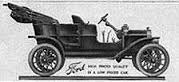
Or take cars, we started out with what we now think of as funny looking, A Model-T:  images9LPUJHQE

Thanks to progress, we now have all sorts of car models.  We have electric cars and self-driving cars: 18th-Century-Math-to-Solve-Traffic-Jams-2

My point is, progress is about persevering and moving forward. I applaud my father for doing so, but, man, I really think little kids are missing something if they never play Tiddly-winks.

Thanks, for stopping by.

Typhoid Fever and Johns Hopkins Hospital, Baltimore, 1891

Photo courtesy: New York Public Library

My Brother Was Right!

jay-z-holiday-charity (2)
Jay-z holiday charity*

Happy Holidays to everyone!! My brother, Brad Beasley, has told me from the day I started writing a biography on my father, Eddie Green, that Eddie was just like Jay-Z, who is a hard-working man who has made a name for himself as a rapper and as an entrepreneur, and who is married to a gorgeous, talented woman. I put off mention of any similarities, cause I couldn’t figure out how to write a relevant post.  At last I have found what I needed!  A picture of Jay-Z and friends at a holiday charity.

This provided a link that I could work with, because, not only was my father, Eddie, also a hard-working man who made a name for himself as a songwriter, actor and as an entrepreneur, and who was married to a gorgeous, talented woman (my mother), Eddie was also involved in holiday charity work.  Thanks to the research I have done, I just happened to have a newspaper article that covered Eddie’s act of charity on Christmas of 1940.  Following is the article.

As per the New York Age, Saturday, December 21, 1940:  Eddie Green to Play Host to 250 Poor Christmas Eve.

importfromphonejuly 132

“Eddie Green will play host to 250 of New York City’s poor on Christmas eve morning. Along with Arthur Oliver, manager, and about a dozen of the girl employees of Eddie Green’s Bar-Bee-Q, they will assemble at the Eighth avenue link of this popular chain of restaurants where they will pack and hand out Christmas baskets containing roasting chicken and all of the fixings that go to make up a good dinner. Tickets for these baskets have been distributed among quite a few responsible persons who in turn are giving them to families that they know to be needy.”

Then and now these two gentlemen had and have the spirit of Christmas. Decades apart, yet similar in outlook. Role models.

I wish you a safe and happy holiday season. Thank you so much for stopping by!

*Jay-Z holiday picture courtesy http://www.fuse.tv and Google Advanced Images


I’m So Excited

th (6)I’m so excited, and I just can’t hide it
I’m about to lose control and I think I like it!


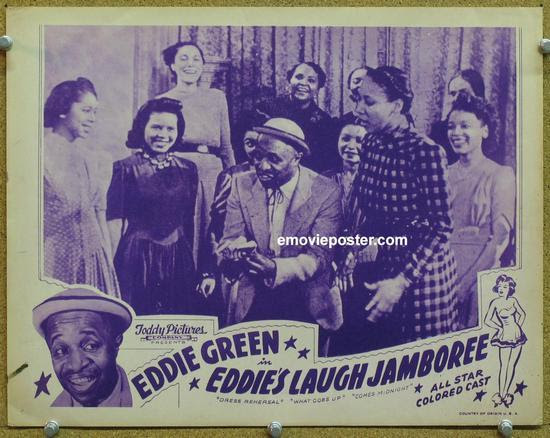
Hi, there!  I have been working diligently on the biography of my father, Eddie Green, for the past couple of weeks, because I am so close to finishing and I want to get the manuscript sent out for proofreading before I send it to a publisher. One year ago I bought my first laptop and started this project. AND THEN, last week, out of the blue, I received a message from a lady whose 90-plus year old Grandmother, whose name is Millicent, had been in one of the movies my father directed, produced and starred in, “What Goes Up.” The movie was made in Fort Lee, New Jersey in 1939.

Evidently, Millicent had for years been telling  the younger members of her family about those days, but no one really listened until one family member decided to investigate. She went on line and found my blog (yay!) after typing in Eddie’s name, and now I get to add a bit more information to my book, and I get to share a little of Millicent’s story (she played a chorus girl in the movie) with my readers. This is exactly the type of thing I wanted to happen, though I wasn’t sure it would.

Millicent is the shorter woman in the front in the black dress.  I have had a copy of this photo for a long time, but had no idea who these women were. Now I know one of them.  Millicent and I live in different cities and have never met, but, boy, am I glad her relative found me.  (Laugh Jamboree was a Toddy Pictures production, though the movies, Dress Rehearsal, What Goes Up and Comes Midnight, were Eddie’s.)

Through her granddaughter, Millicent has provided me with more insight into Eddie as an entertainer and as a movie producer than she will ever know.  For instance, she says that Eddie was “all business”.  Well, in a Baltimore Newspaper article from around the same time that Millicent knew Eddie, the headline reads: ” As a Comedian, He’s Very Funny, As a Business Man, He’s Very Sensible and Comedy is a Business.” The article goes on to say “The fact that Eddie is so funny on the screen, stage and radio is due to the highly intelligent and efficient manner in which he conducts his work.”

The other thing about this contact with Millicent, is that, had my mother, Norma, still been alive today, she would have been 92 years old. For those that don’t know Eddie married my mom when he was 54 and mom was 22. So Millicent was a cast member in Eddie’s movie, about the same time Eddie first met my mom.  I love Millicent, I don’t know her, but that’s ok. I have a few more tidbits to share (Millicent was a beauty contest winner), but I will save them for another post.

Being able  to look back and “experience” the past through my book and this blog, brings me so much joy.  I mean, just because its 2015 does not mean past times are inconsequential. Past times, older people,  are extremely important to who we have become today, and well worth the attention, in my opinion.

Thank you, Sharon.

And, thank you, for stopping by.

Lyrics for “I’m So Excited” courtesy of The Pointer Sisters


.


A Symbol of Abundance

untitled (29)

The horn of plenty is a symbol of abundance and nourishment, commonly a large horn-shaped container overflowing with produce, flowers or nuts. The horn originates from classical antiquity, it has continued as a symbol in Western art, and it is particularly associated with the Thanksgiving holiday in North America and with harvest, prosperity and spiritual abundance.

This time last year, I had just started my blog.  I was a bit discouraged about the world situation at the time, as I still am today, however, this year I am experiencing more hope.  I have finished 90% of a goal that I set for myself, and I have stuck with this blog for a whole year.

My first post, Can’t is Not in My Vocabulary, explained how I came up with the bright idea to enlighten my grandson, in book form, on what a person can accomplish, by telling him about his grandfather, Eddie Green, a Black man born in poverty in 1891,  who rose to prominence despite many obstacles, and, I discussed how I would use my posts as a way to chronicle the writing of the biography about my father.

While doing the research for my book and verifying information for my posts, I discovered way more than I expected, not just about my father’s rise, but also about what motivates people, and about determination and how much work actually goes into achieving one’s goals, and how that work can be extremely rewarding. What I hoped to impart to my grandson, morphed into a desire to share inspiration to any person who feels they “can’t”. I want the experience of reading my posts to be as uplifting and inspirational as possible to those who could use a boost.

In America, Thanksgiving is traditionally a celebration of the blessings of the year. I am celebrating the achievement of my goal. I am celebrating the friendships I have acquired over this past year. I am celebrating the fact that people “follow” me. Yee haw! I am celebrating the fact that I am still just as gung ho about the research and the writing, as I was when I began this project.

I have a vague memory of my mom putting out her yearly Horn of Plenty for the Thanksgiving season, way back when I was a child, and it seems to me that, though I could not articulate this, I knew then that her well-used bamboo horn signified a never-ending source of good things. May you experience an abundance of thanksgiving.


A BOOGIE WOOGIE HALLOWEEN

images (10)

Hi, there.  Well, I would like to wish you a Happy Halloween, although the guy in the above photo would probably not agree with me as he doesn’t think Halloween should be a fun holiday like everyone else does.  But since it’s the season, I chose Oogie Boogie to lead off this post.  (Thank you, Mr. Burton.)  I also chose Oogie because of his last name, Boogie.

My father, Eddie Green, was doing well in radio entertainment career in the 40s.  According to the Syracuse New York Journal   One of the radio programs Eddie appeared on was the Canada Lee show on WEAF, ” Eight to the Bar.”  In the 1940s, the phrase “eight to the bar” was up-tempo slang meaning “a boogie beat.”

New York Post, Thursday, July 24, 1941, HIGH SPOTS OF THE DAY’S BROADCAST OFFERINGS

WEAF- Benny Goodman’s Orchestra. Joan Bennett.
8:15 WOR—Drama. Florence Reed in “An Englishman’s Home.”
8:30 WEAF—Drama. Canada Lee, Eddie Green in “Eight to the
Bar.”
WABC—Barber Shop Quartet Society.

There was a boogie-woogie dance:599fc67ba64af1846452c75a83984b41

In 1945, a person could buy  a Two-piano Boogie Woogie album for Dancing for $2.50.

When I found the “Eight to the Bar” Canada Lee program in the Syracuse newspaper, I remembered that I have in my possession a DVD of a Jubilee radio program from 1943 with Mr. Lee and my father doing a comedy skit together.  Being a good researcher, I looked up Mr. Lee, and I am so glad I did.  Canada Lee is another of those famous, successful, Black pioneers, like Eddie, who seems to have been forgotten by the general public.

th (4)

Canada Lee was born Lionel Cornelius Canegata in 1907.  At one time he was a jockey, and then became a boxer, welterweight division, until he sustained an eye injury.  Before he had his radio show, Mr. Lee began an acting career. He was cast in his first major role, that of Banquo, in the legendary Federal Theatre Project (a New Deal program started to help struggling writers, actors, directors, and theater workers) production of Macbeth (1936), adapted and directed by Orson Welles, with an all-black cast.  Macbeth was sold out for ten weeks at the Lafayette Theatre.  Mr. Lee played Banquo (When Macbeth kills the king and takes the throne, Banquo—the only one aware of this encounter with the witches—reserves judgment for God.)  Having never read Macbeth, I had to read it to understand what the heck I was writing about in this post.  Anyhow, The play debuted in 1936 at Harlem’s Lafayette Theater and was performed for segregated audiences. It was so popular that it exceeded its initial run, then toured the country, spending two weeks in Dallas at the Texas Centennial Exposition.

Canada Lee appeared on Broadway in Anna Lucasta.  He also appeared in the movie Lifeboat in 1944, directed by Alfred Hitchcock:

300px-Lifeboat_(1944)_1

There is much more information out there to be found on Canada Lee, if you care to look it up.

Below is the comedy skit I referred to earlier.  Canada Lee and Eddie performed  in 1943, on Jubilee, a radio program that was broadcast to the nations military to help ease the stress of war.  The skit was titled “Boxing”, from January 5, 1943:  I have heard this skit and Mr. Lee has a nice, strong voice, where my father’s voice was a tad higher which Eddie said himself in a newspaper article. Hattie McDaniel acted as Mistress of Ceremony:
MISS McDANIEL: The clock says it’s laughing time. And when it’s time to laugh, then it’s time to listen to Eddie Green  and Canada Lee!
CANADA LEE: Remember some time ago, Eddie, I told you that I think you would make a good prize fighter?
EDDIE, laughing: .Yea, I member that, I do.
CANADA LEE: Well now, listen Eddie. Just like I told you. You’ve got the makings of a great fighter. I’m gonna build you up to be a champion.
EDDIE: No, is you?
CANADA LEE: Yea, I can see the whole thing.
EDDIE: You can.
CANADA LEE: Yea, First, I’ma have you fight some ham and eggers.
EDDIE:  some what?
CANADA LEE: Some ham and eggers.
EDDIE: Oh, right away I get scrambled.
CANADA LEE: No, no. I mean these fights are free, see. We pay these fighters to lay down.
EDDIE: Well, why can’t they pay me to lay down?
CANADA LEE: Oh Eddie, don’t be silly, you’re honest. When it comes to fighting you’re upright.
EDDIE: Yea, but not for long.

I started this blogging project as a way to get noticed by publishers, as a writer, which would help me when I was ready to publish the first book that I have written about my father for my grandson, because the general consensus is publishers want to see something other than just one book.  The blog is also a way for me to get over a fear of putting my writing out into the world.  What I did not expect was the education I would get from this process, through research.  Nor did I expect to have ideas about the possibility of continuing to write after this first book.  But I do.  Have ideas.  But first, I must finish proofing my first endeavor.

I like to finish my posts with something that refers back to the beginning:

untitled (26)6

Thanks, for stopping by.

Thank you Francis Lee

Into Each Life, Well, you know the rest.

untitled (23)

Well, as my dear sweet mama would say, into each life, some rain must fall.  Actually, she would usually say it sarcastically, but it still means the same thing.

In the on-going saga of my father’s life, considering he was born a Black man in 1891 in the “poor” part of town in East Baltimore, Eddie, who, by 1941, had become a star of stage, screen and radio,  owned two restaurants and a movie studio, had a good life.

Two years later……  In an article, dated January 2, 1943, an article was printed in the local newspaper, well, it wasn’t even an article, it was a paragraph:

Eddie Green the comedian, who once owned a chain of Bar-b-q places in Harlem, his own movie producing company and who ran the gamut of one stage and radio success to another, has filed a voluntary petition in bankruptcy in the U. S. District Court.  His listed liabilities are $5,119.00 and assets $473.00.  He owes the government $445.74 that should have been paid weeks ago.  Always a fine fellow, the misfortune of Eddie is not without sadness.

Imagine having your personal business in the neighborhood newspaper.  Of course, today everybody knows everybody else’s business, whether we want to or not, but I still think he may have experienced some embarrassment.  But, maybe not.  He probably used it in his comedy routines, like the one he did three days later in the  January 5, 1943 Duffy’s Tavern show with Milton Berle as the guest:

EDDIE:  What is that sign you’re making, Mr. Archie, is it a welcome sign for Mr. Berle?  ARCHIE:  No Eddie, it’s a resolution, you know, one of those New Years things.  Listen to it, “There is a well known golden rule, through the ages it’s been true, always be good to your neighbor, they may live next door to you.”  That’s good, huh?  EDDIE:  Yea, it makes a lot of sense, too.  How bout hangin up a sign for the waiter, me.  ARCHIE:  Like what, Eddie?  EDDIE:  Like this: “The golden rule has a fine intent, but a ten cent tip will pay the rent.”

I really do believe that it pays to have a good sense of humor.

So, Eddie did still have his job as the waiter on Duffy’s Tavern and two months later, in March Eddie was a guest on the Caravan radio show, along with the popular radio emcee, Gary Moore, who was also a guest on the program.

Screen shot 2011-08-19 at 2.41.44 AM Some of you reading this may be too young to remember, but I know a few of us vaguely remember The Gary Moore Show, or I’ve Got A Secret or To Tell The Truth which Mr. Moore hosted till about 1976.  I remember Mr. Moore as always having a smile on his face.

Despite Eddie’s setback, his success story was far from over.  More to come….

Thanks, for spending some time with me.