
 In the 1940s when my father, Eddie Green, was looking for women to dance as chorus girls or to star in one of his movies, he would put on beauty contests. Beauty contests were not exactly new in 1940, but they were definitely segregated. Which means that these contests only got media attention from the White owned newspapers. If you were to google “beauty contests” from the 1940s, you could find many images of the White ones, but none of the Black ones. This particular contest was for Miss Sepia America. Anyhwho, this is not a post about segregation. Or beautiful girls as it says in the first article from 1940. “Eddie Green Bringing Six Beautiful Girls to Affair At Claver (The St. Peter R. C. Claver Church, located in the Burrough of Brooklyn was hosting their annual post-season Basketball Game and Matinee Dance.) This is a post about communication, then and now.
 As it is next to impossible to read this article from 1941, I will type it out. From the Courier-Post (Camden, New Jersey) – 09 Oct 1941: “Each and every fine cat in Harlem is figgering on draping out in their most much of hard-hitting togs, donning their up-to-date sky pieces and collaring a broom down the midway to Harlem’s Renaissance Casino on the early black of Oct. 9. To dig the most mad lay-out of fine and mellow chicks Eddie Green’s gonna drop on them. Now Eddie is a square (and actually needs some prayer) when it comes to beating up his chops on a bid like this to you. So trilly up Harlem way and dig in on something to gumbeat about . . .Now if that spiel is too panicky for you to latch on, and you’re a Lane from Spokane, or a Home from Rome, may I simply say the date is the early black of Oct 9th. So be on hand to gim those gams…..Dig?”
The funny part here is that it says my father was a square which is probably why I think of myself as being square. But I had a difficult time trying to understand just what this article was talking about!
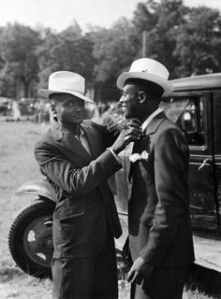 I do know what “fine cat” means (I’m not THAT square) and I know togs are clothes. And back in the 1940s men were always sharp (meaning they always made sure they looked good). If you were going to the Renaissance Casino you definitely had to look good because the Renaissance Casino, provided the backdrop for the area’s most elegant dances and exciting sporting and political events. In the 1940s it was also one of the few places Black people could go to have a good time. And of course I know the article must mean Eddie was bringing some of his beauty contestants for the fellows to ogle.
After I read that article from the Courier I just had to look up some other terms people have used over the years since the forties. I didn’t really use much slang until the 60s when everything was groovy. I particularly liked “Be there or be square”. Oh, and “book it” (meaning to leave from where you were. “Chick” is a word I still use today. My step-dad could always use some extra “bread”.
Then “book it” became “split”. If you were smoking some grass you had to watch out for the “fuzz”, can you dig it? Women were “foxy” and “phat”, word? Pretty soon everything was “totally tubular”, dude. And then along came Run DMC and I was “illin”. As far as slang goes I think I kind of petered out about this time, though I still hang on to “cool”. So before I bounce I will share with you what I think about slang today. WTF does cray-cray mean anyhow? Being a square, of course I thought LOL meant “Lots of Love”. (LMAO) It took me an hour to figure out what my daughter meant when she sent me this one night while texting: gn. (Oh! good night) She ended one of her texts with ty-I thought “why would she end her text with my nephews name-then I found out it meant thank you (ty, get it?) ROFL. Sometimes it’s hard AF to figure out what people are talking about. But it’s all good.
KCB
(Keep Coming Back)

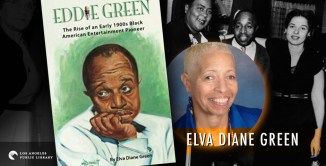 I’m mortified. I have not posted for almost two weeks. Periodically, my depression gets the better of me, plus it’s been as high as 117 degrees where I live, so, I have isolated. When up I have focused on gaining followers to my other social media sites. This month it has been two years since the biography I wrote about my father, Eddie Green, was published. Approximately one year since I won the Foreword INDIES 2016 Bronze Book Award for the book. I set up this blog in 2014 for the specific purpose of chronicling my book writing journey and to have a “platform” as those in the know suggested.
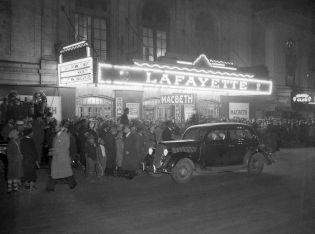 I began the research for the book in the late 1990s. It has all been worth it. And then some. Since the book was published I have begun getting all sorts of new information about Eddie. People have sent me never before seen pictures of Eddie. They have sent me new newspaper articles. I have heard new stories from old timers who showed up at my library presentations. I have met thee nicest, helpful, caring people. Gaining new information and meeting new people has spurred me on to further research about Eddie. The information I have found is adding up to me being able to possibly write another book. For instance, in regard to a play titled Playing The Numbers to be shown at the Lafayette Theater in New York, 1925: “Therefore Eddie Green who had been an Important comedian in the Apollo cast was commissioned to organize a miniature stock company that each week will present a 45 minute performance that will consist of musical numbers and burlesque comedy bits. The bits, however, will be revised by Eddie to conform to the special requirements of the neighborhood.” I knew Eddie had been a part of the play but now I’ve learned how big of a part he really played.
 In order to not share too much of the new stuff here and also to phase out of sharing stories from the first book, I will be posting additional information on little known and sometimes well-known pioneers of the entertainment industry and/or pioneers of civic issues. Earlier this morning on a news site I saw “Today in History”. Out of 24 items listed, only 2 were about Black people. One item was: 1960 Fifteen-year-old Brenda Lee earns a #1 hit with “I’m Sorry”. As you can see she actually also recorded my father’s song! The SECOND item about a Black person was: 1995 Barack Obama’s “Dreams from My Father” is published. Yay!!
 I am adding one more which kind of goes with today’s climate: Lemuel Haynes, first Black to serve as minister to a White congregation, born July 18 1753 to a White mother and an African-American father. At the age of five months, Lemuel Haynes was given over to indentured servitude. He was freed in 1774 when his indenture expired. Haynes was ordained in 1785 and settled at Hemlock Congregational Church in Torrington, Connecticut. He was the first African American ordained in the United States. On March 28, 1788, Haynes left his pastorate at Torrington to accept a call at the West Parish Church of Rutland, Vermont (now West Rutland’s United Church of Christ), where he served the mostly white congregation for 30 years. Fun Fact: Haynes himself was known to say that “he lived with the people of Rutland thirty years, and they were so sagacious that at the end of that time they found out that he was a (insert N-word here), and so turned on him”. (
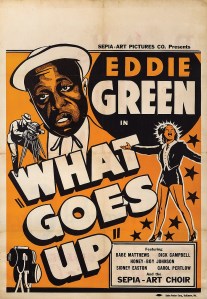 Well, it’s been two years since I published the biography on my father, Eddie Green. During the research period I searched and searched for a physical copy of this movie “What Goes Up“. Eddie wrote it, produced it, directed it and starred in it. The movie was made in Palisades, New Jersey in 1941. I am hoping to find it because, of course, it’s my father’s second movie and also because there is a member of the cast of this movie who has just celebrated her 101 years old birthday and she would love to see the movie one more time. She saw it when it first premiered in 1941 at the Apollo Theater in New York, of course, she and her mother. But not since then.


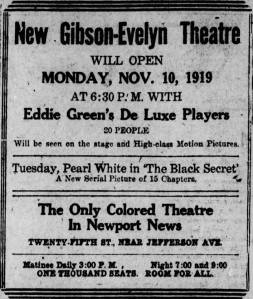 While touring as a “Boy Magician” over the years Eddie added songwriting to his list of accomplishments. He wrote “A Good Man is Hard to Find” which he used in 1919 when he took his own show on tour. The show included singing, dancing girls and comedy. While in St. Louis with this show he saw an ad in the local Variety paper for a comic. Eddie sent an outstanding reply and was invited to become a part of a vaudeville show in New York. His performances here and in Burlesque working at the 125th Apollo, earned him inclusion into a hit Broadway musical Hot Chocolates by 1929.
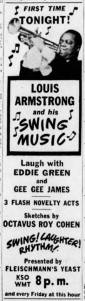
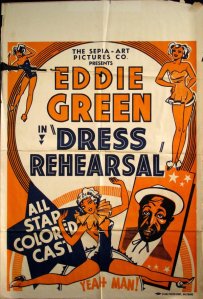 When I started this blog Eddie had almost been completely forgotten. Almost. Despite his many accomplishments in the entertainment world and the business world, despite the many friends he made and how widely he became known, beside myself, there were not a lot of people remembering that old comic, Eddie Green. I have written a biography about my father. (Eddie Green The Rise of an Early 1900s Black American Entertainment Pioneer, get it on Amazon). Since I wrote the book I have had someone tell me that I stopped the process of my father being erased from history. Wow.
 Hey, thanks, for stopping by.
 This photo absolutely suits my mood in regard to Memorial Day. I would probably rather “celebrate” Veteran’s Day seeing as I intended to write a post about my father, Eddie Green, and his experience as an African American who enlisted in WWI. Then it dawned on me that Eddie was not one who died in service. I was going to talk about how Eddie was working in a theater in Philadelphia before winding up at a Chicago Training Camp. I wanted to add information about how African Americans had to tear off a piece of their Registration Card to signify their race. After I realized I needed to re-direct my idea for a post, I stumbled across an article in the Pennsylvania York Daily Record newspaper. The article was posted on this date May 27, 2018 earlier in the morning. So I have chosen to share this information instead, as it will do nicely to get my point across.
 York County Afro-American veteran George A. Wood was killed in action September 29th 1918 during World War I. Private First-Class Wood is honored on the bronze memorial tablets flanking Gate 4 at the York Fairgrounds. His surname is incorrectly spelled “Woods” among the 197 York Countians honored on the World War I panels, fronting four columns, at the York County Administration Center, located at 28 East Market Street in York, PA. (Stephen H. Smith, York Daily Record, May 27, 2018.)

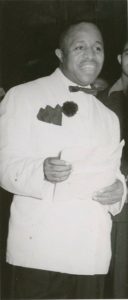 I like to think I am like my father. He was a happy man. He had a great smile. He loved to make people laugh. He was a good friend, with a helpful attitude. And he liked people, period. He was a family man, too. He was married 4 times. Had two daughters, one in 1911 and then me in the 40s. He told the Brooklyn Eagle in 1939 that “the depression doesn’t worry him. He’s happily married (3rd wife), Daughter Hilda is grown up and starting to follow him in show business. He’s got his work, his radio to tinker with and he’s the proud possessor of the first television set in Harlem.” At the time of this interview he was appearing in Mike Todd’s Hot Mikado. As Koko he sang “Titwillow” (Stars Over Broadway, Star Tone (M) ST 214 (Eddie Green with orchestra conducted by William Parson) The Brooklyn Eagle article said he had a “perpetual beaming smile.”
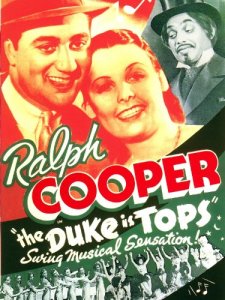 Like my father, Eddie Green, Cooper was also a filmmaker. Meaning he wrote, directed and starred in his own movies. In the late 1930s he was making movies during Oscar Micheaux’s filmmaking time (Micheaux began making films in 1915). He wrote, directed, produced or starred in at least fifteen films. My father began making his films in 1939, right about the time Cooper left filmmaking. In 1937, Cooper formed Million Dollar Productions with black actor George Randol and white producers Harry Popkin and his brother Leo Popkin to produce race films.
 Ralph and my father appeared on the same bill during those early days; their names are kind of close to the bottom of the ad as they had not “blown up” yet. But they must have met backstage. Maybe Eddie talked to him about making movies someday. Both Eddie and Ralph were successful in their chosen pursuits. Through their own talent and hard work. When it was truly a struggle for a Black man to get ahead. I salute my father and Ralph Cooper and their own special uniqueness in bringing a little entertainment into the lives of others.
 pininthetush