
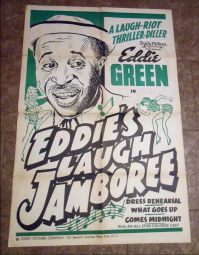
 Hello out there! What a lucky girl am I. I have started researching a third book. Just writing those words down makes me have to stop and ponder. I’ve never considered writing 3 books. Just the one-about my father- a rags-to-riches biography about the legendary Eddie Green, Old Time Radio icon (Duffy’s Tavern once a week radio show and others), composer, filmmaker, singer, dancer magician, TV star. A Black American who made it big despite the travails of Blacks in the early 1900s.
I never thought I would write a second book about a 70s TV sitcom, The Jeffersons, which I am working on finishing as I begin work on my new book about another 70s TV sitcom, Maude. Remarkable.
The first choice was mine, the next 2 were my publisher’s idea. Imagine that. And, it’s been a blast. I love research. I love reading. I started reading when I was four years old. My father left me a set of classics and a set of encyclopedias. I love words. Also, I have met the nicest people, period.
What these books have in common is that they are about Comedians and comedy. My father was into producing, he owned a string of restaurants, he wrote music, but he was first and foremost a comedian, he made his fame as Eddie the waiter, on the Duffy’s Tavern radio program in the 40s. The TV programs, The Jeffersons and Maude were comedic, while managing to focus on social controversial issues, such as abortion, politics and racism. But they made people laugh.
I was struck by a thought one day (probably because of the civil unrest these days) that most of the writers on each of these shows were White. Even on the almost all Black show The Jeffersons. One of the White writers on the Jeffersons was once asked by a Black person how he, a White man, could write for Black people. Basically his answer was a question: Did you laugh?
 Duffy’s Tavern was on the air for ten years. It was funny. Especially Eddie the waiter’s lines. Apart from a very few, the weekly guests were White. The cast was White. The announcer was White. Eddie was the only Black cast member on that show. And he was hilarious.
The Jeffersons had very few Black writers. But the show was funny. It ran from 1975-1985.
I thought Maude was funny. Most of the writers were White. And I’m Black.
I think it sucks that Black writers, good Black writers, have to work at getting into script writing. Or that when they do get in, the public does not hear about it. I’ve spoken with a Black writer that wrote for a White TV show (had one Black cast member that I can think of) and that TV show made a mint for everybody thanks to that Black writer. Because people thought it was funny.
Maybe its just about being funny.
 My father made a movie titled Mr. Adam’s Bomb (1949). His idea was to show the world how regular every day Black people reacted to the use of the Atom Bomb. It was a horrible episode in our country. Eddie, as an ex vaudevillian and as a comedian chose to include humor and singing and dancing as in this movie as he had in his first four movies.
From the reviews I have read over the past ten years, some Black people don’t get it. They don’t get the dancing. The audience singing. And of course the comedy is way old time. But it was the only way Eddie knew to express himself as an entertainer. A Black comedic filmmaker, who liked using chorus girls in his movies, taking on the aftermath of the Atom Bomb through his people for his people and by his people. But like I said above, some Black people today don’t get a Black man’s sense of humor from 1949. Eddie always wanted to look at the “up” side of life.
Anywho, maybe it doesn’t matter the color of the comedy writer. Maybe it’s just about being funny. Or silly. Some of the Walter and Maude lines cracked me up. Florence playing a old timey Black maid and shouting “Oh lawd” and throwing her hands up was too funny. Eddie in Duffy’s Tavern laughing out loud because someone called to make a reservation was hilarious.
 Now here’s a Fun fact: Mr. Bob Schiller and Mr. Bob Weiskoph (both gone now) wrote for Maude. The two Bobs also wrote for Duffy’s Tavern and probably knew my father. I love their picture.
I hope you can find something to make you laugh out loud or to make you smile.
Thanks, for stopping by.
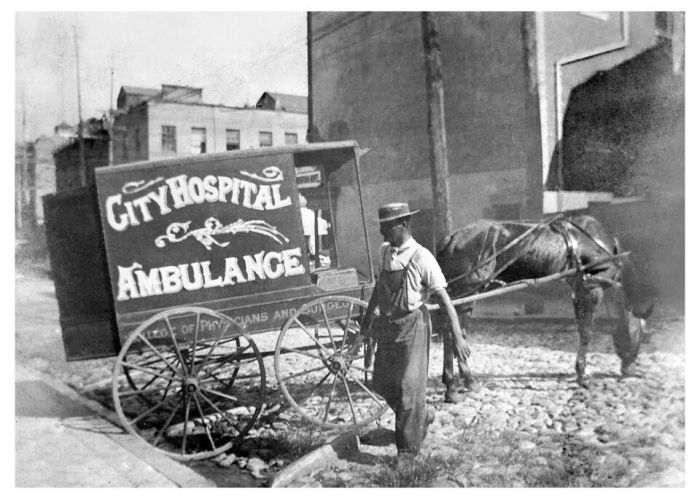
 I have been asked to do an essay on a Mr. Perry Bradford. Perry was born in 1893. As a vaudeville performer and composer and songwriter, he too worked in theater circuits throughout the South and into the North. I imagine that he had the same worries as every other Black man in the South at that time. But he had a goal in mind. Bradford persevered in getting the recording industry to value recordings of African-American artists. In 1957, Little Richard had a hit with Bradford’s “Keep A-Knockin'”. In 1965 he wrote his autobiography Born With the Blues. Later in 1994 his song “Crazy Blues” was inducted into the Grammy Hall of Fame. Perry lived a long time, too. He died in 1970.
 More recently, there was Arlando Smith, born 1952. Arlando came up during the Civil Rights era, police with hoses and dogs and batons. He worked at becoming successful. Arlando was a TV writer and director. During my research for my book on The Jeffersons I learned about this gentleman. He worked on What’s Happening Now, All In The Family, Silver Spoons, 227, The Richard Pryor Show, She’s The Sheriff, The Robert Guillaume Show. The Jeffersons (2 episodes) and Malcolm and Eddie. He was the stage manager for All in the Family, 51st Annual Academy Awards, The Richard Pryor Show, What’s Happening, Sanford and Son, That’s My Mama, Good Times, and The Jeffersons (48 episodes). In 2015 when Arlando Cooper Smith died The San Pedro Sun reported that: “Smith was an award-winning director who directed the first episode of La Isla Bonita Telenovela. He also contributed to several American television series, Arlando Cooper Smith made the Isla Bonita his home, has selflessly supported the island in ways too numerous to count for many years. He will be missed by all those who knew and loved him.”
 Seen Today: May 18, 2020 WASHINGTON (AP) — President Donald Trump said Monday that he is taking a malaria drug to protect against the new coronavirus, despite warnings from his own government that it should only be administered for COVID-19 in a hospital or research setting due to potentially fatal side effects.
 One of my favorite posters is this one. I mean, this is patriotic-a BIG flag and a little person. I know it’s a poster about a movie (Patton), but it signifies PATRIOTISM for me. Maybe because I saluted the flag every morning in Grammar School. It’s woven into my psyche. The President of these United States is the highest chair in the land and ought to be treated with dignity, as opposed to recklessness, in my opinion.
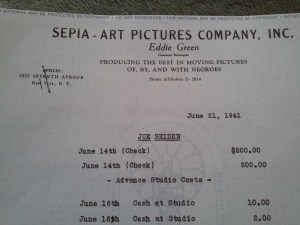 Well, here we are all quarantined together. A good time to take a look back into the past. The first picture on this post is a copy of a financial document from my father to Joe Seiden from about 1939. Eddie had his first movie studio in Palisades, New Jersey as did Seiden (Seiden Cinemas). Seiden edited Eddie’s films and helped with sound and the making of prints. Eddie made his first four films here from 1939-1941. What is now Fort Lee, New Jersey was, at one time, the “movie capital” before there was “Hollywood”. Fox, Universal, Biograph studios all began here. Oscar Micheaux was at Metropolitan Studios at this site. The last movie Eddie made here was “One Round Jones”, a movie about a nightclub owner who comes up with the idea to pay $50 to anyone who can go “one round” with his mystery fighter, who of course turns out to be Eddie.
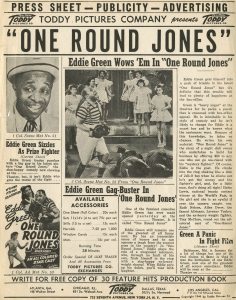 When I wrote the biography about my father I discovered one thing. The more I searched for information, the more I found. This has carried over until today. When I first received this press sheet I was overjoyed. I had to have permission to use it in the marketing of my book which was fine with me. What I didn’t realize was that this sheet held a font of information that would eventually hook me up with more information four year after publication of the book. My first example is in the lower portion of the 4th column of this article a Mr. Lorenzo Tucker is mentioned as part of the cast. I did not expand on this in the book, mainly because I had no idea exactly who he was and how he would pop up in future. About a month ago I heard from an Eddie Green fan who had some original photos of my father that he wanted to gift to me. One of the photos is of Eddie and Louis Jordan and a woman name June Richmond. Louis and June had starred in the 1947 movie Reet, Petite and Gone. I decided to research this movie and learned that Lorenzo Tucker appeared in this movie as the shyster lawyer, Henry Talbot.
 Reet, Petite and Gone is about an Old-time musical star Schyler Jarvis, now wealthy, who is dying; his last act is a visionary plan for the future happiness of his son, swing bandleader Louis Jarvis, and Honey Carter, daughter of his long-lost love. But crooked lawyer Talbot has a nefarious scheme to get his hands on the Jarvis money. There is also plenty of swing from Louis Jordan’s Bands. Lorenzo Tucker also appeared in 18 of Oscar Micheaux’s films. He eventually went totally off the movie track and became an autopsy technician for the New York City medical examiner, where he worked on the body of Malcolm X. That original photo that is being gifted to me shines more light. Lorenzo seems to have started out with my father’s movie studio.
 Then I noticed that Mr. J. Louis Johnson was also in the 1947 movie Reet, Petite and Gone. He played Senator Morton’s Butler. Well, J. Louis Johnson was a cast member in my father’s Sepia Art Pictures Company, Inc. in 1939. I did mention him in the book but I just did not see the connection. Mr. Johnson was in a lot of great movies. Mostly bit parts, but hey, he must have been a good actor because he worked with such stars as Clark Gable in Homecoming (1948), Lena Horne and Eddie “Rochester” Anderson in Cabin In The Sky (19400, and he had parts in Hitchcock’s Strangers On A Train and Orson Welles The Magnificent Ambersons (1942). But he was with Eddie before these others.
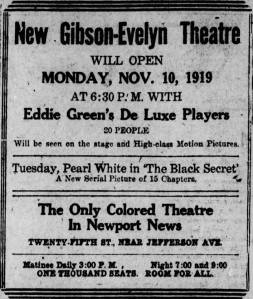 I’ve been doing what I like to do best-researching. I saw a story online about the 1918 Spanish Flu and it dawned on me that my father was alive back then. As a matter of fact, he was married to his first wife, had his first daughter, had signed up for WWI, had written a song and was on the road traveling down south with his “Deluxe Players”. The 1918 pandemic lasted from, I think, August of 1918 through December of 1920. Eddie began his first on stage vaudeville work in 1920. He was a comedian. The 1918 flu was targeting young adults. About half of the deaths were in the 20-40 range. Eddie was about 29. He had already experienced diseases and poverty being born in 1891 in Baltimore during a time of no indoor plumbing and rampant Leukemia in the East Baltimore slums. It’s one of the reasons he left home at nine years old and worked as a boy magician until someone suggested that he was so funny he really didn’t need a lot of props to entertain people. It seems that Eddie never got sick. Vaudeville and Burlesque were pulling people in. Eddie was performing in Tampa, Fla., in 1919 with his Deluxe Players when he applied for and got a job as a comedian in New York in 1920. The flu had hit Haskell County, Kansas In January 1918.
 The “Roaring Twenties”. Booze and parties. Eddie was appearing onstage in “All In Fun”, dancing and singing now along with his comedy. I read he and his partner were encored many times. So everyone must have been having a good time. Duke Ellington was coming along. Eddie opened a publishing business, a movie studio and wrote “King Tut’s Blues” because of the discovery of the tomb in 1923. And better things were yet to come. Even so, there was also the fact that in those early 1900 years racism was also a death sentence for Blacks. And Eddie was touring the country with Burlesque shows. In Blackface. And he was a hit everywhere he went. Fascinating when you think about it.
 When I began this blog in 2014 I was still in the process of doing the research for the biography I wrote about my father. I had lots and lots of news articles about Eddie, I had pictures of Eddie that I didn’t even know existed before 2014 and I was finding more and more information about my father than I even suspected. As an entertainer in the early 1900s Eddie was busy. And his doings were routinely printed up in the local newspapers. Mostly the Black newspapers, but also in Billboard (which is still in business today). In the beginning they were just one-liners (Eddie Green at the Gayety), and then as time went by the articles became longer. Then interviews were printed as Eddie got more famous. Five yeas before Eddie died he was featured in the Paramount movie “Ed Gardner’s Duffy’s Tavern” (1945). The popularity of the Duffy’s Tavern radio program seemed like a good idea for a full-length movie in which the principal characters of the radio show were signed to play their same parts in the movie, Ed Gardner as Archie, Charles Cantor as Finnegan, Eddie Green as Eddie the Waiter, and Ann Thomas as Miss Duffy. Paramount used almost their whole roster of stars in this movie:
 Since publishing my father’s biography what I have discovered is that there exists much more information about my father that I did not find, but others have. Fans of my father have sent me pictures, articles and cd’s of Eddie’s radio shows. My publisher told me early on that I would probably find more information and that I should save it up for a second book about Eddie. Well, he was right. Even today 2020 in the past week I have been contacted by someone who has a couple of pictures and a Duffy’s Tavern (DT) beer mug from the 1948-49 season. I didn’t even know DT beer mugs existed. A Twitter friend sent me dozens of articles he found while doing some research. He said in his first email: “It’s been so interesting tracing Eddie’s career – he was really well-known, and liked.” This is so remarkable to me that these people have taken the time to trace Eddie’s career and have held on to items related to Eddie. If you are an old movie fan you will recognize the name Adolphe Menjou in the Lincoln Theatre ad. He was famous! And there’s Eddie Green appearing at the same theater.
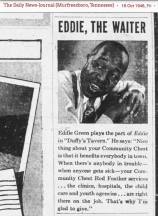 Of course, I could go on and on about my father. Since I don’t really remember him, writing about and talking about him brings me a type of peace. Something that makes me feel good always. This is my Black History. This man though born in 1891 chose to drag himself out of his childhood poverty, taught himself to read and chose a path that he liked and was good at and became quite successful in the field of entertainment. Plus, he was a nice guy while doing so. He became well-known and “liked”.
 I’m typing this on Super Bowl Sunday the second day of February. February has been designated Black History Month (or as Mr. Obama said: African-American History Month). We progressed over the years from 1926 when we celebrated Negro History Week. As a matter of fact there was a Negro Week at the 1940 New York World’s Fair. However, when Super Bowl Sunday rolls around on February 2, 2020 it’s all about football. Yea, it’s just one day. But the lead up is crazy. And do you know how much some of those tickets cost? This year I have noticed that people are focusing on civil and voting rights for Black Americans or lack thereof back in the day. What I want to do is celebrate Black Historical Americans. Especially those who may not receive much notice these days. Of course, I could just post about famous Black footballers like Ray Kemp. But I’m not really into football, so I would have to do a bit of extra research. Which is how I found this guy:
 Raymond Howard Kemp (April 7, 1907 – March 26, 2002) was an American football player and a charter member of the Pittsburgh Pirates football team (now called the Pittsburgh Steelers). He was also the first African-American player in the team’s history. It’s kind of amazing to me that this man was still alive in 2002 and I’ve never heard mention of him. I am not a big football fan but I have watched a few games and I have seen the Gayle Sayers movie (a heart-breaker). What I’m saying is that there are a lot of Black Americans in history who have made great contributions that we do not hear about. Even if they played football.
 What I know a lot more about is my father’s life. As the title of my book says, a Black American Entertainment Pioneer. Eddie Green. In this post I am sharing about Eddie in 1941. He was 50 years old, and had become a filmmaker, working his way up from a poverty-stricken childhood, through vaudeville, burlesque, the stage and many radio programs as a magician, a dancer and comedian. His household fame hadn’t come yet, but his name was always in the local Black newspapers. Eddie used a lot of young women in his movies as chorus girls. He would find his ladies at beauty contests. In 1941 there was a contest at the Renaissance Club in Harlem. Eddie presented the winner of the “Miss Glamourous” contest. Her name is Millicent Roberts. Millicent was 101 years old a couple of years ago. A living legend of Black History-when we had Black beauty contests. She also had a part in one of Eddie’s movies “What’s Going Up”.
 I celebrate Black history every day. Through my mother and my father. My mom’s got some Italian mixed in on her father’s side but she always identified as Black. (This sometimes caused her problems-in later life she told people she was a gypsy and they would not question her further.) Anyhow, I’ll be posting in celebration of Black History this month. Because there is a lot of good information out there about African-American history that needs to be shared. History that has been blended in with the stories of America that make for great reading.
 Every now and then I like to write about random stuff. Stuff not connected to my father’s biography or my latest writing venture. Sometimes I ache to write about politics, however, I would probably burn up my laptop with my furious typing. But today I am going to share with you the conversation I had with myself while “doing” my hair this morning. My daughter says I spend way too much time worrying about how my hair looks. But I have always placed a lot of emphasis on how my hair looks. As I was combing it today I remembered the old childhood story about Rapunzel- “Rapunzel, Rapunzel, let down your hair”. I loved that story as a young girl. But I did not have long hair like Rapunzel, I had frizzy hair, when my mom put my hair up in a rubber band I looked like I had a bunny’s tail.
 “This yam will make a nice dinner, said the farmer. Put me down! Put me down!” said the yam
 SURPRISE!!!! About two weeks ago it Snowed in the Antelope Valley in Sunny Southern California! Real Snow. In Lancaster, where it was hot as the blazes a couple of months ago. Snow in the Valley. I’ve seen snow before, in Manassas, Va. Not here. So all the neighbors were out taking pics and some of them made snowmen and snowwomen (guess how you could tell the difference). All I could think of when I went outside was “Merry Christmas!!!!” So I shouted it out. An early White Christmas. I love it! It hung around for about 3 days before it melted away. I took this pic with my old “free” government phone.
 I began researching and interviewing last December 2018. I am THIS close to having a rough draft for my publisher. I’ve spoken to cast and crew members, writers, directors and guests. I’ve spoken to those who cannot be done without – Administrative Assistants (I’ve been one so I know their importance). My self-imposed timeline to finish a rough for my publisher was the end of December 2019. It’s quite possible I may go a tad bit over. But everything about this book writing process is fun, except the proofing (:() Rather tedious, but necessary.
 So I’ve left my OG phone behind (now that I can afford an upgrade). I’m working hard on a new book about a TV sitcom that I loved and I’m looking way back into those yesteryears when you had to read what was on the screen. Which somehow seems to meld in to what we are doing today. Reading our screens. Anybody out there remember telephone party lines? Wishing you all a bunch of good Holiday Surprises!
 pininthetush