
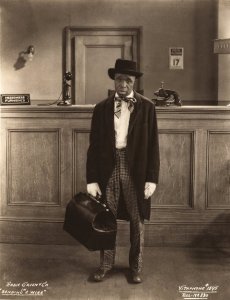
 According to today’s news, a new Black female movie director who has just finished directing Madeleine L’Engle’s “A Wrinkle In Time”, has been chosen to direct Jack Kirby’s “New Gods” for Warner Bros. I have been following her rise, and when I read the words Warner Bros., my father flashed into my mind because he did a Warner Bros. Vitaphone Film.
The film is titled Sending A Wire. I felt that here is a connection (if somewhat remote) I can use to help make Eddie relevant to today. You know, Eddie was Black, he was a director, he worked with Warner Bros. and he was a Trailblazer.
I also communicate via Twitter. So I tweeted this information to the female director, yes, hoping for some type of acknowledgement. I am still in the process of promoting the biography I have written about my father and I am trying every way I can think of to get his story seen. I read somewhere that I should “do the same thing everyone else does, but do it differently”. Huh?? So I’m just doing what I think this advice is saying. I want to bring Eddie back to the fore of people’s minds. Because he was a trailblazer who was the best at what he did. His story can provide that pin-in-the-tush type of motivation for others.
Sending A Wire started out as a skit in a play titled Hot Chocolates and went on to become quite popular. From my book:
There was also “Sending A Wire”, written by Eddie, featuring Eddie and Jimmy Baskette, as a customer and clerk, respectively, in a telegraph office. The New York Age called Sending A Wire “riotously funny”. Evidently, Eddie was “knocking them ga-ga” in his telegraph skit at the Hudson.
James “Jimmie” Baskette, born February 16, 1904, would later become best known as “Uncle Remus” singing the song “Zip-A-Dee-Do-Dah” in the 1946 Disney feature film, Song of the South.
Connie’s Hot Chocolates was hailed by critics and was touted as being fast, funny and frank. Hot Chocolates would go on to have 219 performances. The closing date was December 14, 1929.
The skit from “Connie’s Hot Chocolates”, “Sending A Wire”, became a Warner Brother’s Vitaphone film that was said to be the funniest Vitaphone comedy act “which has yet been produced”, and that it “kept thousands shaking with laughter.” The film is registered in the Library of Congress as Sending A Wire, Eddie Green and Co. New York Age February 1, 1930.
“Sending A Wire”, would go on to be shown at Loew’s Main St. New Rochelle Theater, December 7, 8 and 9, billed as “Eddie Green & Co.”, featured between the Hearst Metrotone News and Irene Franklin, and, at the Strand Theater on the same program with a Mickey Mouse cartoon called The Jazz Fool.
Okeh Records would record the song “Sending A Wire” with Eddie Green and Company (which can be found at the Library of Congress under Black Films: Paper Print Collection.)
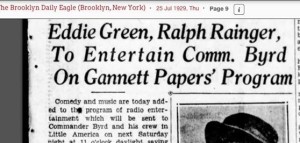
At the time, Commander Richard E. Byrd, an America Naval Officer had started an expedition to the Antarctic, and had set up a base camp named “Little America” in the Antarctic on the Ross Ice Shelf. The Gannet Newspapers, which at the time included the Albany News and The Knickerbocker Press, decided to put together a stellar list of entertainers to perform over radio stations WGY and WHAM to be broadcast to “Little America”, for the enjoyment of the explorers. Commander Byrd would receive the short wave and the broadcast wave lengths to all broadcast listeners in the United States. Amsterdam Evening Recorder: “Tonight’s radio program for Commander Byrd-Radio entertainment, originating in three different cities will be broadcast by WGY and its short wave stations to Commander Richard Byrd and his men in Little America.
Eddie was added to the program specifically to do his “Telegraph Skit” which was said to be “one of the funniest skits on the stage.” Eddie would perform along with Ralph Rainger, the composer of “Moanin’ Low”, who was also invited. Some of the other stellar performers included Rudy Vallee, Fred Allen and comedian Ted Healy. At the end of the program letters and messages from the men’s families were read over the air.
Regarding Eddie Green’s performance on the radio program, The Brooklyn Daily Eagle said “The whole town is talking about Eddie Green, prime colored comic, who will put on one of the funniest skits on the stage. He will dash from the Hudson Theater immediately after the final curtain to the National Broadcasting Company where he will re-enact his side-splitting “Telegraph Office” skit for Commander Byrd and his crew.” (Brooklyn Daily Eagle July 18, 1929).
“The whole town is talking about Eddie Green.” What a wonderful line to read about one’s father in the newspaper.
Thank you so much, for stopping by.
Eddie Green The Rise of an Early 1900s Black American Entertainment Pioneer-BearManor Media publisher
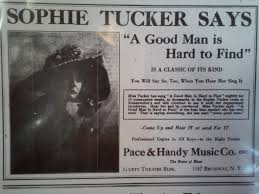 On March 7th I had the best time doing a book talk at a local library here in Los Angeles. There was a nice group of people, snacks and tea and I was prepared. But, I was a bit nervous. I think I was worried about how “cute” I was, or not. I said “uh” a lot. After I shared the Toastmaster tips I was not following I got a laugh and I felt more at ease. I spoke for almost an hour. I passed photos around. One thing I have noticed is that once the audience begins to hear my father’s rags-to-riches story they become truly interested. They are amazed in some instances and sad in others. And they laugh. His story is inspiring. I love it. I have begun to want to be a Cheerleader for Trailblazers, not only Eddie, but others. I find that keeping in mind those that paved the way is a motivating factor for future endeavors. One of the things I talked about was that Eddie wrote the song “A Good Man is Hard to Find” way back in 1917. During the early 1920s Sophie Tucker loved this song so much she sang it in her nightclub act every night for ten weeks.
 Depending on who was talking about it, the song was listed as a Blues song or a Fox Trot or as Jazz. Sophie did a Blues version. As you can see by this poster she was a red hot mamma, so you can imagine how she must have sang that song. After my talk at the library, a few of the people stayed around to talk with me. One of them was a gentleman who just happened to be a big Sophie Tucker fan and an Eddie Green fan. When I got home he had posted this message on my Facebook Book Page: “Dear Miss Green, I attended your talk at Memorial Library yesterday afternoon and enjoyed it very much. I am going to order the book from Amazon and look forward to reading it. Good luck to you and thank you for bringing Eddie Green back to life.” Now, of course, he did not know it but basically this is exactly what I was hoping to do with my book. Bring Eddie back to the fore of the public’s mind because of his many achievements during his lifetime which people have forgotten. What a treat to have spoken with this man.
 The gentleman also told me a story I had never heard before about Sophie Tucker and Alberta Hunter. Alberta Hunter was an American jazz singer and songwriter who had a successful career from the early 1920s to the late 1950s. He saw Alberta Hunter on a late night talk show probably in the 60s or 70s. She was discussing the night she decided to sing “Sophie’s” song-A Good Man is Hard to Find-on stage. And so she did. With Sophie Tucker sitting right there in the audience. So there!! They each participated in making the song a big hit. The gentleman who told me this story also said he looked and looked for a Sophie Tucker recorded version and finally found it just by happenstance. And here he was now talking to the daughter of the man who wrote the song. This is one of the reasons I love doing these talks. I get to meet and connect with people who know about my father or want to know. Since Eddie died when I was three this is so special for me.
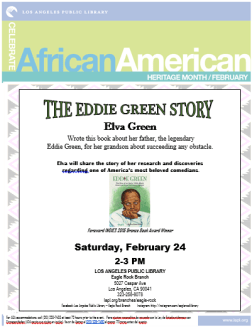 Hello again. Here is a poster announcing my next appearance at a local library here in Los Angeles, the Eagle Rock Branch Library to share my father’s inspirational story. When I started this book writing journey my thoughts never went further than getting the writing done and getting a publisher. The idea of being asked to give a presentation at a library never entered my mind. I simply knew that I wanted to put my father’s story down on paper and present it to my grandson. My doctor asked me the other day how I wrote the book-did I have any help? I realized that this is one of the first questions people ask. So this past week I sat down and wrote out what I did to get this book written. Once I took a good look at what entails getting a book written, I was in awe of myself. I am beginning to realize what a big deal this is.
 Here I am last week speaking about writing the biography of my father. I have pictures, we played a cd of a comedy skit with Lena Horne and I was happy to be there. Especially as there were two grammar school girls sitting in the front row. Paying attention. Sitting still. One little girl would take a photo I handed out, show it to her friend, have a little discussion and place the photo on the table. They even contributed to the discussion when I managed to touch on something currently relevant. I loved talking to them and assuring them that they too could achieve their dreams, like Eddie, if they learned as much as they could and believed in themselves.
 Of course I told these young girls that I started my research in the Central Library in Los Angeles. That I went to the library a lot when I was little, which I did. And, in fact, the Central Library is exactly where I began my research for my book. My mother actually found the first picture we had of Eddie on stage doing an Amos n Andy radio show back in the 1930s or 40s. This is Central Library.
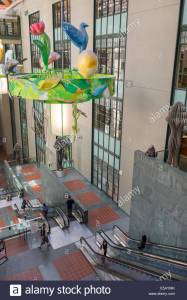 Central Library is beautiful. All of the information I found here about Eddie (and my mom) was housed in the basement level. So I went down this escalator many times. This is where I found the copyright entries for Eddie’s last movie. This is where I found old copies of Black newspapers that had so many articles about Eddie. And my mom. This is where I got carried away with reading those old newspapers. And how I found my aunt mentioned and my Nana. And my godfather. I even began genealogy research here. I made lots of copies here. I usually ate lunch in the building. And of course you can’t just visit one area of this library.
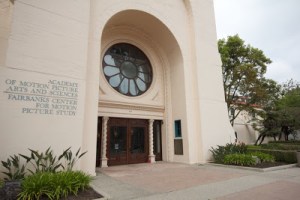 Along the way someone told me they had found information on Eddie at the Margaret Herrick Library in Beverly Hills and suggested I check it out. This is the library for the Academy of Motion Picture Arts and Sciences. It houses the Oscars library. So I went to this library. What an experience. First of all, I would have never thought of going to this library. Even though I knew my father was a filmmaker-I did not realize how big an impact Eddie had in the entertainment field. I must say here that at the time I did not have a car. I used public transportation. L. A. has good public transportation, but, some buses only run once an hour or once every 30 minutes. And visiting these libraries took me from the East to the West side of town. I visited the African American Museum in Exposition Park, the Mayme Clayton Museum in Inglewood, AND I spent hours at the Family History Library in West L.A. (a 2 hour bus ride one-way), I found so many books here on US history.
 The inside of the Margaret Herrick Library is gorgeous. One must leave one’s bags, coats and books in a little locker. When looking at photos or scripts of old papers, one must wear gloves and be very careful when handling delicate items such as old invoices. Oh, and you cannot just walk in, you have to have an appointment. The people that work in here are so nice. You tell them what you are looking for and they get it and bring it to you. I found Eddie’s movie scripts!! Posters of his movies!!! Invoices from Seiden Cinema in New Jersey for the film work they did for Eddie (with signatures). I even found the contract he made with Paramount when he was in the 1945 Duffy’s Tavern movie. Of course,, some of those items I could purchase, some not, but I could write down what I found and pay for copies. I made three trips to this library.
 Visiting libraries and museums was a big part of my journey. There were also conventions. I spent many hours online. There was a lot of reading, emailing, learning how to get with social media. Reading how-to books and articles. Reading other people’s biographies to study writing styles. Studying how to get a publisher. Biting my nails. After my mother passed in 2010 I used my grieving time to focus on the book. I was retired. Footloose and fancy-free. I had time to put into this book. Today, now that it is published I have time to share Eddie’s story in the libraries here in Los Angeles. This photo of Eagle Rock library is where I will be on the 24th of February 2018. I hope to get more kids involved. Because after all, I began this writing venture to try and motivate my grandson who grew up while I was in this process. But I also want to bring Eddie out of the shadows of time and share his many contributions to the entertainment industry and beyond.
 This past week a political figure’s book sold out in 2 days on Amazon after he received an uncomplimentary response to an opinion that he voiced. I wonder why? Did the book sell out because of controversy? Is that what people want? Of course, my bright brain then thought “hm, how could that work for me? Could I find someone of note to mention me in a bad light on the internet? Of course, they would have to mention the name of the book I authored, then people would rush to buy my book, to see if I really am as bad as that person said!” Then I laughed out loud. I don’t want controversy to sell my inspiring, delightful biography about my legendary radio icon, filmmaker, comedian father, Eddie Green.
 Let 2017 be your year of overcoming the obstacles. In our world today there seems to be a lot of obstacles: racism, poverty, joblessness. But I have come to learn in my own life and through writing my father’s biography, that obstacles don’t signify stopping points. Unless you live in Chester’s Mill “Under the Dome.” (A fictional TV program that I loved-the town people couldn’t go under the Dome or around it or through it.) In real life obstacles can be overcome.
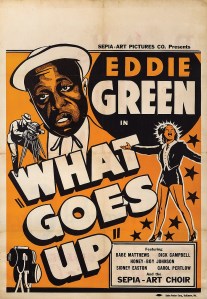
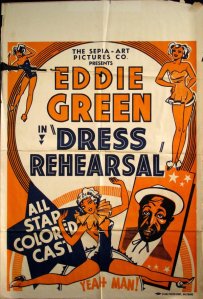 This movie, written, directed and produced by my father, Eddie Green, in which he also starred, prompted one journalist to refer to Eddie as the “comic movie making mogul”, because the movie proved to be quite popular.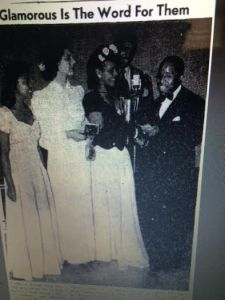


 pininthetush