

For those new to my blog and to refresh the memory of long time followers, I am posting a few pictures of Eddie’s entertainment life over the years. Eddie Green was my father. He died in 1950. Born in 1891. Over the years Eddie rose from poverty to prominence due to hard work, determination, talent and love for his fellow man. Eddie learned what was necessary to progress in his chosen field, starting out as a “Boy Magician”. He had a knack for comedy and he used his comedic talent to propel him along his way. And he was successful. He pulled himself up from poverty using his talents. From Vaudeville to Burlesque, to Broadway. From early radio and television to becoming the head of his own movie production studio, producing, directing, writing and starring in his own all-black cast films. From appearing in radio productions for the troops during WWII to becoming a major character on one of America’s best loved radio programs “Duffy’s Tavern“, while opening his third movie and television production studio.
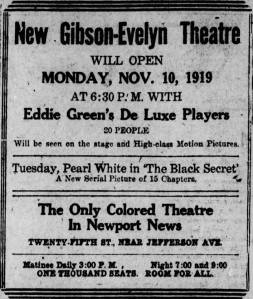 While touring as a “Boy Magician” over the years Eddie added songwriting to his list of accomplishments. He wrote “A Good Man is Hard to Find” which he used in 1919 when he took his own show on tour. The show included singing, dancing girls and comedy. While in St. Louis with this show he saw an ad in the local Variety paper for a comic. Eddie sent an outstanding reply and was invited to become a part of a vaudeville show in New York. His performances here and in Burlesque working at the 125th Apollo, earned him inclusion into a hit Broadway musical Hot Chocolates by 1929.

In 1929, not only was he a part of the ensemble of Hot Chocolates, Eddie wrote all of the comedic skits for this show. His name is listed twice. The show ran for 219 performances. Two of the songs would go on to be recorded, one “Big Business” was recorded by Victor Records, and “Sending A Wire”. Sending A Wire would also be made into a Vitaphone short by Warner Bros.
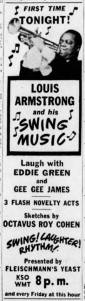
Eventually, Eddie began appearing on the radio. Rudy Vallee introduced him to the radio audience, inviting him over and over due to audience reaction, and during the summer of 1937 Eddie was asked to join Louis Armstrong as co-hosts of the Fleischmann’s Yeast hour while Rudy was on vacation. Eddie had also appeared for a number of weeks as the featured attraction on the Sunday evening NBC “Echoes of New York” program. During the 30’s Eddie also had a “first”. He appeared as one of the very first two Black men on an RCA/NBC television broadcast-but I’m saving this for another post.
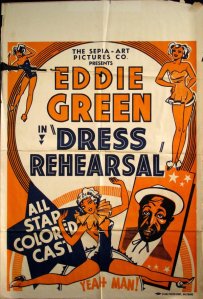
Eddie went on to become a filmmaker in 1939 making four movies Dress Rehearsal, What Goes Up, Comes Midnight and One Round Jones among other endeavors. In 1941 he joined the cast of Duffy’s Tavern where he became famous as one of America’s most beloved comedians.
 When I started this blog Eddie had almost been completely forgotten. Almost. Despite his many accomplishments in the entertainment world and the business world, despite the many friends he made and how widely he became known, beside myself, there were not a lot of people remembering that old comic, Eddie Green. I have written a biography about my father. (Eddie Green The Rise of an Early 1900s Black American Entertainment Pioneer, get it on Amazon). Since I wrote the book I have had someone tell me that I stopped the process of my father being erased from history. Wow.
I mainly started the project to show my young (at the time) grandson what a person could do regardless of the obstacles life throws at us. But as I researched my father’s life I realized that his story, so full of inspirational stories, could help so many people. That his story as a Black man born in 1891 could prove to be motivational to Black people for sure, but also to anyone who feels that the odds are against them. Maybe you have someone in your family you could write about. Or you just have some inspirational stories you think might be of help to others if they only knew about them. You too can stop the process of someone being erased from history.
 Hey, thanks, for stopping by.
Book: Eddie Green The Rise of an Early 1900s Black American Entertainment Pioneer
 This photo absolutely suits my mood in regard to Memorial Day. I would probably rather “celebrate” Veteran’s Day seeing as I intended to write a post about my father, Eddie Green, and his experience as an African American who enlisted in WWI. Then it dawned on me that Eddie was not one who died in service. I was going to talk about how Eddie was working in a theater in Philadelphia before winding up at a Chicago Training Camp. I wanted to add information about how African Americans had to tear off a piece of their Registration Card to signify their race. After I realized I needed to re-direct my idea for a post, I stumbled across an article in the Pennsylvania York Daily Record newspaper. The article was posted on this date May 27, 2018 earlier in the morning. So I have chosen to share this information instead, as it will do nicely to get my point across.
 York County Afro-American veteran George A. Wood was killed in action September 29th 1918 during World War I. Private First-Class Wood is honored on the bronze memorial tablets flanking Gate 4 at the York Fairgrounds. His surname is incorrectly spelled “Woods” among the 197 York Countians honored on the World War I panels, fronting four columns, at the York County Administration Center, located at 28 East Market Street in York, PA. (Stephen H. Smith, York Daily Record, May 27, 2018.)
 Ralph Wilhelm Cooper, 1908-1992. Actor, dancer, screen writer, emcee, choreographer (Shirley Temple-Poor Little Rich Girl). Ralph Cooper spent five years acting and directing in Hollywood and while there folks began calling him the “Dark Gable” because of his “handsome, rugged good looks and his charm and wit”. * I would like to say instead of giving him a nickname that reminds people of a White man, can we just say that this man was Ralph Cooper, a handsome, charming Black man who was very active in the world of entertainment in the 1920s, 30s and 40s. And beyond.
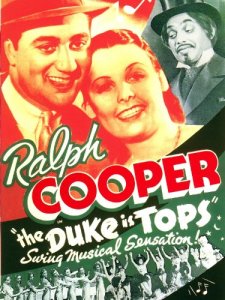 Like my father, Eddie Green, Cooper was also a filmmaker. Meaning he wrote, directed and starred in his own movies. In the late 1930s he was making movies during Oscar Micheaux’s filmmaking time (Micheaux began making films in 1915). He wrote, directed, produced or starred in at least fifteen films. My father began making his films in 1939, right about the time Cooper left filmmaking. In 1937, Cooper formed Million Dollar Productions with black actor George Randol and white producers Harry Popkin and his brother Leo Popkin to produce race films.
 Ralph and my father appeared on the same bill during those early days; their names are kind of close to the bottom of the ad as they had not “blown up” yet. But they must have met backstage. Maybe Eddie talked to him about making movies someday. Both Eddie and Ralph were successful in their chosen pursuits. Through their own talent and hard work. When it was truly a struggle for a Black man to get ahead. I salute my father and Ralph Cooper and their own special uniqueness in bringing a little entertainment into the lives of others.
 Joseph Bologne, Chevalier de Saint-Georges (December 25, 1745 – June 10, 1799) was a champion fencer, classical composer, virtuoso violinist, and conductor of the leading symphony orchestra in Paris. Born in Guadeloupe, he was the son of George Bologne de Saint-Georges, a wealthy planter, and Nanon, his African slave. During the French Revolution, Saint-Georges was colonel of the Légion St.-Georges, the first all-black regiment in Europe, fighting on the side of the Republic. Today the Chevalier de Saint-Georges is best remembered as the first classical composer of African ancestry.
 My father liked two things for sure: Pretty women and he liked being happy. From the first time he went out on the road with his first song in 1919, through his movie making days in 1939, ’40 and ’41 his ensemble included chorus girls and comedy. He even incorporated dancing girls, tap dancers, singers and comedic skits in his last 1949 movie that depicted Blacks and how they dealt with life after the Atom Bomb. For those new to this blog you can see his last movie on YouTube-it’s titled Mr. Adam’s Bomb. A young lady (Margaret Westfield) sings a song called “You can Always Believe Your Heart” which Eddie wrote. I am still looking for information on Ms. Westfield.
 Eddie became a household name as Eddie, the waiter in the radio program Duffy’s Tavern, during the last ten years of his life. Everyone loved Eddie. February is Black History Month. I am going to inundate social media with “fun Eddie stuff”. I want to get him as much exposure as possible. I want to get as many people as I can to experience Eddie’s good nature and for them to get a few laughs as well. I think our world could use uplifting right now. Eddie’s life story is truly inspiring. I will also be pushing the biography I have written about him, “Eddie Green The Rise of an Early 1900s Black American Entertainment Pioneer“, it’s much more fun that that “other” book everyone is talking about these days.
 In this still from Eddie’s 4th movie you can see that Eddie (in the striped shirt) liked being silly (which is why, I am sure I like silly jokes: What kind of flower is that on your face? Tulips!!! Hahahahaha!) There were even chorus girls in this movie.
 NORMA and EDDIE choose the name “ELVA” for their new daughter. Elva Green. This was of course a few years ago. Well, more than a few. I got the idea for this post because Kanye and Kim are trending on twitter because of their newest child’s name. I like to show my blog’s younger readers that famous couples have been trending in the news for years. Readers of today’s news have come up with all sorts of reasons K and K chose the name that they did for their child. And this reminded me that most of my life I have wondered how my father chose my name. Despite the fact that my name contains only 4 letters, people have mispronounced it always. Evelyn, Eva, Elvis, Alva, Elba. When I was a kid, the other kids called me Greenie stickum caps (I think some of you older folks might remember those).
 When my father was still alive, mom would put me in our Buick and drive me to see the street sign that read Elva Ave. It was located in Compton, California. I remembered looking at the sign out of the passenger window. So I thought I was named after that street for a long while. As an adult I wondered why that name was chosen for a street in Compton. In my lifetime I have met less than ten women named Elva. And none of them were Black. There were a lot of Black people in Compton when I was a child. I researched a bit and discovered Elva has roots in Scandinavia-I think it means “running brook”. Compton was named after a settler who travelled from Pittsylvania, Va., where Scot and Irish had settled.
 Well, here is the announcement in the newspaper about me and my name and my proud daddy. And my mom, the former Norma Amato. The name my father gave me has taken me around the world. I am proud of my name as I am sure Kim and Kanye’s daughter will be of her name.
 Articles like this one here are only to be found in the Black newspapers of the day-once I found out what those were all I needed was the time and patience to go through the archives. This article happens to mention the same program as the first article. The first article mentions a Clarence Robinson and his “Christmas Carols” show. I wanted to get some information about these folks before I typed this post. Well, typing in Clarence’s name into the internet to get some background on him got me nada. So I typed in “Apollo”.
 You’ll notice that Eddie was on this same bill with Jackie “Moms” Mabley. I discovered Moms Mabley when I was about sixteen. She cracked me up. Turns out that at the height of her career, she was earning US$10,000 a week at Harlem’s Apollo Theater. One of her regular themes was a romantic interest in handsome young men rather than old “washed-up geezers”, and she got away with it courtesy of her stage persona, where she appeared as a toothless, bedraggled woman in a house dress and floppy hat. I heard her talk about “George” and that white suit “I bought you”. She was too funny. And my father had once been on the stage with her. Remarkable.
 And this is Ralph Cooper, the originator and master of ceremonies of Amateur Night at the Apollo Theater in Harlem. Ralph, also known as “The Dark Gable” (so handsome) was an American actor, screenwriter, dancer and choreographer. Starred in “The Duke is Tops with Lena Horne” in 1938. Ralph was also a producer and a director and starred in at least ten movies. He was working in this capacity just ahead of Eddie who started his movie making career in 1939. Mr. Cooper was with us until 1992. I would have loved to have met him.
 On September 10, 1942 Eddie Green, my father, opened a dramatic training school in this building at 2352 Seventh Avenue, New York City. The school, called Sepia Artists offered services and classes for both amateurs and professionals. The Pittsburgh-Courier newspaper referred to Eddie in it’s article about the school as a comedian of radio and stage fame. I think it was a short-lived endeavor because in 1943 Eddie filed for bankruptcy. Before this from 1939 through 1941 Eddie was making movies and planning plans, so he had some money.
 An interesting fact is that this tree, The Emancipation Oak, stands near the entrance of the Hampton University campus and is a lasting symbol of the university’s rich heritage and perseverance. The peaceful shade of the young oak served as the first classroom for newly freed men and women, eager for an education. Mrs. Mary Peake, daughter of a freed colored woman and a Frenchman, conducted the first lessons taught under the oak located on the University’s campus. Classes continued with the The Butler School, which was constructed in 1863 next to the oak. One day in 1863, the members of the Virginia Peninsula’s black community gathered to hear a prayer answered. The Emancipation Oak was the site of the first Southern reading of President Lincoln’s Emancipation Proclamation, an act which accelerated the demand for African-American education. And Chauncey Northern was a part of this history. And Eddie was a part of his history. And I am a part of their history. Awesome.
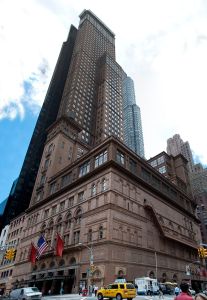 After Mr, Northern’s debut in Naples, he remained in Europe until 1937, when he returned to the United States and established the Northern Vocal Arts School at Carnegie Hall, where he taught until his death in 1992. The main hall of Carnegie Hall was home to the performances of the New York Philharmonic from 1892 until 1962. The building also contains the Carnegie Hall Archives, established in 1986, and the Rose Museum, which opened in 1991. Until 2009 studios above the Hall contained working spaces for artists in the performing and graphic arts including music, drama, dance, as well as architects, playwrights, literary agents, photographers and painters. The spaces were unusual in being purpose-designed for artistic work, with very high ceilings, skylights and large windows for natural light. In 1906 both Mark Twain and Booker T. Washington spoke here. Chauncey Northern had his studio here!
 An internet map. If my father was alive today he would be over the moon about the internet. According to the old Los Angeles California Eagle newspaper Eddie said it “was thrilling to talk to people all over the world”, and he said this way back in 1946 when asked about his hobby ham radio.
 This is an example of a ham radio set-up. Eddie had one in our basement on 2nd Avenue in Los Angeles in the 40s. When Eddie and my mom “motored” across the U.S. Eddie could also broadcast from his automobile. Mom said that he spent a lot of time in that basement talking to people from all walks of life. Eddie’s call letters were W2AKM. He got his ham radio license in 1925. A newspaper reporter saw his set-up at home and called it a private radio station!
 By 1939 Eddie had a ham radio set-up at this theater, the Broadhurst on 44th Street in New York where he was performing as KoKo, The High Executioneer in Mike Todd’s Hot Mikado, as well as a set-up in his apartment at 120 W. 138th Street in New York (W2AKM—Edward Green, 120 W. 138 St., N. Y. City. Radio Amateur Call Book Magazine). During this same time the 1939 World’s Fair was happening and Eddie spent a lot of time commuting between Harlem and Flushing Meadows just so he could spend time at the communications exhibits. I read that he had been cited by the government for his work with ham radio, and had written a few articles, but I could not find any actual corroboration.
 Eddie continued this hobby until his passing in 1950. By the time he was doing Amos n Andy shows he would communicate with Freeman Gosden (Amos) in Beverly Hills, another ham operator, with engineers at NBC and with others around the country. I imagine he would be happy to know that according to an estimate made in 2011 by the American Radio Relay League, two million people throughout the world are regularly involved with amateur radio. This is not a good picture but I put it in because Eddie’s call letters for his station are the teeny pin on his lapel in the bottom right hand corner.
 I WISH FRIENDS, FAMILY, FOLLOWERS, VISITORS AND ALL THOSE YOU LOVE A HAPPY AND SAFE THANKSGIVING DAY. I AM THANKFUL THAT THIS BLOG CONTINUES TO ATTRACT ATTENTION, ESPECIALLY AS I BEGAN AS A NEWBIE WITH MY FIRST EVER LAPTOP THAT I GOT FOR A STEAL PRICEWISE. I KNOW THIS WAS MEANT TO HAPPEN NOT JUST TO SHARE MY WRITING JOURNEY BUT BECAUSE I HAVE MET SO MANY WONDERFUL PEOPLE. HAVE FUN!
 pininthetush