
Too tired of US politics. Going to talk about my father. Hello good people. Maybe I would have done a blog about something scary for Halloween, but I had my trick yesterday-someone egged my car. Right in front of my abode. The freaks were out last night! You ever had to clean egg off of your car? I didn’t even get angry. Another thing that is just not worth the energy. Focusing on my father feels good to my soul, so I post a lot on Social Media about Eddie. Then I forget what I put online. Someone found this photo I posted with an article about 2 years ago on Twitter and they Retweeted it!. They liked it that much. And that made me feel good. It really made me LOL.

In 1929 Eddie was in a musical called “Hot Chocolates”. He wrote a couple of songs and he wrote the comedy sketches. One sketch was “Sending a Wire”. A newspaper article read: The Brooklyn Daily Eagle said “The whole town is talking about Eddie Green, prime colored comic, who will put on one of the funniest skits on the stage. He will dash from the Hudson Theater immediately after the final curtain to the National Broadcasting Company where he will re-enact his side-splitting “Telegraph Office” skit for Commander Byrd and his crew.” (Brooklyn Daily Eagle July 18, 1929).
Seeing this photo again made me wonder why a skit about a telegraph office would be funny. Eddie was trying to send the wire and James Baskette was the clerk. Sending a telegraph or “wire” was the thing in 1929, it was fast and you could communicate with people across the world. It led to the telephone, the fax machine and now the internet, losing favor after the 1929 stock market crash. However Eddie kept up with the times in his comedic sketches, and the telegraph would have been of interest to him as he was already a ham radio operator (had his own station) and he loved to communicate with people all over the world. The internet would have been right up his alley.
Well, Warner Bros. certainly liked the sketch as they produced a film for their Vitaphone Varieties series. The skit from “Connie’s Hot Chocolates”, “Sending A Wire”, became a Warner Brother’s Vitaphone film that was said to be the funniest Vitaphone comedy act “which has yet been produced”, and that it “kept thousands shaking with laughter.” The film is registered in the Library of Congress as Sending A Wire, Eddie Green and Co. (Warner Bros. (as The Vitaphone Corporation) 1929 Sending a Wire © September 28, 1929 Murray Roth (director); Eddie Green with Jimmy Baskett & (NYC) (vitaphone varieties – Cinematop). There is just the one film in existence and I will probably never get to view it, but just knowing it exists helps me know my father as an entertainer.
This was all so long ago. Even before my mother met my father. As a matter of fact she was only six in 1929. Eddie was 30 years older. Chronicling my father’s life has been deeply satisfying. I know my own positivity comes through Eddie. (My inner sarcasm comes from Mom.) My ability to laugh out loud comes through him. I used to tell her I was funny because Eddie was (she didn’t think I was funny). It’s good to be able to keep Eddie’s name and face in the fore of people’s memories. I feel much better now. I love you, Eddie.
Friends and family, stay safe, love each other and thanks, for stopping by. 🙂
 I’m mortified. I have not posted for almost two weeks. Periodically, my depression gets the better of me, plus it’s been as high as 117 degrees where I live, so, I have isolated. When up I have focused on gaining followers to my other social media sites. This month it has been two years since the biography I wrote about my father, Eddie Green, was published. Approximately one year since I won the Foreword INDIES 2016 Bronze Book Award for the book. I set up this blog in 2014 for the specific purpose of chronicling my book writing journey and to have a “platform” as those in the know suggested.
 I began the research for the book in the late 1990s. It has all been worth it. And then some. Since the book was published I have begun getting all sorts of new information about Eddie. People have sent me never before seen pictures of Eddie. They have sent me new newspaper articles. I have heard new stories from old timers who showed up at my library presentations. I have met thee nicest, helpful, caring people. Gaining new information and meeting new people has spurred me on to further research about Eddie. The information I have found is adding up to me being able to possibly write another book. For instance, in regard to a play titled Playing The Numbers to be shown at the Lafayette Theater in New York, 1925: “Therefore Eddie Green who had been an Important comedian in the Apollo cast was commissioned to organize a miniature stock company that each week will present a 45 minute performance that will consist of musical numbers and burlesque comedy bits. The bits, however, will be revised by Eddie to conform to the special requirements of the neighborhood.” I knew Eddie had been a part of the play but now I’ve learned how big of a part he really played.
 In order to not share too much of the new stuff here and also to phase out of sharing stories from the first book, I will be posting additional information on little known and sometimes well-known pioneers of the entertainment industry and/or pioneers of civic issues. Earlier this morning on a news site I saw “Today in History”. Out of 24 items listed, only 2 were about Black people. One item was: 1960 Fifteen-year-old Brenda Lee earns a #1 hit with “I’m Sorry”. As you can see she actually also recorded my father’s song! The SECOND item about a Black person was: 1995 Barack Obama’s “Dreams from My Father” is published. Yay!!
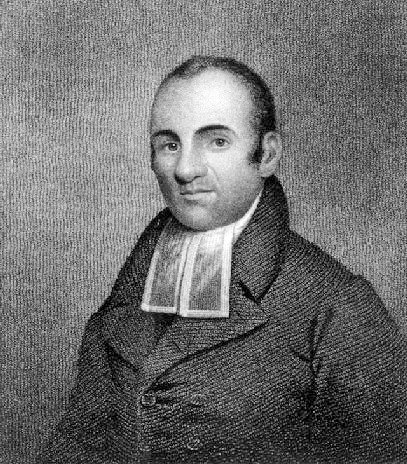 I am adding one more which kind of goes with today’s climate: Lemuel Haynes, first Black to serve as minister to a White congregation, born July 18 1753 to a White mother and an African-American father. At the age of five months, Lemuel Haynes was given over to indentured servitude. He was freed in 1774 when his indenture expired. Haynes was ordained in 1785 and settled at Hemlock Congregational Church in Torrington, Connecticut. He was the first African American ordained in the United States. On March 28, 1788, Haynes left his pastorate at Torrington to accept a call at the West Parish Church of Rutland, Vermont (now West Rutland’s United Church of Christ), where he served the mostly white congregation for 30 years. Fun Fact: Haynes himself was known to say that “he lived with the people of Rutland thirty years, and they were so sagacious that at the end of that time they found out that he was a (insert N-word here), and so turned on him”. (
 This photo absolutely suits my mood in regard to Memorial Day. I would probably rather “celebrate” Veteran’s Day seeing as I intended to write a post about my father, Eddie Green, and his experience as an African American who enlisted in WWI. Then it dawned on me that Eddie was not one who died in service. I was going to talk about how Eddie was working in a theater in Philadelphia before winding up at a Chicago Training Camp. I wanted to add information about how African Americans had to tear off a piece of their Registration Card to signify their race. After I realized I needed to re-direct my idea for a post, I stumbled across an article in the Pennsylvania York Daily Record newspaper. The article was posted on this date May 27, 2018 earlier in the morning. So I have chosen to share this information instead, as it will do nicely to get my point across.
 York County Afro-American veteran George A. Wood was killed in action September 29th 1918 during World War I. Private First-Class Wood is honored on the bronze memorial tablets flanking Gate 4 at the York Fairgrounds. His surname is incorrectly spelled “Woods” among the 197 York Countians honored on the World War I panels, fronting four columns, at the York County Administration Center, located at 28 East Market Street in York, PA. (Stephen H. Smith, York Daily Record, May 27, 2018.)
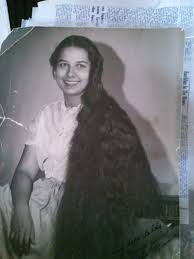 My family is connected with an important part of history. In the book I have written about my father I included a chapter on my mother, Norma. I don’t write about her often, except on Mother’s Day and when the date of her death comes around or the date of her birthday, which is on November 17th. This is Norma about 4 years before she married my father. But the history I want to write about started with my maternal grandmother.
 My mother’s mother was born in 1896, her name was Sinclaire White. In 1912 Sinclaire got a mention in The Crisis magazine for her skills as a violinist. The second photo here is the cover of that 1912 issue. The lady on the front is not Sinclaire. I only ever saw one picture of my maternal grandmother and I do not remember her as she died when I was a year old. My siblings never knew her or even saw a picture. Nor was she ever talked about as we grew up. As a violinist she was magnificent. Later in life she taught violin. Inside this magazine in the MUSIC AND ART section is this article about my grandmother:
 At the time The Crisis was a very influential magazine. Published by W. E. B. DuBois who was also a co-founder of the NAACP. William Edward Burghardt “W. E. B.” Du Bois (February 23, 1868 – August 27, 1963) was an American sociologist, historian, civil rights activist, Pan-Africanist, author, writer and editor. Due to current racial issues he and the NAACP have been in the news more often, lately. I love his picture. It’s possible Sinclaire knew DuBois.
 Sojourner Truth (1797 – November 26, 1883) was an African-American abolitionist and women’s rights activist born into slavery in Swartekill, Ulster County, New York. We didn’t talk much about Sojourner Truth when I was growing up, but they obviously recognized her in Pasadena back in the day and Sinclaire had the good sense to hold her meetings in a building named after a woman who would become a force in 2017. As of today Truth’s statue will stand on the Empire State Trail in Ulster County.
 Inspire someone today. I chose to write a book “Eddie Green The Rise of an Early 1900s Black American Entertainment Pioneer” to inspire my grandson. He was six when I came up with the idea, he is twenty-six today and the book just published in July of this year.
 My desire to inspire my grandson with his great-grandfather’s story morphed into wanting to inspire any person who thinks “they can’t .” So I was blown away with the interest generated by this book in the Nostalgia field. I have discovered that a lot of people knew about, remembered and have actually seen my father perform. I have been made aware of the fact that there are young people who are fascinated with success stories from the 1900s, for the very reason I wrote the book, inspiration. Also, I have happily realized the interest this book can garner in the Black community as a success story of a Black man, both personally and professionally, in a time of great racial discord.




 This movie, written, directed and produced by my father, Eddie Green, in which he also starred, prompted one journalist to refer to Eddie as the “comic movie making mogul”, because the movie proved to be quite popular.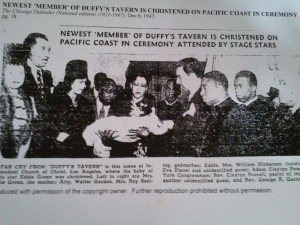
 pininthetush