Look What I Found!


252652590777_1_0_11
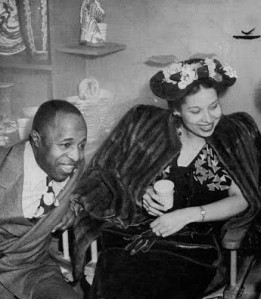
Ernie Whitman, Lena Horne, Eddie Green (my father)


Family, friends, young and old, prepare to be blown away.. Here is a photo of Ernie Whitman, Lena Horne and my father, Eddie Green! My publisher told me I would find more information on my father once I published the book and he was right. For whatever reason I decided today to search for new pictures of Eddie, so I went to Google Advanced Search and typed in Eddie’s and Lena’s names (I chose Lena because she and Eddie performed together and for once I was “thinking outside the box”) and Lo and Behold there they were. This photo was taken back in the 1940’s while they were waiting to perform on a Jubilee radio show for our troops in WWII.

For those who don’t know:

Ernie Whitman .(February 21, 1893 Fort Smith, Arkansas – August 5, 1954 Hollywood, California) was the wartime host of the Jubilee radio show aimed at African-American troops and he was a stage and screen actor appearing in such films as
The Green Pastures (1936), Jesse James (1939), Gone With the Wind (1939), Third Finger, Left Hand (1940), Among the Living (1941), Road to Zanzibar (1941), Cabin in the Sky (1943), Stormy Weather (1943), The Lost Weekend (1945).

Lena Mary Calhoun Horne (June 30, 1917 – May 9, 2010) was an Award–winning jazz and pop music singer, dancer, actress, and civil rights activist. Horne’s career spanned over 70 years appearing in film, television, and theater. Her film appearances were many including Cabin in the Sky (1943) and Stormy Weather (1943). There may be some younger folks out there reading this blog who have never heard of Lena Horne (what!!). She was beautiful and sexy and someone said she had a sultry voice.

Anyhow, finding this picture was a new thrill for me today and helps to keep me motivated to write these posts and also to get out and market my book. This month I will be visiting libraries in California performing readings for nostalgia buffs and spreading the word. I will probably “tweet” the dates and places.

In my book Eddie Green The Rise of an Early 1900s Black American Entertainment Pioneer I have included a portion of a Jubilee radio program these three did together in 1942.

If you haven’t read the book yet, you might want to check it out. I’m told that it is an enjoyable read. (Christmas is coming!)

Thanks for stopping by and KCB.

(photo provided by ebay on Google Advanced Image Search)


Find Something You Like To Do & Spread The Love

dowhatyoulike

I like to gather knowledge. I like to read. I like to go to the Library. So the next phase of my book writing venture should bring me pleasure. I will be contacting libraries in Cali to inquire about whether they would be interested in having me visit their library to discuss my book with their patrons and/or if they would allow me to post my brochures, bio or bookmarks at their facility. My publisher says do California first then if I want branch out to other states. I must spread the word about the biography I have written on my father “Eddie Green The Rise of an Early 1900s Black American Entertainment Pioneer.” I am also currently in the process of arranging some kind of presentation here in California at a local museum.

The research I have done has shown me how knowledge provides a real connection to other people and places. I have recently discovered two people, miles apart, who found what they liked to do and did it the best they knew how which enabled them to find success and happiness in life. And both of these people connect directly back to me socially. The first person is a woman by the name of Mayme Clayton, the second is a man named Charles I. D. Loof. Hopefully Worpress will work with me and leave my pictures where I place them, if not I am sure the reader will be able to tell who’s who. (the photo at the top of this post is a copy of an album cover from Taio Cruz from 2015, I love the red.)

Mayme A. Clayton, Ph.D. (1923-2006) founded MCLM in 1975 as the Western States Black Research Center (WSBRC). Dr. Clayton, a university librarian, collector, and historian, believed that preserving and sharing the scattered and often neglected history of Americans of African descent was vitally important for current and future generations.

220px-mayme_agnew_clayton

Dr. Clayton liked collecting African-America memorabilia. The collection was initially housed in a renovated three-room garage at the rear of Dr. Clayton’s home, located in the Los Angeles community of West Adams. Over time the collection began to outgrow the garage.

Today The Mayme A. Clayton Library & Museum (MCLM) is home to the Mayme Agnew Clayton Collection of African-American History and Culture. The collection contains over two million rare books, films, documents, photographs, artifacts, and works of art related to the history and culture of African Americans in the United States, with a special focus on Southern California and the American West. The collection is one of the most important collections chronicling the history and culture of Americans of African descent in the United States of America. I discovered a 1938 autographed photo of my father at this museum in 2015. Hopefully, I will do a presentation about my father’s filmmaking, at this facility. Dr. Mayme Clayton achieved success in the pursuit of what she liked to do. And provided me pleasure.

Charles I. D. Looff was an American master carver and builder of hand-carved carousels who was born in Denmark in 1852 and emigrated to the United States in 1870. After working in a furniture factory all day, he took scraps of wood home to his apartment and began carving them into carousel animals. Young Looff assembled his wooden horses and animals onto a circular platform and created his first merry-go-round. In 1876, he installed his ride at Lucy Vandeveer’s Bathing Pavilion at West Sixth Street and Surf Avenue. This was Coney Island’s first carousel and first amusement ride. charles_i-_d-_looff

In 1909, Charles I. D. Looff built a beautiful carousel with 54 horses and presented it to his daughter, Emma, as a wedding present, when she married Louis Vogel. The ride was installed at Natatorium Park in Spokane, Washington. This ride has been restored and operates today at Riverfront Park in Spokane. When I went to Spokane to visit my brother’s family on November 16th of this year, they took me on a mini-tour and I saw this carousel. I decided to research Charles Loof.

Imagine my surprise when I discovered that in 1916, Looff with his son, Arthur, came to California and designed and built Looff’s Santa Monica Pier along the south side of the city’s long, narrow, municipal pier. They constructed a large Byzantine-Moorish style “Hippodrome” building to house one of their ornate carousels, now known as the Santa Monica Looff Hippodrome. The Looffs also erected the Blue Streak Racer wooden roller coaster on their new pleasure pier, along with The Whip and the Aeroscope thrill ride.

In addition to Santa Monica and the Pike, Looff built and operated amusement parks and carousels at Ocean Park, Redondo Beach, Venice Beach, and Santa Cruz, as well as Griffith Park in Los Angeles (still in operation)
Did I used to go to the Pike back in the day and the Santa Monica Pier? Have I been on the Santa Monica carousel? You bet I have. Did I used to Love to go on the Griffith Park carousel and try to grab the golden ring? You bet I did!
Mr. Loof liked to work with wood. He liked making wooden animals for his carousels. He was the best he could be at what he liked to do and he became a successful man. He provided me with hours of pleasure as a child when my mom would take me to Griffith Park.
The search for knowledge provided me with a new, relevant connection in Los Angeles, a loving visit in Spokane (with tour) and connected me back to happy memories in Los Angeles. Strangers, relatives and friends blending together. I love it!
Thank you so much, for stopping by.


BOOK REVIEWS: YESTERDAYUSA

yesterdayusa

In September of 2016 I was interviewed on Walden and Patricia’s Open House on the above named internet radio program. Patricia sent me an email after the interview and following is a portion:

QUOTE FROM PATRICIA (Walden and Patricia’s Open House) INTERVIEWER FOR YESTERDAYUSA INTERNET RADIO, SEPTEMBER, 2016:
“We have had calls and emails from listeners telling us how much they enjoyed you and were feeling so good about learning about your father, his work, the culture at the time, the people in the entertainment industry who would otherwise be forgotten So from them, too, thank you.

I tried to explain to Walden (her husband) – and probably didn’t do a very good job of it – what a remarkable and seamless blend of personal thoughts and feelings you captured (which added such warmth and life to the book) while at the same time maintaining an objective distance that made the book impartial and educational and Eddie Green captivating. I will add my comments on the Amazon site this week.

I have a hard time helping people grasp how much I love and appreciate American history, overt and obscure, but most especially the stories and experiences we would never know about except for people like you who put in the time and love to share it. What you share in your book is more than a gift for all of us.”
It is so good to receive messages such as this one and I want to thank Patricia and Walden again for having me on their program.
Thanks for stopping by and may you be inspired.


SPREAD THE INSPIRATION

6765541_1_lThis movie, written, directed and produced by my father, Eddie Green, in which he also starred, prompted one journalist to refer to Eddie as the “comic movie making mogul”, because the movie proved to be quite popular.
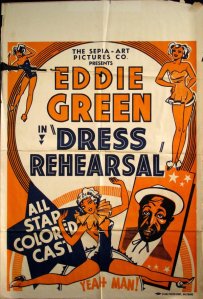
Dress Rehearsal (1939) was Eddie’s first movie that was released under Sepia-Art Pictures Co. (which Eddie owned) at the 125th Street Apollo in New York on October 21, 1939. The film was also shown in the Lichtman chain of theaters in the South. Eddie’s sales manager reported that after the first showing of the movie the “White as well as the Black audiences grabbed at it greedily.” And that due to this unexpected phenomenon “the entire plant had to be reorganized.” The “plant” being Eddie’s movie studio in Palisades, New Jersey.

The next “first” for Eddie is that in December of 1939 the National Broadcasting Company (NBC) picked Dress Rehearsal for broadcast over their television station in New York, making this movie the first Black (Negro in those days) motion picture to be sent out over the air.

Unfortunately, I have yet to locate copies of this film, although I do have copies of a script. The original script is kept in the Margaret Herrick Museum which is a non-circulating reference and research collection devoted to the history and development of the motion picture.

Today, I am looking forward to my first “First,” my upcoming book signing event. On November 9, 2016 at 7:00PM PST I will be at Book Soup in Los Angeles signing Eddie Green The Rise of an Early 1900s Black American Entertainment Pioneer. When I started this book writing venture I concentrated only on research and writing. I intended to present this book to my grandson as inspiration to go forward with his life. It turns out that my father’s story has provided inspiration for me and a lot of other people who have read the book or seen this blog. During this process, however, it never dawned on me that I would have book signings.

To paraphrase Norma Desmond, after this book signing there will be another one and another one! I already have two invites. This first one though has become a sort of celebration for me so I am having snacks, and a comedy clip and a reading and a raffle. And of course my marketing continues. I have become a part of a couple of social media sites and I am beginning to be a bit more outgoing in regard to “selling” the book.

One thing I know is that if I have a desire to do something, I can. And if the something I want to do gives me pleasure I will take the necessary steps to get it done. My father was a good example of that. Anyone can do the same. I appreciate my followers on this site because they help me to keep writing.  I hope you will mention this blog to others so that we can spread the inspiration.

Thanks, for stopping by and KCB.


Keeping my eye on the Beauty of the World

millicent-and-eddie
Millicent Roberts receiving award from Eddie; with Miss Futter and Miss Graves.

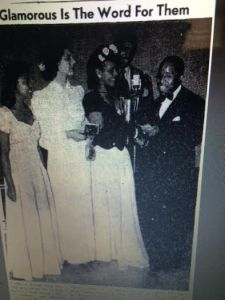
Article in the Norfolk Journal and Guide: Some of Harlem’s most beautiful girls turned out for Eddie Green’s Second Annual “Night of Glamour”, last Thursday night at the Renaissance Casino when the popular comedian offered valuable prizes plus a movie contract with his Sepia Art Pictures Company. Eddie is standing next to the winner Millicent Roberts Miss Glamour.


As well as being a filmmaker, stage star, old time radio icon and composer, Eddie was also well-known for holding beauty contests, usually in Harlem, that featured beautiful Black women. He even put together the Miss Sepia America contest which was held at the 1939-40 World’s Fair in New York. There was a pavilion at the fair that showcased exhibits for and about Black people (though today it is difficult to find mention of this). 5814421775_46ea0e10b6_b

As I have mentioned in former posts Millicent (Miss Glamour) is still with us. She is a living testament to the fact of Black beauty contests. I don’t think we have those anymore.

My father believed in promoting Black people. Through beauty contests or in his movie studio and in his office. His letterhead from his movie studio read “Producing the best in Moving Pictures, of, by and with Negroes.” (We were negroes back in Eddie’s day and proud of it.)

Eddie possessed the ability to get along with people though, be they Black or White, men or women. It’s what helped propel him through his career as a comedian. It helped him work at the Apollo drilling white chorus girls for 45 weeks, and this was such a big deal it was written about in the local newspaper.

Lately, I have found it difficult to write upbeat posts because of the recent shootings of Black men. Eddie must have been extremely upset though back in the early 1900s. But he focused on the goals he wanted to achieve. He was a good husband to my mom. He was all-business when he was supposed to be. And he was a funny, if droll, comedian. People liked to see him coming. Eddie lived a good life through hellish times for Black people. Eddie lived through the depression, hellish times for everybody. And he just kept going.

I feel for all those who are losing loved ones to violence. And I know that positivity exists.

Thanx for stopping by and don’t forget to check out my book Eddie Green The Rise of an Early 1900s Black American Entertainment Pioneer

http://www.bearmanormedia.com


Scene 2 – Little Miss Fresh Mouth

h3257-l74549107

During the process of researching information on my father’s life for the biography I have written, I began to realize that not only would I learn interesting facts about my father during this research but that I would also learn new and interesting facts about those with whom he worked. As this writing process went on I found that the more I discovered, the more I discovered. And somehow the discoveries made in the latter part of my research matched up with the earlier discoveries.

For instance, in a 1940 Baltimore newspaper article, my father says that an important point in the making of any motion picture, but particularly in photographing Black actors, is an experienced cameraman, because of the wide variety of skin colors and tints to be found in the Black race. The article noted that Eddie said the cameraman he used most of the time was Dan Malcomes, a veteran when it comes to cameras.

In order to use this information in my book I began to research Dan Malcomes. I started this research in 2014. In 2015 I learned that a Don Malkames had worked as a cameraman back in 1939 for a Mr. Joseph Seiden of Seiden Cinema, located in Fort Lee, New Jersey, which is where movie-making was done before there was Hollywood. Mr. Malkames was the cinematographer on the movie Paradise In Harlem (1939) which was directed by Joseph Seiden.

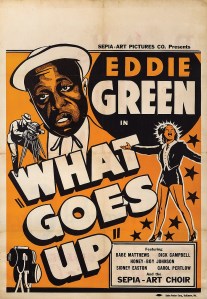
My father, Eddie, also made a movie  that year (wrote, directed, produced and starred in) titled What Goes Up, in his movie studio in Fort Lee, New Jersey, Sepia Art Pictures.   Through more research I discovered that the cameraman that Eddie worked with for his promotional photos was in fact, Don Malkames, miss-printed in the newspaper as Dan Malcomes. A search on the Internet today will show a listing of the different spelling versions.

Two of the stars in Eddie’s movie What Goes Up were Bebe Mathews and Sydney Easton. Two of the performers in Paradise in Harlem were Bebe Mathews and Sydney Easton. What I find unsettling is that the Paradise movie can be found on the internet, but Eddie’s movie has disappeared.

That What Goes Up has not been found is unfortunate too, because in 2015 as some of you may know from an earlier post, I received an email from the granddaughter of a woman who was an actress in the movie. The actress’s name is Millicent Roberts and she is now ninety-nine years of age. She is one of the ladies who was picked up by a chauffer and driven to the set in New Jersey to rehearse and perform her part as “little miss fresh mouth.” She told her granddaughter that she remembers the White cameraman who took her promotional bathing suit pictures on the set. (Eddie’s movie set was all-black except for Don, on purpose.) Millicent says that the pictures “were glamourous, just like Hollywood photos.”

The one thing that Millicent, who lives on the East Coast, would like is to see the movie What Goes Up again. A few of our friends are endeavoring to discover the whereabouts of the physical copy of this movie.  Maybe you beautiful people out there could keep an eye out, also. The movie premiered at the Apollo in New York in 1939.

Millicent has seen the photographs that were taken of her but was never given copies. Thanks to the internet I found out Mr. Malkames’ relative Rick Malkames has followed in Don’s footsteps and currently is head of The Malkames Collection.  I was able to send an email but they have nothing in their archives.

Millicent and Eddie
Millicent and Eddie

Now that I have written Eddie’s biography, Millicent’s granddaughter has bought the book and reads portions of the book to her. She says her grandmother “is just beside herself(lol!!!)”.

I am going to end with this quote from Millicent’s granddaughter in regard to the book because I never expected to receive such a powerful response or such a wonderful compliment. Very positive!

“It (the book) is also an inside look at the resilience and fortitude of our brothers (Black Men) like Eddie -who were clearly brilliant, talented, and resourceful in a time when we (Blacks) were considered to be nothing of the sort! This book should be required reading in African American History courses in every College and University!”

BLACKARTMATTERS-A Good Man is Hard to Find

Out of necessity I am getting better and better at cutting and pasting on my posts and I have posted a GREAT link.

A while back I submitted a story to an online electronic magazine Unlikely Stories Mark V. Unlikely Stories Mark V is the new incarnation of the electronic magazine, Unlikely Stories, which has been published on the Web, more-or-less continually, since 1998 publishes poetry, fiction, and creative non-fiction, especially firsthand accounts of sociopolitical activism. They publish galleries of visual art, music, spoken word, other forms of aural art, and audiovisual presentations.

Below is a link to the magazine. Once there scroll down till you see “A Good Man Is Hard to Find”, (the title of my article) By: Me. I wrote a good article but Unlikely Stories put a spin on it that you will love, I know I do.  Check it out and enjoy! The article begins thus:

Eddie Green, legendary filmmaker, star of movies and Broadway, Old Time Radio Icon and composer, was born in Baltimore, Maryland in 1891 and died in Los Angeles, California in 1950. He achieved fame as an actor and comedian, and was well-known as an entrepreneur as the owner of two movie studios and a string of restaurants. As a composer of music, Eddie wrote over twenty songs. His first song “A Good Man is Hard to Find” written in 1917, is still being recorded almost one hundred years later.

http://www.unlikelystories.org/

Research in Black Culture-A Celebration

momwithfur (2)The latest good news is that the biography I have written about my father, Eddie Green, will now be featured in the Schomburg Center for Research in Black Culture in New York.
The picture I have posted with Eddie and Mom (Norma) is in the Eddie Green Portrait Collection also at the Schomburg. I did not put this picture in the book because I do not own the photo. But I want to show it off here because these two look like they are enjoying the good life. Mom made her own hats back then. I don’t remember that fur coat but I do remember her fox fur stole. She kept it in that drawer that I wasn’t supposed to open.

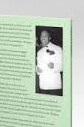
If you have bought the book (thank you so much!!), you will see a picture of Eddie in a white suit and black tie, I was able to purchase a copy of the picture from the Schomburg and it works perfectly for my back cover.cropthisforpost (2)

As a filmmaker, movie and Broadway star and Old Time Radio Icon, Eddie was always sharp. He was a good business man. He was well-read. Eddie travelled with his books. He had his own library at the Hudson Theater in New York. They say a lot of those old time vaudeville actors read a lot of the classics in order to come up with ideas to incorporate into their funny skits, similar to a reference to Shakespeare’s Hamlet that was used in an old Three Stooges movie:

” Among the insane sights in this Stooges short is a burro wearing galoshes. The burro is named “Yorick,” and when it appears it was accidentally blown up, yes, we hear: “Alas, poor Yorick. We knew him well.”

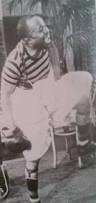
Eddie was a comedian. A good comedian. He was funny, someone said he could not open his mouth without being funny. He didn’t mind acting funny, either.eddiegreensillyphotoas he did in his movie One Round Jones.

Over the time it took for me to write the book, I have had a number of people tell me that Eddie is looking down at me and smiling (even the lady who has my first consignment said it). I don’t know if this is so, but if it is he can now be proud that in 2016 both of our works are housed together in the same public access building in New York. I know I am proud. Thank you Schomburg Center for Research in Black Culture.

And thank you, for stopping by and celebrating with me.


IF IT WAS NOT FOR EDWARD

myfamblyIf it wasn’t for Edward, I may not have written a book about my father.

My father’s birth name was Edward and he later changed it to Eddie. My grandson’s birth name is Edward (for reasons other than what one might think), and he later began to go by Eddie. The picture on this post is Melony (my gorgeous daughter), Edward (aka Eddie) and me, Grandma. Edward is about 24 in this picture and he was about six years old when I conceived the idea to write a book. This picture was taken about two years ago and my book has been published as of this past June.

My father, Eddie Green, died when I was a little child. I grew up with the knowledge that he had been “somebody” in the entertainment industry, but it had never been paramount in my mind. As a youngster I wanted to be an entertainer, I wanted to be a singer and entertain the world. When I thought I had said something funny, I would tell my mother it was because Eddie (the comedian) was my father. But I never wanted to write a book about my father.

I became aware as I got older that my father had been a successful man, as an actor, a composer, filmmaker, singer and Old Time Radio personality, especially as he was a Black man coming along in an era of major struggles for Black people trying to get into show business. Still, I did not consider writing a book. I was proud of the fact that my father had been in show business. I was proud of the fact that he wrote the song “A Good Man is Hard to Find”. I even heard Alberta Hunter singing the song on the Jazz radio station in Los Angeles in the 80s. Cool.

And then Melony had Edward. And then Edward began school, which meant homework. Nobody likes homework. Homework is hard. I think Edward is a genius now, but back then he had trouble with homework and when he was told to do his homework, he would say “I can’t”! Well, what grandma wants their grandkid to grow up thinking they can’t? So, I got the brilliant idea to use my father, his great-grandfather, as an example of what a person CAN do, no matter what. And so began the process of research.

Little did I know that Eddie’s career as an entertainer and as an entrepreneur was far greater than I had thought. His life story truly was inspiring. And could inspire other people struggling with the seeming difficulties in life. The fact that Eddie was a Black man born in 1891 who attained certain heights in what was seen as a White man’s world just made his story more awe-inspiring, to me. Being a modern Black woman, I had to get over my feelings of discomfort when I saw my father in black-face on stage on television,  I researched the issue and gained a better understanding of why. But the fact that my father is one of the first Black men to be  on the first RCA-NBC 1936 test demonstrations of television BLOWS me away. The man is on the internet today! He looks funny, but if it had not been for people like Eddie back then, Blacks would probably not be where they are today. If it had not been for people like Eddie, who rose against all odds, I would not have this story to tell to provide motivation to anyone who needs it.

If it had not been for Edward, my grandson, I may not have known that I could write a book. He told me after the book was written that “no matter what else happens, just remember that you wrote the book”.  (He is a genius) And that was the point. To write a book demonstrating a persons ability to achieve success in their endeavors, no matter what.

Wow, I was long-winded today. Hey, thanks for stopping by.