

The other day I was browsing my facebook friend’s comments and I saw a comment regarding a Black Male Opera Singer. I had not heard of this person before and said so in my reply. My friend sent a message back: “You’ve never heard of George Shirley? Where have you been?” Well, I thought, for the past __-odd years I’ve been right here on planet earth. But I had not heard of Mr. Shirley. He probably had not heard of me, either. Although my mother had been an aspiring opera singer before she married my father back in 1945. So, from the beginning of my life I was immersed in the world of opera through my mom. I saw my first opera at the Shrine Auditorium in Los Angeles-Hansel and Gretel. I still have the memory of my mother practicing Ave Maria on our piano. I was assaulted every day by mom’s opera records that she played loudly while she cleaned. But she either played Marian Anderson or Madama Butterfly or some other female, I don’t remember hearing male opera stars in our house.
As a child it never dawned on me to question the race of the stars I heard. I didn’t really take note of that until I became an adult. Probably not until I saw my first “Porgy and Bess” where I fell totally in love with Porgy, he was handsome, well-shaped, and that voice! Before seeing this guy, I knew of the four tenors, Jose Carreras, Placido Domingo, Mario Lanza, and Lucianno Pavoratti. I knew of Rossano Brazzi, who began early as a child in an operatta, and who I heard in “South Pacific”. I still get chills watching him sing to the woman in the movie. I knew of Nelson Eddy and Jeanette McDonald (I love her voice) from watching them in movies on television. Of course, I heard my mother sing. I found out much later that she had been a favorite back in the day through an article in The California Eagle newspaper that said: Tip to Talent Scouts: Keep your ears on Norma Amato’s delightful thrushing. She has the kind of voice you hear only in a dream.
As I got older I began to realize the presence of Black female opera stars such as Kathleen Battle and Leontyne Price. They began to have a forward presence in my brain. But I just had not taken a lot of notice or even cared about seeing more Black male opera stars. I blame this on my parents. Well, on my mom and my step-father, and my aunt Dot. They didn’t play male opera singers on their record players. They played Big Joe Turner or Joe Williams, Black jazz singers, or Nat King Cole. My aunt Dot was a Dinah Washington fanatic and LOVED Billy Eckstein! Their album covers were always prominent (my relatives did a lot of partying). But I never saw one Black male opera star album in our house. I saw Black boxers on TV ’cause my step-father loved boxing. Plus we never discussed race in our family. Definitely not as it pertained to progress.
Except when it came to sports. Baseball, Boxing, Football, Boxing, Boxing. Basketball. Mom and my step-dad even had a bookie joint going on in one of our houses. Then I was out on my own and the seventies came around and the party was on in my life. Black male opera singers were the furthest thing from my mind. Give me some James Brown, Teddy Pendergrass, Lionel Ritchie, 50 cent, Johnny Mathis, Run DMC, babee. Now, today, I have gained some new knowledge. I’ve been introduced to the singing of Black male opera singer George Shirley.
Mr. Shirley has a beautiful voice. His voice reminds me of what it is I like about the opera. The voices touch my soul, and my heart. They transport me into a different realm. They bring me peace and love. I think my mother should have introduced me to more opera sung by Black men. I think Black parents should tell their kids about Black male opera singers, not just Black sports figures. We have so many talented Black men in this field. They deserve a bit of adoration, too. And a lot more mention, in my opinion.

In 1961, George Shirley won the Metropolitan Opera Auditions thus becoming the first African American tenor to be awarded a contract with the Met as a leading artist, the beginning of an eleven-year association. Over the span of his career, George has had a vested interest in helping African American students reach their full potential. In 1962 Leontyne Price and George Shirley two Negro-American
singers will be featured as stars of two operas that are already sold out.
In 2015, through my research During the writing of my father’s biography I did learn of another Black tenor who was my father’s friend, Mr. Chauncey Northern. Here is a quote from a newspaper article from 1928: Mr. Northern who successfully interpreted the title role of the opera “Othello,” In Naples, Italy, recently, and his four brothers, comprising the Northern’ Brothers Quartet, will be heard in the New York Edison Hour tonight at 8 o’clock on WRNY. The program will Include solos by Chauncey Northern and quartet numbers, spirituals and characteristic negro melodies-which are recognised as true folk music of this country.
Mr. Northern would later work with my father in Eddie’s Sepia-Art Pictures Studio in the 1940s: Chauncey Northern, well-known tenor who is also a recognized voice specialist and coach, has joined the Sepia-Art Motion Pictures Company as head of its music department. In this capacity, Mr. Northern will have charge of the arranging of voices for the choir which will be a permanent feature with this organization. Sepia-Art Pictures expects great things to be accomplished by these young singers under the careful and
comprehensive direction of Mr. Northern. His studios, located in Carnegie Hall, are the mecca of many of the great artists of today.
So, I’ve been exactly where I was supposed to be especially here and now so that I could be the recipient of some wonderful news about a Black male opera singer who has a gorgeous voice that I get to listen to on social media. Thank you for your glorious musical contribution Mr. Shirley.
Thanks, for stopping by, stay tuned for more from me. 🙂
 My question is “didn’t Black people ever watch old time radio?” I have begun to realize the magnitude of commercialism and how it played into Blacks being ignored in this world in the early 1900s. While researching African-Americans and their relationship to Old Time Radio I did a Google search for “Old Time Radios”. The search engine game me dozens of images of families sitting around the radio listening to a program. Some actually were looking at the radio as if it was a television. However, none of these families were Black. I am trying to wrap my head around the idea that despite all the African-Americans in America at the time, there was little representation in the radio industry. According to J. Fred MacDonald “the industry in its so-called Golden Age offered only limited opportunities for black men and women to develop.” Even though there was a huge need for personnel.
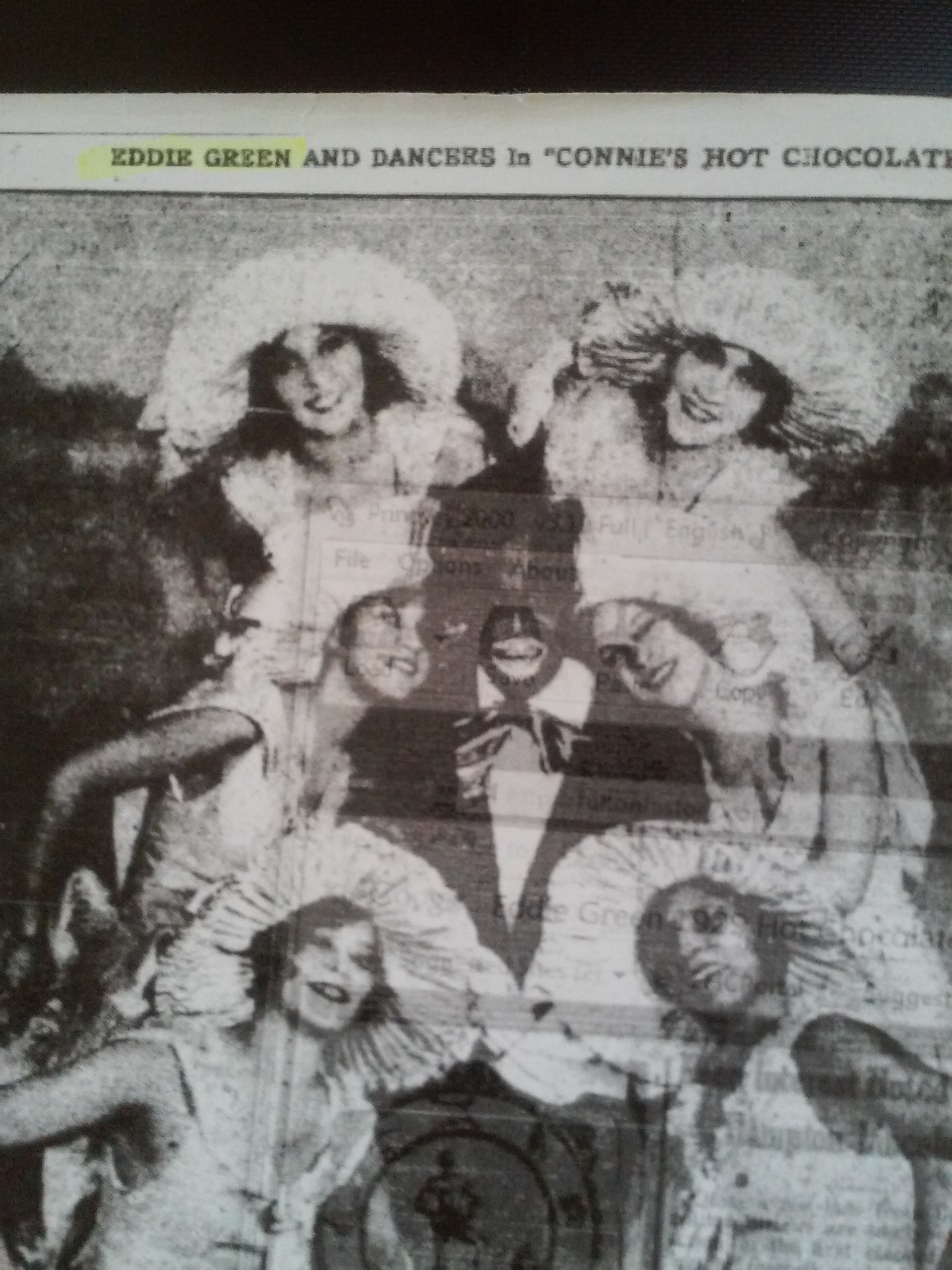
 Of course, there were Blacks working in radio as janitors, or electrical assistants and even an announcer or two. They had to come in the “other” door, though. And there were Blacks performing on the radio, such as my father, Eddie Green, who became Rudy Vallee’s protege’ or Eddie “Rochester” Anderson from the Jack Benny program. My father was evidently so funny that Rudy Vallee would feature Eddie over and over. Then there were shows that were hugely popular with everybody (maybe not the NAACP), such as, Amos n Andy. People everywhere literally stopped what they were doing to listen to this program. Eddie was the lawyer, Stonewall in this program. There must have been some Blacks sitting in front of their radios, or if they did not have one a person could stand in front of their local storefront and listen to the broadcasts. Yes, I am beginning to really see how segregation kept Black people “out of the picture”, except in some rare instances. I mean we were THERE.
 Today, If you look up Old Time Radio (OTR), not the Beyonce’ concert, you will get a lot of information about all the White radio suspense, cowboy, comedy and horror shows.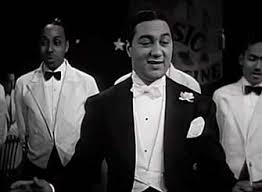









 pininthetush