ANTICIPATION

eddieinoffice
Eddie and his secretary signing talent


Hi. So I have posted a picture of my father, Eddie in his office back in 1939 greeting young ladies who showed up for a chance to appear in one of his movies, produced by his Sepia Art Pictures Company movie studio. Eddie’s office was located on 7th Avenue in New York, which is where a good part of his career took place. He spent some time in Hollywood during 1936-38 appearing on various radio programs, but he did not have a home in California until 1945. Sepia Art Pictures had gone out of business by 1945, but that did not mean his movie making days were over.

Eddie was signed on to play “Eddie, the waiter” in a new radio program titled Duffy’s Tavern in 1941, and when Paramount decided to produce a movie version of the radio program in 1945, Eddie was signed for the role in the movie. Eddie’s movie making money had run out, but I do believe financial difficulties took a turn because he married my mom in 1945, bought his house in Los Angeles and started a new movie/television studio on Western Avenue in 1946.

Today I decided to make this a short post about Eddie because I want to write about me and my book writing journey.  I have a writer friend who is well versed in the etiquette of book writing. Meaning this friend has offered to help make sure I have not printed material that might show someone in a bad light. So my friend is reading my book. The book about my father is the first book I have ever written so I take all the help I can get. But……..the waiting is difficult. Even though I am perfectly aware of the time frame called for. My book is approximately 48,000 words in length. And people have other things to do. My friend has a family, a job, book signings. I am blessed to have this help. I am sharing this because maybe someone else is having the same issue. Learning how to wait with anticipation.

I was reminded today of the last opera I saw with my mom. It was Madama Butterfly. In one scene Madam Butterfly is waiting for her love to come back from the sea. She sits on the floor and waits.waiting 3And waits. And waits. Pretty soon some of the people in the audience at the Dorothy Chandler Pavillion start getting a little fidgety. Madame Butterfly hasn’t moved. She’s waiting. After a while we, the audience, begin to understand that we have been invited to participate in order to understand how long Madama Butterfly waited for this man. We were waiting too. By the time her wait was over I had begun to question whether the producer of this play was a genius or a nut for making the audience wait so long. And when I thought of this today while I was standing on the bus stop, I laughed out loud. Which relieved some of the pressure that had begun to build up in me.

After all, judging by the past few years of this endeavor, everything I have needed I have received. I have no complaints. My grandson told me to remember, that no matter how things turn out, to remember that I said I was going to write a book and I did. I just need to sit back, relax and be prepared for the next phase of marketing this bad boy. Thank you, Jeremy.

Hey, thanks, for stopping by.

Sepia Pride

letterheadcropped

The above is a picture taken of the letterhead my father used during his 1939-41 movie making period. Eddie had two studios during his lifetime, the second studio he had was in Los Angeles in 1946-1950. As you can see, Eddie was very proud of his achievement and he was a man who was intent on furthering the African-American community.

Now that I have written the biography of my father, the manuscript has been sent for editing after which I will get to make any revisions deemed necessary and then the publisher will take over. So, the focus of this blog will eventually shift from writing about Eddie’s life to writing about how the book is received. Whether it will attract readers and whether it will hopefully provide inspiration. I will also write about how this book writing journey has helped to increase my understanding of the struggles that still exist for black independent film makers today.

I have become almost painfully aware of the lack of movies being made by African-Americans, of African-Americans and with African-Americans. Movies written by, produced by, and directed by African-Americans with an all-black cast.

Before 1950 there was The Lincoln Motion Picture Company of George and Noble Johnson. This company is considered to be the first all-black movie production company. The company made and distributed only five films. These films were limited to African American audiences in churches, schools, and “Colored Only” theaters, despite the Johnson brothers wanting a wider audience. Unfortunately production expenses and low sales halted future films to be made and distributed. There was Spencer Williams (he of Amos n Andy television fame), Williams along with a partner formed a movie and newsreel company, the Lincoln Talking Pictures Company. There was Oscar Micheaux of the Micheaux Book & Film Company (probably the most well-known early black film maker, who directed and produced over 40 films.) And there was Eddie Green, who owned two studios, Sepia-Art Pictures and Sepia Production Co. Like the Lincoln Motion Picture Company Eddie produced only five movies, four in 1939-1941 and one in 1949. Eddie directed, wrote, produced and acted in each movie.

Eddie died in 1950. Oscar Micheaux died in 1951. By then black owned studios were becoming a thing of the past, mostly due to production expenses.  White movie producers began producing the so-called “race” movies and were able to woo black actors with bigger paychecks.

Once Hollywood took off, black actors became famous through these mainstream “Hollywood” made movies, movies like  St. Louis Blues (1958) with Nat King Cole, Eartha Kitt, Ruby Dee, Ella Fitzgerald. Superfly (1972) which was produced by Warner Bros.

Then along came Spike Lee in the early 1980s, with his 40 Acres and a Mule Productions. I could be wrong, but from what I have researched he wrote, produced, directed and starred in She’s Gotta Have It, and the movie had an all-black cast in a black neighborhood. Hello!

Now, of course, there are more independent black owned film companies, but you have to stumble upon them. Well, maybe not Harpo, which produced the movie Beloved, which had a white director.

The integration of blacks into movies made by the major movie studios contributed to the decline of all black cast movies. Lack of money was a major factor. The deaths of our pioneers was another major factor. The early independent pioneers struggled. Blacks, whites, women.   Blacks have blended into the movie industry very well on the screen. The so-called “race” movies that were produced, directed, written, and photographed and starred in by only blacks, seem to no longer exist. There are how many black-owned film studios? Few. There is still a struggle going on.

Going forward with this blog, I want to research and write about more people who are working to achieve recognition. Who deserve recognition. There is room at the top and I would like to put some effort into pushing someone up. My book is about my father who happens to be black which gives me a good reason to focus on black progress. But my major desire is to be able to contribute some positivity to anyone’s ability to rise.


It has been eleven days since my last post. Now that I have finished writing the biography of my father’s (Eddie Green) life and signed with a publisher I have been concentrating on the book cover design. Actually, I have been obsessing over it. Morning, noon, and night. Today I went out to the dentist and I was so anxious to get back home to my computer, I forgot to bring home something for dinner. I have been wracking my brain over what pictures to use.

Eddie’s forte was comedy, but he also sang, wrote songs, ran a string of restaurants, owned a movie picture/television station and was a government licensed ham radio operator. In the early 1900s Eddie was what Bob Hope called “a man of all trades, master of fun.” He was present before, during and after the Harlem Renaissance. So there are photos that I can use on the cover page, but in most of them Eddie was either acting silly, as in the picture from his movie “One Round Jones” (1941), or he is making a funny face in character. Anyhow, what I want to use is a picture that showed Eddie as the business man that he was because even as a comedian he was all business.

3ONEROUNDJONES
EDDIE GREEN IN ONE ROUND JONES

So, I have chosen the only photo that I have – a head shot of Eddie in his usual attire when he wasn’t in character – a sharp suit and a snazzy hat. Back east in the 40s and 50s men wore snazzy hats. Once the design is done, I will post it here. I think I will place small images of one or two of the comedies he made on the cover also.

I have realized recently that when I post to this blog I post as if I am sending my stuff out to the whole world, worrying that if I put too much in the blog who will buy this book? But, hello, silly me, the whole world is not following my blog! I have realized that I think of my blog followers as the whole world which is a good thing. Because that means I am pleased and satisfied with the progress of this endeavor.

Once my book publishes of course, I will be making a serious effort to see that it gets out to as many people as possible.

Hey, thanks, for stopping by.

The Size of Success

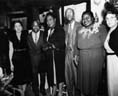
eddieandhattieThough this picture is very small, I wanted to lead this post with it because in more ways than one it signifies success. From left to right are my mom Norma, my father Eddie, actress Louise Beavers, Louise Beavers’ father, Academy Award Winner Hattie McDaniel, and unfortunately I have not identified the woman on the far right. This photo was taken about 1939.  Eddie, Ms. Beavers and Ms. McDaniel were role models of success in the entertainment business, especially in the African-American community. My mom had begun to achieve success as an opera singer. My daughter, Melony (a success in more eyes than just mine), loves this picture.

I have realized over the past few days that success for me is finishing the book about my father’s life.  Relatively speaking, it’s a small thing. Thousands of people have written books. But today I actually felt successful. I had the motivation and the ability to search out information and put it down on paper. My skills with a laptop grew along with my need to use a laptop. Every person has the ability to succeed in life, whether it be on a grand scale or on a less than grand scale.

I have learned that success is achieved with the help of others. I never thought that I would receive as much help as I have during this process. From the beginning of my research for my book, through the writing, the proofing, until today, I have received support and encouragement from people I have met along the way.

Of course, it’s not finished yet. I am working on a Book Cover design (with help). And I have to get a picture taken of myself for marketing purposes (which means I need a new outfit, a manicure, hahaha). By the way, the title of the book is: Eddie Green – The Rise of an Early African-American Entertainment Pioneer.

I started my very first blog post back in 2014 with this sentence:  Best-selling author, Dean Koontz said, “I really believe that everyone has a talent, ability or skill that he can mine to support himself and to succeed in life.” I wanted this blog to help others determine the skills or abilities they possessed. I hoped to be able to help determine what motivates each individual person, and what it means to succeed in life. Hey, if I can do it………..

Thanks, for stopping by.


APPRECIATION IS THE KEY

3rd set with new pictures 168
my father and mother 1945

The book I have written (yay!) on my father, Eddie Green includes a chapter donated specifically to my mom, Norma Anne Amato Green Beasley Washington. As this blog is basically about inspiring folks through the life story of my father’s success in the early 1900s in the entertainment industry I haven’t written a lot about my mom. For instance, Norma is not just “my” mom. As a Beasley she had four more children, Lance, Brad, Donna and Brian. Lancie-pants is no longer with us. Mom died in 2010. She was 87. If Eddie had lived until 2010 he would have been 119 years old. Yea, he was a lot older than Norma when they married.

When I was about ten or twelve, Mom told me that Eddie had written a song titled, A Good Man Is Hard To Find. She also told me that he said he had written it for her.  I always thought that was really sweet, until I grew up and found out that the song was written in 1917 and Mom wasn’t even born until 1923. I guess Mom knew that Eddie hadn’t really written that song for her as they didn’t meet until 1939 or so, but the fact that he told her it was written for her shows us that how we want to be treated as significant others never really changes.

Lately, it seems to me that a lot of comments have been placed on a certain social media site regarding how men need to learn how to treat their women. Appreciation is a big deal. Well, these types of issues were relevant back in 1917 also. Only in Eddie’s case it was about how  women need to treat their men. Eddie’s song was a major hit and was recorded many times by well-known and little-known artists, check out Bessie Smith’s version.

https://youtu.be/QJ6gcpVPTDs

Thanks, for stopping by.

Elva D. Green


I HAVE A PUBLISHER!

signontheottedline

When questioned about his recipe for success, my father Eddie Green said the best recipe that he has for success, is to find what you like to do and do it the best you know how.

I decided to write a biography of my father. Once I got into the process of researching this gentleman who died when I was three years old, I found that I liked doing the research. I have the patience needed for this type of project, of course, I have an interest in the subject, and as time went on the information I discovered gave me the impetus to keep searching. I was amazed at how much my father had accomplished in his lifetime that I never knew about. I began to like what I was doing. The book writing idea began back in about 1998, but the serious work began in 2010. I like it and I have done it the best I know how. This week I am signing a contract with a publisher. The very publisher I had planned to contact when I was ready (meaning when I got over being afraid of certain rejection).

I have a PUBLISHER. The cover photo is on my previous post and the title is: Eddie Green – The Rise of an Early 1900s African-American Pioneer.

And just in case here is another picture of Eddie:(Hopefully, WordPress places it here)

duffy'stavernPerino

Eddie is the little short dude standing next to Mr. Ed Gardner, his boss in the Duffy’s Tavern 1945 movie. I have to point out here, that Eddie and Ed became good friends and I have had the pleasure of being in contact with Ed Gardner’s son.

This week I am addressing the proofreading “those wonderful people out there” did for me, and beginning my photo scanning.

I am now in a new phase of my book writing project and I will continue to post about it here because, after all, this is why I bought this, my very first laptop. I wanted this blog to be an inspiration to others. I believe it has been judging by my friendly followers. So, stay tuned for more good news!

And Thanks! For stopping by.


PICTURE THIS ON A BOOK COVER

329
EDDIE GREEN

This is the picture I want to use on the cover of the biography I have written about my father.  This is the only picture that I own. Norma, my mother, gave me this picture in 1980, I think, as a birthday present.  It was the only picture she had. Eddie died in 1950 and over the years, the other pictures that she had were lost. Some in a house fire in the 70s. I saw the pictures, when I was a little girl.  There was a picture of Eddie and Frank Sinatra on a stage, there was a picture of me in my bassinet with Eddie and Mom standing over me, and there was a picture of Norma’s mother, Sinclaire, with her hair piled up on top of her head and staring stone faced at the camera.  Sinclaire had on a floor length, white dress with buttons all the way up to her chin. An old photo from the 1920s or 1930s. I was shocked when mom gave me this picture of Eddie. She loved this picture.

In the past almost six years that I have been doing the research on the book, I have discovered other pictures of Eddie. Eddie as a customer in a 1929 Vitaphone fifteen-minute movie, Eddie as Ko-ko, the High Executioner in the Hot Mikado on Broadway in 1939, Eddie as a boxer in his own movie One Round Jones, Eddie with Louis Armstrong preparing for their radio program in 1937, Eddie chatting with George Burns, Eddie on an advertisement for the Community Chest during the war years, Eddie and Mom with Adam Clayton Powell, Jr. at my christening.

None of these pictures belong to me. In order to use them in my book, I need to get permission from the copyright holders and pay a fee based on how many books I hope to sell, unless the pictures are in the public domain. Or a family member objects. It’s been so awesome discovering these pictures that I want to put them all in the book.  I am in the process of scanning the ones I can use, however, so that is a good thing.  The publisher may have a say-so on the book cover, but I think they will like Eddie’s “entrepreneurial, star quality” headshot.

Speaking of the publisher.  I have been in communication with a publisher.  Yes!  Soon I will have the pleasure of discussing the publishing side of this venture.  I haven’t exactly started jumping up and down yet, but I am so glad I started this journey. And I am not finished.  I am in the midst of what has become a serious learning process, that of going over my proofreader’s suggestions.

I think that there are many of us who have family members they would like to write about, be they movie stars or stay at home moms, or Uncle Jim, you know, the one who always makes you laugh.  I know there are people out here who are looking for good, uplifting stories. Share yours.


Thank you so much, for stopping by.

49,957 words

untitled (34)

49,957 words.

Need to cross some more tees and dot some more iiiis (eyes). I’m feeling a little silly, cause I’m nervous. It has come time for me to begin my search for readers to proof my manuscript. I could not, for the life of me, come up with an idea for a post, so I decided to post Chapter Two of my tentatively titled book:

 Eddie Green: Star of Stage, Screen, Radio and Television

A Biography

Chapter Two: A Good Man Is Hard To Find

While continuing to perform as a magician, in 1916, Eddie wrote a silent movie titled, Eddie Green’s Rehearsal, which gives an early indication of the direction in which Eddie was heading. This movie was directed, produced and distributed by Eddie, the cast was Eddie. The movie was about a man by the name of Eddie Green, who is desperate to get into show business. Eddie borrows a friend’s clothes and car, and goes to an audition. He tells jokes, sings and generally performs to an encore. This scenario proved to be prophetic.

The movie did not actually make it to the big screen, at least not in its original format, and not until 1939, but it had enough merit to warrant a mention, in the form of a “clipping,” which was placed in a folder at the Margaret Herrick Library, a non-circulating reference and research library devoted to the history and development of the motion picture as an art form, where I found it in 2015, sixty-five years later.

About a year after Eddie wrote his silent movie, The United States entered World War I. Eddie was twenty-six years old when he reported to his draft board. I have not found out yet, where he may have been stationed. However, the information on his draft registration card provided me a good source of information. Listed was Eddie’s address at the time, 1405 Ten Pin Alley, in Baltimore, Maryland. Research showed me that Ten Pin Alley was, literally, an alley, located in what was then Ward 5, a part of East Baltimore, which, though dirty and crowded, was basically the only place in which poor blacks were allowed to live. Noted also on the card, was his occupation, actor, his place of employment, the Standard Theatre in Philadelphia, Pennsylvania and the fact that he was married and had a child.

Eddie’s place of employment in 1917, the Standard Theater was owned by a Mr. John T. Gibson, a native of Baltimore, who also ran Gibson’s Auditorium Theatre on South Street and made good money booking Black vaudeville acts on the national “chitlin circuit.” Stars such as Bessie Smith and Ethel Waters, also performed at the Standard. Ticket sales at the Standard helped make Gibson the “richest black man in Philadelphia.”

While at the Standard, Eddie dropped the magic tricks from his act. After catching one of his shows, a stage manager told Eddie to, “Get rid of the paraphernalia and just do comedy, you are really funny.” Eddie took the man’s advice and began performing strictly as a comedian, eventually adding singing and”soft shoe” dancing to his routine.

It was during this time, that Eddie wrote the his first of his twenty-nine songs, “A Good Man is Hard to Find, “ which he copyrighted on December 28, 1917, in Chicago. “A Good Man is Hard to Find” is a bluesy type of song, explaining what a woman should do when she manages to get a “good” man. Six months later, Eddie sold his song and on June 2, 1918, the song was copyrighted by Pace and Handy Music Publishers (Home of the Blues), and went on sale as a piano roll in the Fort Wayne Gazette.

“A Good Man is Hard to Find” became a hit. January 4, 1919, Eddie got his first top billing as an entertainer, though his name, as the songwriter, was in tiny print. The name of the song was in big, bold letters right at the top of the Billboard page. The Billboard listed the song as “a 1,000,000 copy hit, sure fire applause getter for any singing act or combination on the stage.”

Marion Harris, a popular singer, most successful in the 1920s, the first widely known white singer to sing jazz and blues songs, recorded the song in 1919 for Victor Records. Miss Harris’s recording has been digitized at the Library of Congress Packard Campus for Audio Visual Conservation.

Eddie decided to put together a company of eighteen actors, which he called the “Deluxe Players,” and as owner and manager of the “Deluxe Players,” he began to tour the south, featuring his song, “A Good Man is Hard to Find,” performing in places such as Tampa, Florida and St. Louis, Missouri. Eddie and his company were a sensation in St. Louis at the Booker Washington Theater, as was printed by the St. Louis Argus, January 9, 1920: “Green with his droll humor, and his coterie of performers made a big hit during a previous performance at this house.” The show bristled with tuneful melodies, graceful and eccentric dances and a barrel of side-splitting comedy.”

Eddie’s song caught the attention of Miss Sophie Tucker, one of the most popular entertainers at that time, known as, “the last of the red hot mammas.” While performing in the Sophie Tucker Room in Reisenweber’s in New York, Miss Tucker sang “A Good Man is Hard to Find” every night for ten consecutive weeks, and “will continue to use it until her engagement terminates.” Miss Tucker said that, “A Good Man is Hard to Find” is “the best blue number she has ever used.” {Photo 1. Caption: Sophie Tucker Says.}

This song has been recorded as a blues number, a fox trot and a swing number, by such greats as Wilbur C. Sweatman’s Jazz Orchestra, Les Brown and his Orchestra, Louis Prima and his Orchestra, Jess Stacy and his Orchestra, Dorothy Loudon with the Honky Tonks, William’s Cotton Club Orchestra, Muggsy Spanier, the Alabama Red Peppers, “Fats” Waller, Bessie Smith, Frank Sinatra, Rosemary Clooney, Cass Daley, Big Maybelle, Brenda Lee, Nancy Wilson, and Carol Channing, to name a few, and a version of the song has been heard in Woody Allen’s recent film Blue Jasmine, and even more recently in HBO’s 2015 presentation of Bessie. As was Sophie Tucker before her, Bessie Smith was instrumental in popularizing, “A Good Man Is Hard to Find.”

As I write this, I am realizing that, as the years went by, Eddie must have been aware of the impact this song had on people. At the time he wrote this song, though, he probably had a need for whatever money he received when he sold it to Pace and Handy. The popularity of this song, did, however, announce the arrival of Eddie Green, and with his talent for getting laughs, and his willingness to work for what he wanted, Eddie was on his way up.

End of Chapter Two

Hey, thanks for stopping by.


Surrounded By Flowers

mildredandeddie1939but1946poster

So this is my father, in a photo at a studio, surrounded by beautiful women. I have recently purchased a copy of the original photo, minus all the text. I even know now who took the picture way back in 1940. I didn’t know, until about a year ago, that these photos still existed. That they had been donated to a library here in California. The fact that at least one of the ladies is still with us, (Millicent, in the black dress), was a wonderful piece of knowledge I have also recently received. New knowledge and acquisitions have necessitated a few minor revisions to my book, but it’s all good.  Looking at this particular picture reminds me of what my mom, Norma, once told me-that Eddie enjoyed being around pretty women.  Like being surrounded by flowers.

Something I have discovered in the last five years about my father, is that Eddie enjoyed getting married, too. I learned that Norma, my mom, was his fourth wife.  I always knew Eddie had been married once before mom, and that I had a half sister from that earlier union, but the fact that Eddie had two more wives was news to me.  I only found out through my census searches.

Eddie married for the first time in 1909, to a lady born about the same time he was born, and in 1910 he and his wife had a daughter.  By 1930, Eddie’s first wife and their daughter were living in Philadelphia, and Eddie was married to his second wife, a twenty-nine year old nightclub dancer, and living in Manhattan. This second marriage only lasted two years.  By 1932, Eddie married wife number three, a twenty-two year old Trenton, New Jersey lady.  They lived in Harlem on 138th Street. This marriage was the first marriage Eddie discussed in a newspaper interview saying his wife would stay home and listen to his radio broadcasts and then tell him how he sounded. Eddie said that sometimes with him “his voice gets too high.” This third marriage lasted through 1940 or so while Eddie was in his first movie making venture.

By 1944, Eddie moved to Los Angeles, alone.  One of Eddie’s friends was Louise Beavers (an actress who appeared in the movie Imitation of Life). Eddie boarded with Louise in her house in the “Sugar Hill” district of Los Angeles, until he found and bought his own house, announcing that “he was just waiting for the right lovely to come along.”  Enter wife number four, my mom, Norma, twenty-two years old.  Mom was Eddie’s last wife, as he died in 1950.  Mom was young and beautiful, and she had a lot of young and beautiful girlfriends who were always hanging around the house, because, she said, their house was the place to be.  Eddie was a lucky man, a gentleman and a Star.

Thank you, for stopping by.


Progress-two of my viewpoints

momwithfur

This is my father, Eddie Green and my mom, Norma, in about 1945-46.  Progress had been made in Eddie’s life, as you can see by looking at that coat around mom’s shoulders.  As I have mentioned before on this blog, Eddie did not start out with a lot of money.  As a matter of fact, when Eddie left home at nine years of age he didn’t have any money.  But he must of had a plan (excuse my English).  Because he wound up quite well-known in the entertainment industry, and at one time, had a lot of money. When Eddie left home, He intended to progress.

Home in 1891 (when Eddie was born) was Baltimore.  According to an old report from the  Johns Hopkins Hospital, which was in the area where Eddie lived: Typhoid fever was then very prevalent in Baltimore, especially in the city’s outlying areas. Drinking water was obtained from public pumps connected to shallow wells, now mostly contaminated by the myriad of privies and cesspools located in backyards. Mortality from typhoid fever in the city during the years 1888-1892 averaged around 229 cases per year, disproportionately affecting poor Blacks.  Things were not much better until after a 1904 fire that devastated a large portion of the city.  After the fire, progress began in regard to the sewer issues.

By 1917, Eddie had progressed in regard to recognition when he wrote his first song: “A Good Man Is Hard To Find,” Words & Music by Eddie Green, which was recorded over the years by various artists, including Brenda Lee in 1967.

As a Black man making his way through the early 1900s, Eddie’s progress was steady, benefiting himself, those with whom he worked, his family and those who came after him.  His progress was a good thing.

I read somewhere the other day  that in some ways progress may not always seem good.  For instance, when I was little, I loved to play Tiddly-winks: images (15)

I mean I loved it. All by myself. Take one big disc, press down on a smaller disc and launch the smaller disc into a cup, wow! Today kids do not play Tiddly-winks, not even babies play Tiddly-winks, unless it’s computerized:  images (5)

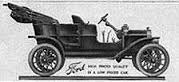
Or take cars, we started out with what we now think of as funny looking, A Model-T:  images9LPUJHQE

Thanks to progress, we now have all sorts of car models.  We have electric cars and self-driving cars: 18th-Century-Math-to-Solve-Traffic-Jams-2

My point is, progress is about persevering and moving forward. I applaud my father for doing so, but, man, I really think little kids are missing something if they never play Tiddly-winks.

Thanks, for stopping by.

Typhoid Fever and Johns Hopkins Hospital, Baltimore, 1891

Photo courtesy: New York Public Library