A BOOGIE WOOGIE HALLOWEEN

images (10)

Hi, there.  Well, I would like to wish you a Happy Halloween, although the guy in the above photo would probably not agree with me as he doesn’t think Halloween should be a fun holiday like everyone else does.  But since it’s the season, I chose Oogie Boogie to lead off this post.  (Thank you, Mr. Burton.)  I also chose Oogie because of his last name, Boogie.

My father, Eddie Green, was doing well in radio entertainment career in the 40s.  According to the Syracuse New York Journal   One of the radio programs Eddie appeared on was the Canada Lee show on WEAF, ” Eight to the Bar.”  In the 1940s, the phrase “eight to the bar” was up-tempo slang meaning “a boogie beat.”

New York Post, Thursday, July 24, 1941, HIGH SPOTS OF THE DAY’S BROADCAST OFFERINGS

WEAF- Benny Goodman’s Orchestra. Joan Bennett.
8:15 WOR—Drama. Florence Reed in “An Englishman’s Home.”
8:30 WEAF—Drama. Canada Lee, Eddie Green in “Eight to the
Bar.”
WABC—Barber Shop Quartet Society.

There was a boogie-woogie dance:599fc67ba64af1846452c75a83984b41

In 1945, a person could buy  a Two-piano Boogie Woogie album for Dancing for $2.50.

When I found the “Eight to the Bar” Canada Lee program in the Syracuse newspaper, I remembered that I have in my possession a DVD of a Jubilee radio program from 1943 with Mr. Lee and my father doing a comedy skit together.  Being a good researcher, I looked up Mr. Lee, and I am so glad I did.  Canada Lee is another of those famous, successful, Black pioneers, like Eddie, who seems to have been forgotten by the general public.
th (4)

Canada Lee was born Lionel Cornelius Canegata in 1907.  At one time he was a jockey, and then became a boxer, welterweight division, until he sustained an eye injury.  Before he had his radio show, Mr. Lee began an acting career. He was cast in his first major role, that of Banquo, in the legendary Federal Theatre Project (a New Deal program started to help struggling writers, actors, directors, and theater workers) production of Macbeth (1936), adapted and directed by Orson Welles, with an all-black cast.  Macbeth was sold out for ten weeks at the Lafayette Theatre.  Mr. Lee played Banquo (When Macbeth kills the king and takes the throne, Banquo—the only one aware of this encounter with the witches—reserves judgment for God.)  Having never read Macbeth, I had to read it to understand what the heck I was writing about in this post.  Anyhow, The play debuted in 1936 at Harlem’s Lafayette Theater and was performed for segregated audiences. It was so popular that it exceeded its initial run, then toured the country, spending two weeks in Dallas at the Texas Centennial Exposition.

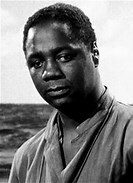
Canada Lee appeared on Broadway in Anna Lucasta.  He also appeared in the movie Lifeboat in 1944, directed by Alfred Hitchcock:

300px-Lifeboat_(1944)_1

There is much more information out there to be found on Canada Lee, if you care to look it up.

Below is the comedy skit I referred to earlier.  Canada Lee and Eddie performed  in 1943, on Jubilee, a radio program that was broadcast to the nations military to help ease the stress of war.  The skit was titled “Boxing”, from January 5, 1943:  I have heard this skit and Mr. Lee has a nice, strong voice, where my father’s voice was a tad higher which Eddie said himself in a newspaper article. Hattie McDaniel acted as Mistress of Ceremony:
MISS McDANIEL: The clock says it’s laughing time. And when it’s time to laugh, then it’s time to listen to Eddie Green  and Canada Lee!
CANADA LEE: Remember some time ago, Eddie, I told you that I think you would make a good prize fighter?
EDDIE, laughing: .Yea, I member that, I do.
CANADA LEE: Well now, listen Eddie. Just like I told you. You’ve got the makings of a great fighter. I’m gonna build you up to be a champion.
EDDIE: No, is you?
CANADA LEE: Yea, I can see the whole thing.
EDDIE: You can.
CANADA LEE: Yea, First, I’ma have you fight some ham and eggers.
EDDIE:  some what?
CANADA LEE: Some ham and eggers.
EDDIE: Oh, right away I get scrambled.
CANADA LEE: No, no. I mean these fights are free, see. We pay these fighters to lay down.
EDDIE: Well, why can’t they pay me to lay down?
CANADA LEE: Oh Eddie, don’t be silly, you’re honest. When it comes to fighting you’re upright.
EDDIE: Yea, but not for long.

I started this blogging project as a way to get noticed by publishers, as a writer, which would help me when I was ready to publish the first book that I have written about my father for my grandson, because the general consensus is publishers want to see something other than just one book.  The blog is also a way for me to get over a fear of putting my writing out into the world.  What I did not expect was the education I would get from this process, through research.  Nor did I expect to have ideas about the possibility of continuing to write after this first book.  But I do.  Have ideas.  But first, I must finish proofing my first endeavor.

I like to finish my posts with something that refers back to the beginning:

untitled (26)6

Thanks, for stopping by.

Thank you Francis Lee

CLOSE KNIT TIES, THROUGH SHOW BUSINESS

quote-Irving-Berlin-theres-no-business-like-show-business-66100

Hi there, welcome and welcome back.  Today my brain is empty, well, almost.  I have been focusing on which photos I want to put in the book I am writing and as I have a one track mind, I have not been able to come up with a post.  My main issue is that some of the photos I want must be purchased from newspapers or museums before I can use them, so I have to spend my money wisely.  Do I want ten photos or twenty?  The photos will be sent to the publisher along with my manuscript., and I am shooting for a month or so from now.  So, with this post I am going to cheat a little and let the newspapers do the talking.

In 1943, Duffy’s Tavern and the Jack Benny programs were big hits.  The two main stars were Ed Gardner and Jack Benny.

Ed_Gardner_Duffy_1949 (2)
Ed Gardner

.

Jack Benny
Jack Benny

However, the popularity of these shows was also due, in part  to two other gentlemen:  Eddie Green and Eddie “Rochester” Anderson:

Eddie Green
Eddie Green
Eddie "Rochester" Anderson
Eddie “Rochester” Anderson

In 1943, both Eddie and Rochester appeared together on “Duffy’s Tavern”.  The following article appeared in The Pittsburgh Courier, January 1943, with the title, “Rochester, Eddie Green Steal the Show” – Eddie “Rochester” Anderson and Eddie Green climaxed the season’s laugh riots with a battle of wits on the popular Blue Network show “Duffy’s” on Tuesday evening. The comedians, together for the first time, were featured prominently during the hilarious half-hour, contributing much to the success of the show. Although old friends since vaudeville days, when Rochester was a dancer and Eddie a comedian their opportunity to appear on the same entertainment bill did not come until Jack Benny’s show began a tour of service camps in the East.  Rochester’s success in pictures has paralleled that of his work in radio, having been featured in “Jezebel,” “Gone With The Wind” and several Jack Benny films.  Eddie Green is heard regularly with Ed “Archie” Gardner on the Duffy’s program; following a successful run on Broadway with Bill Robinson in “The Hot Mikado.” He started as a boy magician and now owns the Sepia-Art Pictures, film producing company, servicing over 500 theaters.”  Pittsburgh Courier, January, 1943.

I am proud of Eddie and Rochester.  Rochester remained a family friend after my father died and would visit us periodically.  I have had the pleasure of having a conversation with Rochester’s son, during the past year, and I have also had the pleasure of communicating with Ed Gardner’s son.

Eddie Green, Ed Gardner, Eddie “Rochester” Anderson and Jack Benny were a show business family.  They showed us how it can be done.

Thanks, for stopping by.

Photos courtesy of Google Advanced Images.

Into Each Life, Well, you know the rest.

untitled (23)

Well, as my dear sweet mama would say, into each life, some rain must fall.  Actually, she would usually say it sarcastically, but it still means the same thing.

In the on-going saga of my father’s life, considering he was born a Black man in 1891 in the “poor” part of town in East Baltimore, Eddie, who, by 1941, had become a star of stage, screen and radio,  owned two restaurants and a movie studio, had a good life.

Two years later……  In an article, dated January 2, 1943, an article was printed in the local newspaper, well, it wasn’t even an article, it was a paragraph:

Eddie Green the comedian, who once owned a chain of Bar-b-q places in Harlem, his own movie producing company and who ran the gamut of one stage and radio success to another, has filed a voluntary petition in bankruptcy in the U. S. District Court.  His listed liabilities are $5,119.00 and assets $473.00.  He owes the government $445.74 that should have been paid weeks ago.  Always a fine fellow, the misfortune of Eddie is not without sadness.

Imagine having your personal business in the neighborhood newspaper.  Of course, today everybody knows everybody else’s business, whether we want to or not, but I still think he may have experienced some embarrassment.  But, maybe not.  He probably used it in his comedy routines, like the one he did three days later in the  January 5, 1943 Duffy’s Tavern show with Milton Berle as the guest:

EDDIE:  What is that sign you’re making, Mr. Archie, is it a welcome sign for Mr. Berle?  ARCHIE:  No Eddie, it’s a resolution, you know, one of those New Years things.  Listen to it, “There is a well known golden rule, through the ages it’s been true, always be good to your neighbor, they may live next door to you.”  That’s good, huh?  EDDIE:  Yea, it makes a lot of sense, too.  How bout hangin up a sign for the waiter, me.  ARCHIE:  Like what, Eddie?  EDDIE:  Like this: “The golden rule has a fine intent, but a ten cent tip will pay the rent.”

I really do believe that it pays to have a good sense of humor.

So, Eddie did still have his job as the waiter on Duffy’s Tavern and two months later, in March Eddie was a guest on the Caravan radio show, along with the popular radio emcee, Gary Moore, who was also a guest on the program.

Screen shot 2011-08-19 at 2.41.44 AM Some of you reading this may be too young to remember, but I know a few of us vaguely remember The Gary Moore Show, or I’ve Got A Secret or To Tell The Truth which Mr. Moore hosted till about 1976.  I remember Mr. Moore as always having a smile on his face.

Despite Eddie’s setback, his success story was far from over.  More to come….

Thanks, for spending some time with me.

IT JUST KEEPS ON GETTING BETTER

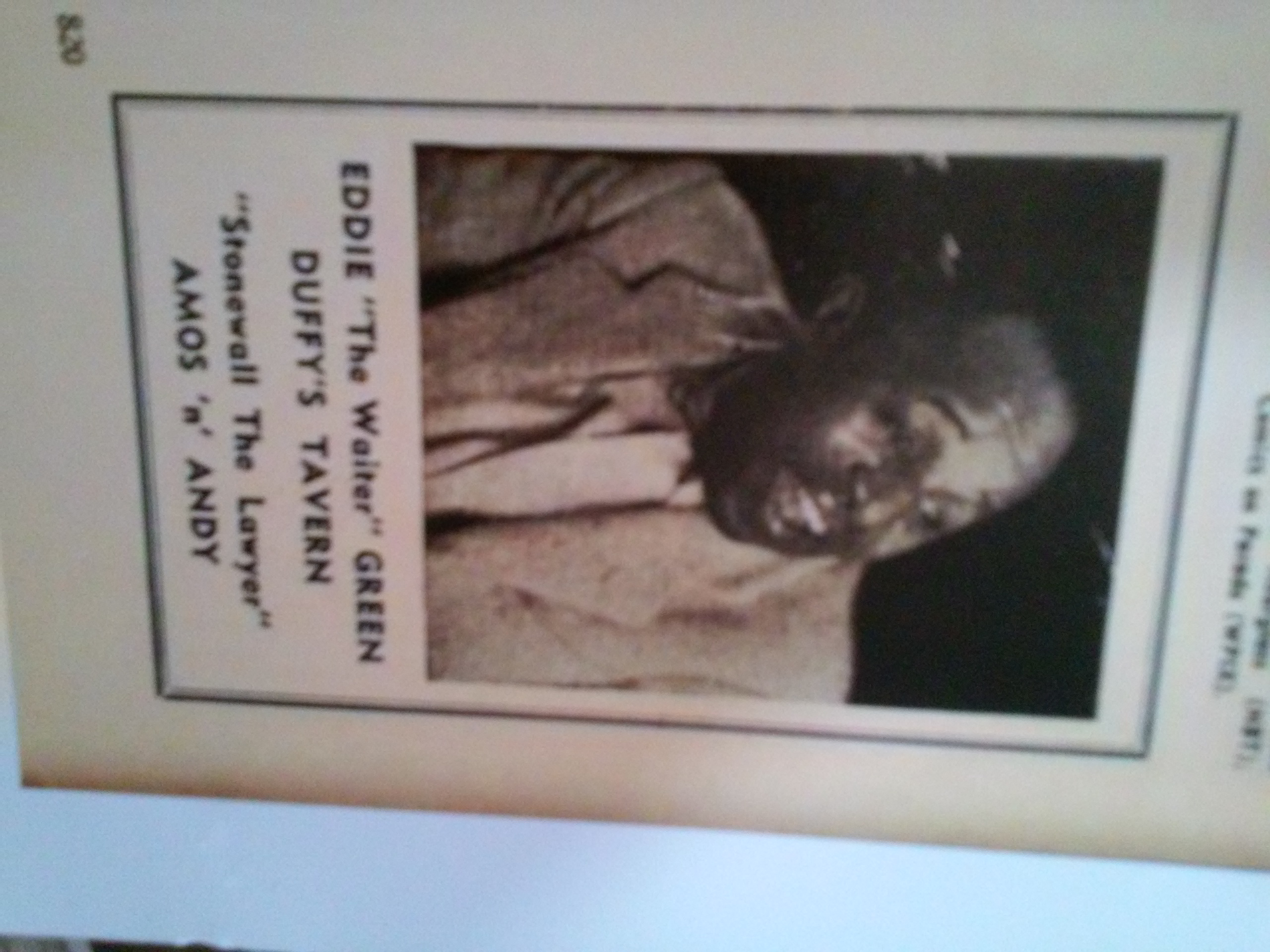
 You’ve Screamed at Him on Duffy’s Tavern In Person – EDDIE GREEN!

duffyscastonstage

This headline was from an article in 1945.  Eddie was scheduled to appear at the Orpheum Theater, in Los Angeles, on May 1st, along with The King Cole Trio, and, Johnny Otis and his Orchestra.

In case you are new to my blog, Eddie, my father, is the Black gentleman with the big smile on his face, in the above photo.  Kinda like my smile.  The gentleman in the hat, is Mr. Ed Gardner, creator of Duffy’s Tavern, the gentleman next to him is Charles Cantor and the lady is Florence Halop.

In the seven years prior to 1945, Eddie had owned two barbeque restaurants in New York (specializing in southern bar-bee-Q), he had made four of his own movies, and, he was on The Executive Board of the Negro Actors Guild of America, Noble Sissle, President, along with Mrs. Noble Sissle, and W. C. Handy.

.

images (8)
Ben Bernie, 1938 Google Advanced Image Search

Eddie had also appeared on  the Ben Bernie Music Quiz radio program.  Ben Bernie was a jazz violinist, and a bandleader as well as a radio personality, who was born in 1891 (like Eddie.)  He originated the term “yowsa, yowsah, yowsah,” that became a national catchphrase, and which was used in the movie, They Shoot Horses, Don’t They?

York_they_shoot

I thought They Shoot Horses, Don’t They?, was very “deep” when I saw it, a movie about  a depression era dance marathon, with contestants desperate to win. I mean, these people stayed on their poor feet a long time.   Now, I am writing a book, years later,  about my father appearing on a radio program starring a man associated with this movie.  It just blows me away.  Small world.

Eddie had appeared on many radio programs, including a radio special titled, “All God’s Children,” with Paul Robeson. Eddie was even a guest on The Jell-O Program, starring Jack Benny.  In the following episode titled “Columbus Day,” (cause it was), Jack is talking on the phone to Rochester who needs $50 dollars to pay off some debts and he sends his friend, Columbus Smith (played by Eddie), to pick up the money from Jack.

jackbenny
Jack Benny Google Advanced Image Search
Knock, knock, knock.
BENNY:  Come in.
COLUMBUS:  Excuse me for intruding, Mr. Benny, but I got a note for you.
BENNY:  I’m sorry, I’m busy right now, come back later.
COLUMBUS:  I would advise you to take a quick gander at this communique.
BENNY: All right, what’s the note, what does it say?
COLUMBUS:  I’m only a carrier pigeon, we ain’t much on reading.
BENNY:  Oh, ok, let’s have it.
MARY LIVINGSTONE:  Who’s it from, Jack
BENNY:  It’s from, Rochester.  Listen to this, dear boss, please give bearer, Mr. Columbus Smith – Columbus?
COLUMBUS:  Yea, that’s me.
BENNY:  Oh.
MARY (to Columbus):  Happy Anniversary.
Loud laughter from the audience.

Eddie would find his greatest fame, however, through the popular radio show, Duffy’s Tavern. 

The show aired March 1, 1941. Once a week, Duffy’s Tavern entertained America’s citizen with the antics of Archie, the bartender, played by Ed Gardner, the creator of the show,  Eddie, the waiter played by my father Eddie Green, and the tavern regulars, Finnegan, played by Charles Cantor, and Miss Duffy, (the tavern owner’s daughter), played by Shirley Booth. Duffy of Duffy’s Tavern was never seen or heard, but the show would start off with Archie having a telephone conversation with his “boss”, Duffy.  The phone would ring, and Archie would answer:  “Hello, Duffy’s Tavern, where the elite meet to eat, Duffy ain’t here, Archie speaking, oh, hello, Duffy.”  Usually, the show featured a different celebrity guest each week.
Archie, the bartender, tended to misuse the English language and Eddie would usually call subtle attention to this fact:
Chapeau
Chapeau
EDDIE:  Mr. Archie, what happened to the sign?
ARCHIE:  What sign, Eddie.
EDDIE:  The “watch your hats and coats” sign.
ARCHIE:  There it is, only I rephrased the words so Clifton Fadiman would feel more at home here.  Read it.
EDDIE:  Maintain scrutiny of thy chapeaus and hats, umm, nice and confusing, ain’t it?
ARCHIE:  Yes, isn’t it?  It’s a quotation from Shakespeare.  Did you ever see any of Shakespeare’s
plays, Eddie?
EDDIE:  One, As You Like It.
ARCHIE:  Well?
EDDIE:  I didn’t like it.
Eddie would appear in every episode until his death in 1950, as well as appearing in the same role in the 1945 movie.
After Eddie got the role in Duffy’s Tavern, he was able to fulfill another dream of his, The Pittsburgh Courier reported “Eddie Green, comedian of radio and stage fame has opened a dramatic training school with services and classes for both amateurs and professionals.  The School is called Sepia Artists.”
Thank you for coming today.  I hope these stories of my father and his ambitions inspire you to go after your dreams, no matter how unattainable they may seem.

SINGING, DANCING, DRAMA, BLACK HISTORY

Eddie as KoKo
Eddie as KoKo

Hello there, this is so funny to me.  I was trying to crop a picture and this is what I got.  A hand-drawn cropping, almost looks like somebody’s profile.  Anyhow, my mom used to say, “You learn something new everyday.”  Here is something I learned while looking for information on my father, Eddie, from when he played “Koko” in the Hot Mikado in 1939.  I found this article from 1962, in the Philadelphia Inquirer.

“Tonight at 8:00, the esteemed Sir Arthur Sullivan would have rarely looked more dour . . . and Sir William Gilbert might have returned to his law practice were they alive to hear the liberties taken In the late 30s version of Mikado.  Tonight we take a second listen as “Ko-Ko”, “Nam-Poo”, “Yum-Yum”, “Katisha” and friends go modern in Hot Mikado with Bill Robinson and Eddie Green.”

A good little blurb to add to my book.

Bill “Bojangles” Robinson turned sixty-one while starring in the Mike Todd version of Hot Mikado as the Mikado.  A local newspaper ran this ad:

“A second negro production of “The Mikado” in modern swing tempo, entitled The Hot Mikado opens tonight at the Broadhurst with Bill Robinson, the tap dancer, in the lead role.”

Michael Todd, producer of the play sponsored an after-theater party on stage at the Broadhurst Theater, where the cast of the play, members of the Cotton Club and a bunch of friends drank a toast to Bill’s health and wished him many happy returns.

Bill Robinson-Wikipedia

According to the New York Age, “following the toastmaking, Eddie Green, “Koko” of Hot Mikado on behalf of the cast presented Mr. Robinson with a silver plaque on which was inscribed:  “Happy Birthday ‘Bill’ Robinson from the cast of the Hot Mikado Co. Broadhurst Theatre, May 28, 1939.” A silver stage crew, the onlv one of its kind in America, was another gift from the cast to its leading star.”

And here is an article from the Brooklyn Eagle, specifically about Eddie:

“Eddie Green, who has been funny all the time but has not quite seemed to get his teeth into anything, is singing “Titwillow” to Katisha and his “Titwillow” turns out to be completely delightful.  The song has, no doubt, been sung many times by better voices, but it could hardly be done more amusingly.  With it Mr. Green makes himself one of the jewels of the Hot Mikado.

In 1940, Eddie went on to appear on the Tommie Riggs radio program:

TONIGHT’S BEST RADIO BETS 7:50— “Blondie,” …Tommy Rlggs and Betty Lou. David Ross, Freddie Rich Orchestra. Eddie Green WEAF. 8:30— ..Brooklyn NY Eagle1940.

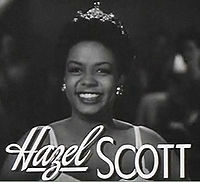
Eddie also found time to appear with Miss Hazel Scott on the dramatic mystery program The Bishop and The GargoyleimagesEHU5HJ1M

The show was about a former Bishop and an excon who teamed up to solve crimes.  It’s very gritty, I listened to about five minutes of one of the shows and here is a sample of the kinds of lines in the script: “Aw listen, man, don’t try to make a chest outta that stomach.”  So funny.

On the show, Eddie and Hazel did a skit titled “The Item of the Voodoo Doll”.  Miss Scott was a jazz and concert pianist, normally, who, according to the papers, put her own interpretation into Bach and Beethoven.  The reviews of her acting ability were good, and of course, Eddie was funny.

200px-Hazel_Scott_in_Rhapsody_in_Blue_trailer

Hazel Dorothy Scott, born in 1920 became a star in her own right and while she was at it, she married Adam Clayton Powell, Jr., who became the first person from New York of African-American descent to be elected to Congress, representing Harlem, New York, from 1945 to 1971. 200px-Adam_Clayon_Powell_Jr

Adam Clayton Powell, Jr. was also pastor of the Abyssinian Baptist Church and as such Rev. Powell christened me.  How’s that for a good ending?

Thank you so much, for stopping by.

.

A REAL LAUGH RIOT

61FklgttwBL._SY450_ (2)

Otay.  Comes Midnight is the third picture my father made.  It is a story about two men (played by Eddie and Jimmie Baskette) who will receive $100 if they stay in Old Man Mose’s deserted house overnight in order to dig up his body and get the gold that has been placed under his body, and return it to the rightful owner.

It’s got really corny jokes in it such as:  1st person:  You know, old man Mose had a million dollars in gold ore.  2nd person:  Gold or what?

Supposedly, Eddie filmed this movie in a real haunted house in New Jersey.  The older residents of the neighborhood said they had heard weird groans and had seen a pale face pressed against the window.  One of the original cast members bowed out because he was too afraid to enter the house.

The movie had a great cast, though.

imagesK6TQ86AOJimmie Baskette, who you might remember as “Uncle Remus” or the man who sang “Zip A Dee Doo Da”.

imagesC02DE8VNAnd Amanda Randolph.  She was the first African-American performer to star in a regularly scheduled network television show, appearing in DuMont’s The Laytons.  Miss Randolph also   starred in “Beulah” in 1953.   She also appeared in 71 episodes of “Make Room for Daddy” with Danny Thomas. (Anybody out there remember at least one of these shows?)  I found the following information on the net, and it kind of upsets me:  Amanda Randolph appeared in a few Oscar Micheaux films.  The reason I get upset is also one of the reasons I am writing a book about my father.  Eddie made movies with the current  stars of his day, the same stars who appeared in Micheaux films and films produced by Whites, yet as far as the media goes, it is as though Eddie and his work with these actors has simply dropped through the floor.  I am a champion for my father.

The movie was a short, only twenty-one minutes, but it was a “real laugh-riot.”

Eddie, “Harlem’s favorite Hollywood comedian”  was quoted as saying this about his movie making skills:

“The first thing I try for,” he said, “is naturalness.  I write my own stories, building them around some incident that has been interesting, but not offensive.  Then I select the actors that I think are best suited to the parts, so that they need only be themselves.”

untitled (17)The movie had its first showing at the Brooklyn Apollo Theater at 1531 Fulton Avenue. The theater closed in 1965.

On Tuesday afternoon of July 30, 1940, if anyone was looking for a good short movie, according to the Television column, of The New York Sun, you could catch “Comes Midnight” at 3:55 p.m. that afternoon, right after the 3:48 p.m. film “Tour of the World’s Fair.”

Just before Eddie started making “Comes Midnight”, he went to Hollywood from New York to audition for the part of “Pork” in Gone With the Wind. He did not get the part, but, hey, nothing beats a failure but a try, right?

The update on my first try at writing a book is that I now have a 48,061 word manuscript, including title sheet, TOC, dedication, introduction, appendices and bibliography.  I’m done, basically, I know I am.  I am sending it piecemeal to my brother, who is helping me with editing, and, of course I am proofing also.  I will be looking for a “real” editor any day now.

I am still having fun.  And I thank you effusively for stopping by and hanging in.

RAISING MY HAND FOR LEFT-HANDERS DAY – And thoughts on Eddie

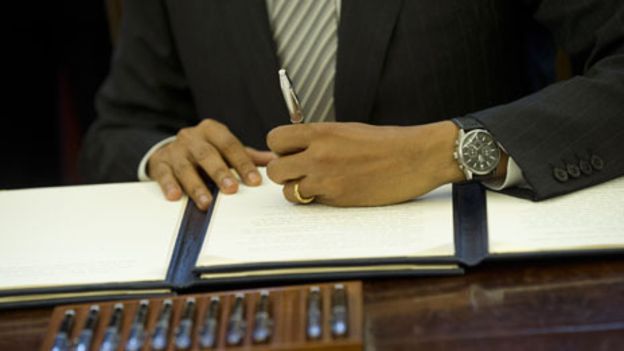
_69685453_obama_signing_afpHey!!! Today is left-handers day!

BABE_RUTHRemember Babe Ruth?  Left-handed.

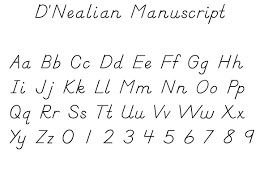
I am left-handed.  When I was still in elementary school learning how to write, we had to have a writing pad to practice with.

images (2)

These pads were set up for right-handed people, because one was supposed to “slant” ones letters to the right.  And my mom was determined that when I wrote, first, I would not right with my left hand all twisted around (bad enough I was left-handed), and second, I would make those letters slant the right way.  My mother was right-handed and had beautiful hand-writing.  I still don’t think my writing slants correctly, but I do not write with my left hand curved around in a circle.  Only because I got hollered at if I did.  Anyhoo, my mom was just doing what she thought best, and I do not have a problem being left-handed.  Except when I have to sign one of those machines at the pharmacy after I slide my card-they are only made to turn to the left to make it easy for right-handed people to sign.

The other day I went to lunch with my daughter, Melony and my grandson, Edward, because Edward is moving to Nevada.  We had a ball.   As you can see, Edward is right-handed so I couldn’t sit too close to him as our elbows would crash together,  My original idea for writing a book about my father, Eddie Green, came to me when Edward was about six years old.  You can see how long he has been waiting for me to write this book.

meandedward

Of course, today, in regard to writing my book, I don’t actually write anything.images (3)

It has all been done on my trusty laptop.  And I think I am happy to say that I hope to be ready to hand over my manuscript for outside editing by the end of the month.  I think I am happy because I feel slightly queasy.  Although, this endeavor has never been about fame and fortune, only a way to share with Edward and others, that a person can achieve their goals against all odds.  Eddie did.

importfromphonejuly 132

More to come.  Thanks for stopping by.

A BIT OF REHASH AND SOMETHING NEW

Eddie Green-Getty Image  Hello there, today I am going to do a short re-cap of this gentleman’s (my father, Eddie Green) story so far, for those who have just tuned in, or may have forgotten my previous posts, or maybe it’s just for myself while I wrap my head around the fact that I must get back into posting mode, from book writing mode.

This month, if Eddie had still been alive he would be 124 years old on August 16th.   Even though I am way past grown, I still sometimes wish Eddie hadn’t died in 1950.  I mean, people do live a long time.  I know there was a French lady who lived until she was 124, and  Jiroemon Kimura became the oldest man in history on December 28, 2012, at the age of 115.  So, Eddie could have lived until 2015, if Life’s plan had been my plan.

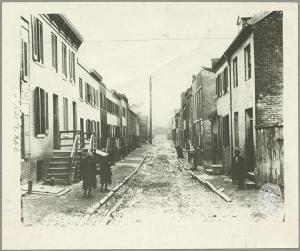
Eddie was born in 1891 in East Baltimore in a poor neighborhood.  He left home when he was nine, became a “Boy Magician” to support himself, and by the age of eighteen, in 1909 he married his first wife.

svf_b_streets_biddle_alley

By 1917, Eddie was living at 1405 Ten Pin Alley and was working at the Standard Theater as a magician, with a little bit of comedy thrown in, and he was also performing handy man chores.

large
Standard Theater

That June, Eddie signed up with the draft board for WWI, I don’t know where he may have been stationed or if he stayed at home because by now he and his wife had a child, my step-sister.

005150793_04693 (2)This is a tiny picture of a 2-page draft card,, but notice that a corner has been torn off, which is how the Government kept track of the Black men that were signed up.  The document says:

Name:Edward Green

City:Baltimore

State:Maryland

Birthplace:Maryland,United States of America

Birth Date:16 Aug 1891

Race:African (Black)

Draft Board: 05

By the year 1921, Eddie had dropped his magic act and had gone into comedy on the Vaudeville and Burlesque stage.

tumblr_inline_mm705itKc41qz4rgp

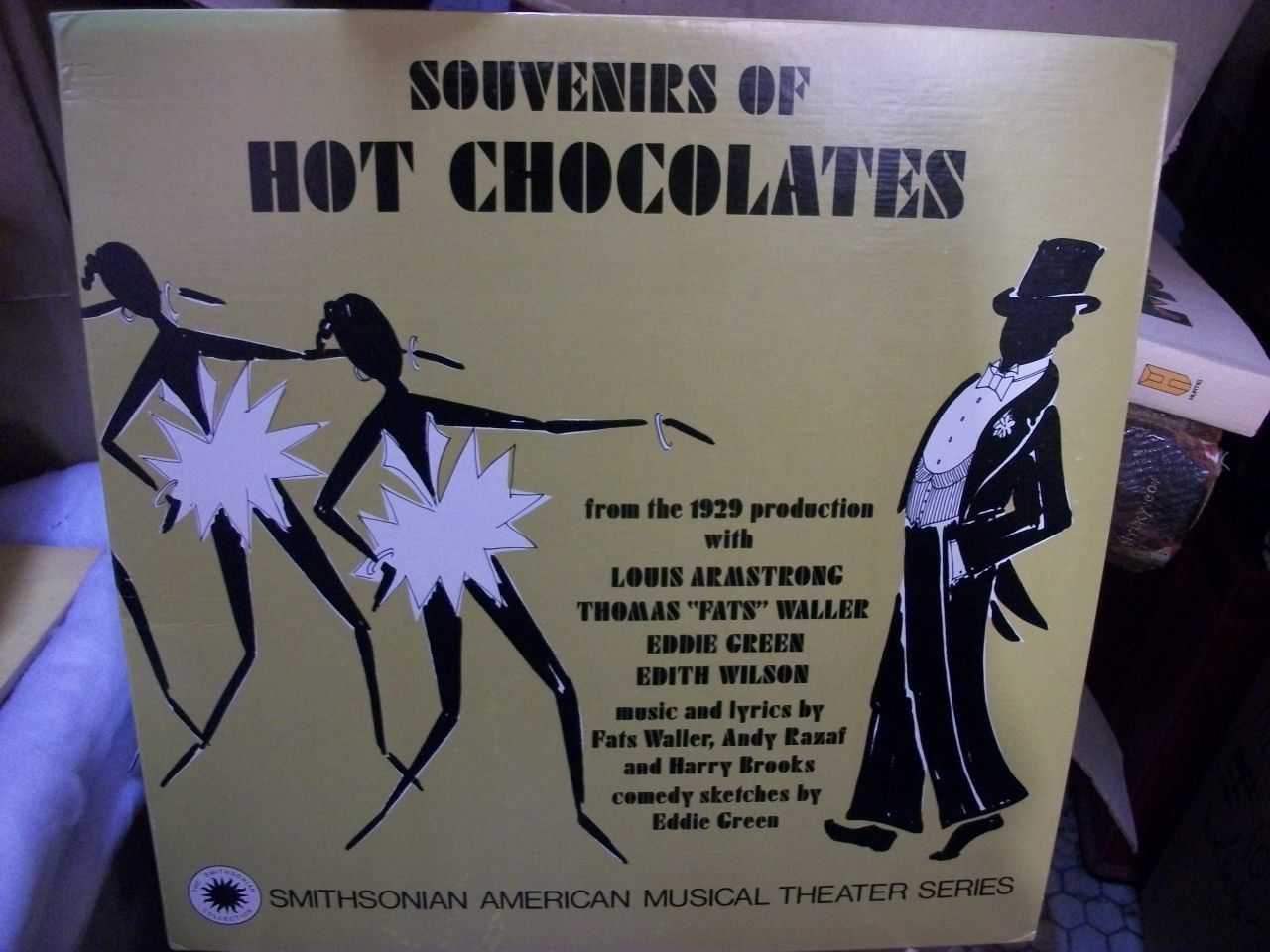
By 1929 Eddie appears in the play “Hot Chocolates” along with Louis Armstrong, and “Fats” Waller, and Eddie also wrote the comedy sketches for “Hot Chocolates”, as listed on this album cover which you can see if you have really good eyesight.

$_57

1939, we find Eddie, as “KoKo”, singing “Tit Willow” in the Mike Todd adaptation of Gilbert & Sullivan’s “Mikado”, “The Hot Mikado.”

On a tree by a river a little tom-tit
Sang “Willow, titwillow, titwillow”
And I said to him, “Dicky-bird, why do you sit
Singing ‘Willow, titwillow, titwillow'”
“Is it weakness of intellect, birdie?” I cried
“Or a rather tough worm in your little inside”
With a shake of his poor little head, he replied
“Oh, willow, titwillow, titwillow!”

hotmikado13

Eddie is “KoKo”, the little guy with the tall white hat.  He was the Lord High Executioner.  Isn’t he cute?

And now we are at the place I left off with my last post (does that make sense?).

By now, late 1939, Eddie is on his third wife, they are living on 138th Street in New York, and at the beginning of 1940, Eddie wrote, directed, produced and starred in his third film “Comes Midnight”, which, per some reviews, was his best film yet.

61FklgttwBL._SY450_ (2)There are some funny stories about the making of this movie, which I will go into in my next post.

I cannot emphasize enough how much pleasure I am getting from researching my father’s life for a book and for this blog.  I encourage you to consider delving into the history of someone in your family, because what I have found is that I am learning so much more about the people who came before me, who worked hard day and night to foster progress in this country and in this world.   And, I continue to be blown away by new people who come into my life via this blog and who provide me with additional information.   Just people who share the same interests.  My father’s hobby was ham radio.  He would talk to people all over the world and I am beginning to be able to understand his enjoyment of simply connecting with people.

Ok, gotta go.  Thank you, for stopping by.

GENERATIONS – GRANNY AND TANISHA

Granny and Tanisha #generations
Granny and Tanisha
#generations

Hi there.

My niece, Tanisha, posted a picture of herself and her Granny on a social website the other day and when I saw it, it struck a chord in my soul.  Tanisha’s hashtags were “generations”, “genes” and “spongecurls”, obviously referring to the similarities in the two pictures.

What struck me the most about this post was the fact that Nish had put up a picture that absolutely speaks to one of the points I am trying to make in writing a biography of my father, Eddie Green.

As some of you know, I have been sharing stories on this blog about my father who was a star of stage, radio and screen in the 1920s, 30s, 40s and 50s, but had basically become absent from the entertainment memory.  And had become a distant memory in the familial sense.  The biography I am writing is to bring Eddie and his numerous achievements back into the light.  To remind those who have come after him what can and has been accomplished by a black man when times were tough during racial segregation, world financial troubles and war, and to remind his descendants, such as my grandson, from whence they come.

I am talking black people here because we (I and mine) happen to be black (with a little bit of this and that thrown in, but that’s for another story), but the idea of remembering those who came before us and continuing to acknowledge and celebrate them is something that can be done by anybody, anywhere.

What we have today is directly linked to what the generation before us did.  Any progress we have made is due to the generations before us.  Rap, electric cars, Black movie directors, space flight, smartphones; in order for these to have been available for us, someone had to start the ball rolling.

Because our past generations have passed on, as Granny has, or whether they may just be getting to the place we call “old age”, ought not mean they are forgotten.

Thanks Nish, for helping me put my thoughts into words.

And thank you so much for stopping by.

I AM WRITING FOR POSITIVITY

bad-posture-cartoon-300x290

Hi there!!  The above picture is me working on the proofing and editing of the first draft of the book about my father, Eddie Green, Star of Stage, Screen and Radio from the 1920s through 1950.

darlene-blog-icon

It’s hard work!  And very time consuming!  And in the process of verifying information, I keep finding new information that just must go in the book!

For instance, I found my father’s 1917 WWI registration card and on the card where it says “Race”, Eddie wrote in “African”.  So I started reading about Africa and how Blacks first came to America and what happened after they got here, and I wound up on a site discussing Billie Holiday and her singing of the song “Strange Fruit.”  So I looked up “Strange Fruit” and found the story of the man who wrote the song.

Mr. Abel Meeropol (February 10, 1903-October 30, 1986), was a writer, teacher and song-writer.  Mr. Meeropol wrote this song after seeing a photo of the hanging of a black man because the photo affected him so profoundly, in regards to the inhumanity of racism.  Billie Holliday received the song through another source and recorded the song and Mr. Meerepool became well-known through this song.

Mr. Meerepol was a man of compassion.  He cared about people.   He was at the house of W. E. B. DuBois one evening and he met the orphaned sons of Julius and Ethel Rosenberg.  Mr. Meerepol and his wife got to know the boys and began to care for them and eventually adopted the boys.  Mr. Meeropol passed away due to complications of pneumonia at a Jewish Nursing Home in Massachusettes when he was 83 years old.

Mr. Meerepol was the type of person I would like to know.  His thought process is what attracts me and somehow ties in with what I have been trying to incorporate into my posts.  That even though there are awful things that happen in the life, there are people who genuinely care about others, no matter what their “color”.   It’s people working together.

Ok, then I was thinking about all the help I have had since I began my book project from people who don’t know me from Adam.  I have received legal help, help with radio scripts, cd’s, free books.  I talk with people in the U.K.  I have been feeling really grateful for the help I have received.  And just wishing the race question could be a little simpler.

So then I start thinking about what to put in my post today.  My last post dealt with Eddie’s first movie in 1939, so I decided to write about the fact that Eddie, while working in the “Hot Mikado”, and contemplating his next movie, was also in charge of “The Miss Sepia Beauty Contest” at the 1939 Worlds Fair.  But when I went on-line to get information, I could find nothing about Miss Sepia or Eddie at the World’s Fair.

5814421775_46ea0e10b6_b
The Perisphere NYWF 1939-40

However, at the New York Public Library there is archived information about:

39negr

All correspondence, speeches, exhibition material, pass and address lists, and financial records  relating to the planning and presentation of “Negro Week” at the New York World’s Fair, 1940, became the property of the growing Schomburg Collection in New York.

“Negro Week” consisted of festivals, exhibitions, song and dance recitals, choral and symphonic music, concerts, religious services, guest speakers and a children’s program.  Noted events during the week included a dramatic sketch of the “Life of Booker T. Washington” performed by the Rose McClendon Players and performances by the Karamu Dancers, Eubie Blake, W. C. Handy, James P. Johnson, Cecil Mack and Philippa Schuyler.  There were speeches by W.E.B. DuBois and L. D. Reddick relating to various aspects of black contributions to American culture.

There was also a beauty contest.  The Pittsburgh Courier printed “South Carolina Beauty Wins
“Miss Sepia America Crown”, with a picture and this blurb under the picture:  ” Helen Lewis, wins first prize honors in nation-wide beauty contest in New York.   The second photo presents “Miss (Sepia) America” and her running mates.   “New York is a great place,” Helen agrees in final photo, as she goes on sight-seeing tour with Eddie Green, master-mind behind contest.”

Back in the day, news about Black endeavors only made it into Black newspapers.  Things have changed.  We, people, make the changes together.

imagesThank you so much for stopping by.

NPR music, E. Blair npr.org 2012

Pittsburgh Courier, 1940