I’m So Excited

th (6)I’m so excited, and I just can’t hide it
I’m about to lose control and I think I like it!


Hi, there!  I have been working diligently on the biography of my father, Eddie Green, for the past couple of weeks, because I am so close to finishing and I want to get the manuscript sent out for proofreading before I send it to a publisher. One year ago I bought my first laptop and started this project. AND THEN, last week, out of the blue, I received a message from a lady whose 90-plus year old Grandmother, whose name is Millicent, had been in one of the movies my father directed, produced and starred in, “What Goes Up.” The movie was made in Fort Lee, New Jersey in 1939.

Evidently, Millicent had for years been telling  the younger members of her family about those days, but no one really listened until one family member decided to investigate. She went on line and found my blog (yay!) after typing in Eddie’s name, and now I get to add a bit more information to my book, and I get to share a little of Millicent’s story (she played a chorus girl in the movie) with my readers. This is exactly the type of thing I wanted to happen, though I wasn’t sure it would.
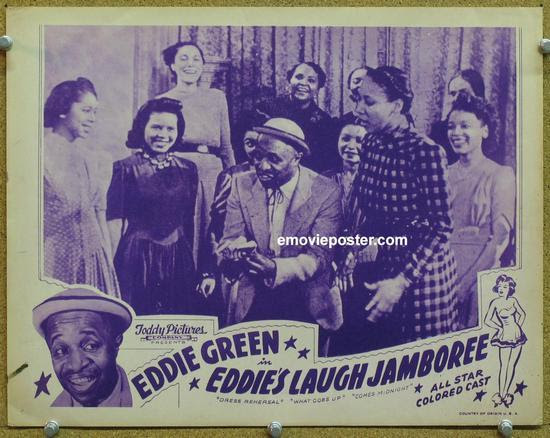
Millicent is the shorter woman in the front in the black dress.  I have had a copy of this photo for a long time, but had no idea who these women were. Now I know one of them.  Millicent and I live in different cities and have never met, but, boy, am I glad her relative found me.  (Laugh Jamboree was a Toddy Pictures production, though the movies, Dress Rehearsal, What Goes Up and Comes Midnight, were Eddie’s.)

Through her granddaughter, Millicent has provided me with more insight into Eddie as an entertainer and as a movie producer than she will ever know.  For instance, she says that Eddie was “all business”.  Well, in a Baltimore Newspaper article from around the same time that Millicent knew Eddie, the headline reads: ” As a Comedian, He’s Very Funny, As a Business Man, He’s Very Sensible and Comedy is a Business.” The article goes on to say “The fact that Eddie is so funny on the screen, stage and radio is due to the highly intelligent and efficient manner in which he conducts his work.”

The other thing about this contact with Millicent, is that, had my mother, Norma, still been alive today, she would have been 92 years old. For those that don’t know Eddie married my mom when he was 54 and mom was 22. So Millicent was a cast member in Eddie’s movie, about the same time Eddie first met my mom.  I love Millicent, I don’t know her, but that’s ok. I have a few more tidbits to share (Millicent was a beauty contest winner), but I will save them for another post.

Being able  to look back and “experience” the past through my book and this blog, brings me so much joy.  I mean, just because its 2015 does not mean past times are inconsequential. Past times, older people,  are extremely important to who we have become today, and well worth the attention, in my opinion.

Thank you, Sharon.

And, thank you, for stopping by.

Lyrics for “I’m So Excited” courtesy of The Pointer Sisters


.


NETWORKING-A DEFINITE BENEFIT TO MY QUEST

Grandma Norma 1945
Grandma Norma 1945

Hello Family:  Personal, wordpress and FB.  Yesterday I got a chance to attend a mini-fair and community gathering at the William Grant Still Community Arts Center in the West Adams District of Los Angeles, California.  William Grant Still (May 11, 1895 – December 3, 1978) was an African-American classical composer who wrote more than 150 compositions. He was the first African-American to conduct a major American symphony orchestra, the first to have a symphony (his first symphony) performed by a leading orchestra, the first to have an opera performed by a major opera company, and the first to have an opera performed on national television.images (12)

The Art Center focuses on the artistic efforts of the community and has a variety of programming throughout the year reflecting the  multicultural diversity of its neighborhood where Still resided for twenty years.  It has been serving the Westside of Los Angeles since 1978. 

My mom, pictured above, had aspirations to become an opera star, and I thought by attending this mini-fair I might be able to hook up with someone who remembered those days, the late 1930s through 1945.  Well, I did.  I also discovered a lot more information about the 1940s and 1950s and what was then a mostly Black neighborhood that was home to many entertainers, architects, doctors and lawyers.

I am focusing on entertainers in this post because that is what my mother and father did.  I chose to go to the gathering at the William Grant Still Center because I also figured I would find people there who had an interest in opera.  My mom used to sing at weddings at the Wilfandel Club on Adams Boulevard, and I found out yesterday that the club is still active.  Possibly I will be able to find more information when I visit them.

I was actually able to provide some new information to the people I met, who were very interested in who Grandma Norma was.  I forgot to mention while I was there that mom was Hattie McDaniel’s protege’, (Hattie McDaniel, first Black female to win an Academy Award,) though I did show them a picture with mom and Hattie, which a couple of people copied for themselves.  I also had the following article, but I didn’t get a chance to share it yesterday.  ” Representing Miss Hattie McDaniel as guest of Miss Lena Horne at her “after theatre,” party closing her Headline Orpheum appearance, was Miss Norma Anne Amato and her mother, Sinclaire White Amato, violinist and pedagog.” The Caifornial Eagle newspaper, June 22, 1944.

I was able to share information about mom’s mother, Sinclaire, who like Mr. Still, played the violin and was the sponsor of the Music Arts Association back in the day.  1931 to be exact.  I was able to become acquainted with someone who would like to begin some type of Art Appreciation club here in L A. again for our kids.

Of course, I also took pictures of Eddie, my father, songwriter, producer, comedian, to share with the people I met. As I suspected, even though there were older people at this function, not one of them remembered Eddie.  However, I found people who knew of people that Eddie worked with.  So I was able to acquaint them with Eddie and I got a chance to exchange cards with other writers of black history.

Bringing Eddie’s accomplishments in the entertainment industry out of the shadows is my quest. I was able to accomplish that, somewhat, at yesterday’s event.   I  found one one-page article with information on it that I could connect to Eddie.  Such as:  The article mentioned Clarence Muse, actor, director, composer. I have this picture of Eddie and Clarence  00001389 Courtesy of L. A. Public Library, donated by Attorney Walter L. Gordon, Jr., my godfather.

The article I saw yesterday  also mentioned Lena Horne, I have an article  from the Pittsburgh Courier, 1945, in which the columnist wrote:   “Last Monday through the courtesy of the NBC broadcasting studios, I witnessed the second production of “Jubilee” to be sent to those fine fellows across the sea:   Eddie Green did a comic script with Santa Claus (Whitman) and Lena Horne.”

This same one page article that I found yesterday mentioned Sydney P. Dones, former actor and producer, well I found an article from The California Eagle, March 20, 1947, that mentioned Eddie and my godfather being at the same function, as  Mr. Dones.:  “Dropped in on the candlelight introduction of Les Dames club Sunday evening, Atty. Walt Gordon seemed to be having a grand time greeting old friends, as did Norma and Eddie Green, Sidney Dones.”

The point here is that though Eddie was a visible, well-known figure in those days, it seem to me that he has faded from view. I hope to rectify that.

These folks lived near each other in the Adams Historical District in the 40s and 50s.  Hattie McDaniel on Harvard, Sidney Dones, on Hobart, Clarence Muse on 24th Street, Rochester, a friend of the family lived off of 37th Street and we lived on Second Avenue, near 36th Street.

I got the chance yesterday to network and share Eddie’s history, and mom’s.  And I will go to great lengths to do that.  It took me 4 hours on the bus to get there, same to get back (MTA and Red Line), but I did it.

I will leave you with a few lines from the Eddie Green, Ernest Whitman, Lena Horne skit.

SANTA(Ernest Whitman): Well, my boy, I brought you something that you’ll like. This is your package.

EDDIE: I guess I’ll open it. Well, looka here, it’s a Lena Horne mamas doll, ain’t that nice. It’ll be good if when I squeeze it, it says mama.

LENA (seductively): Oh daddy.

EDDIE: Well, That’s good enough!

By folks, thanks for stopping by, and thank you Kristina, for giving me the idea to research Grandma Norma’s singing career.

Peace and love

.

CLOSE KNIT TIES, THROUGH SHOW BUSINESS

quote-Irving-Berlin-theres-no-business-like-show-business-66100

Hi there, welcome and welcome back.  Today my brain is empty, well, almost.  I have been focusing on which photos I want to put in the book I am writing and as I have a one track mind, I have not been able to come up with a post.  My main issue is that some of the photos I want must be purchased from newspapers or museums before I can use them, so I have to spend my money wisely.  Do I want ten photos or twenty?  The photos will be sent to the publisher along with my manuscript., and I am shooting for a month or so from now.  So, with this post I am going to cheat a little and let the newspapers do the talking.

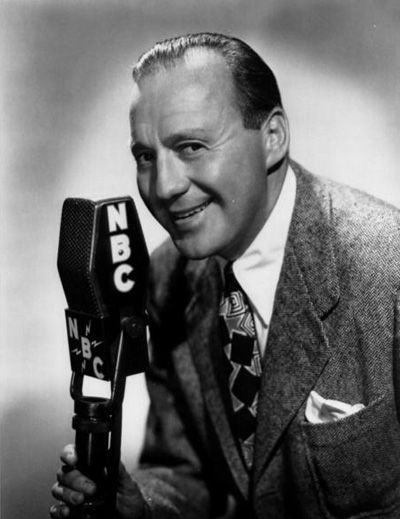
In 1943, Duffy’s Tavern and the Jack Benny programs were big hits.  The two main stars were Ed Gardner and Jack Benny.

Ed_Gardner_Duffy_1949 (2)
Ed Gardner

.

Jack Benny
Jack Benny

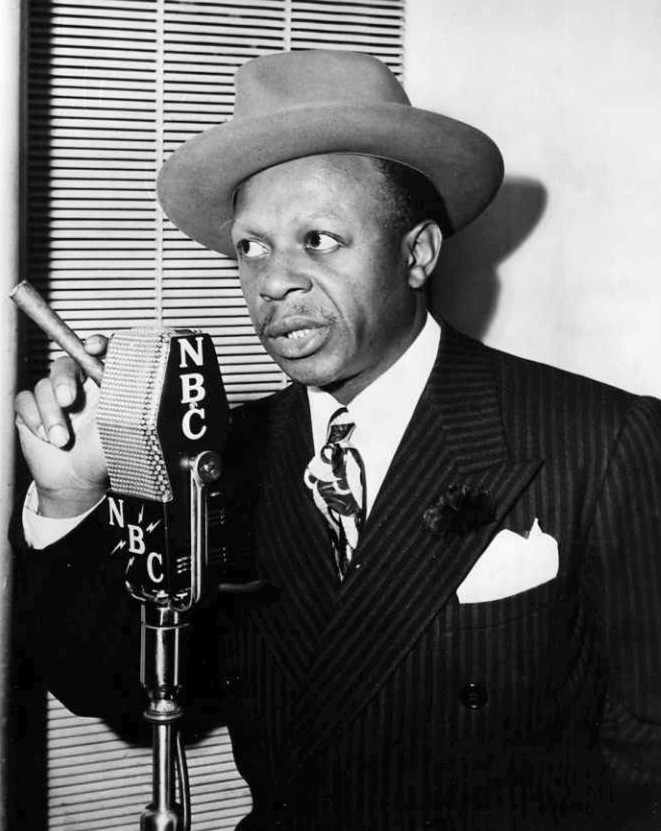
However, the popularity of these shows was also due, in part  to two other gentlemen:  Eddie Green and Eddie “Rochester” Anderson:

Eddie Green
Eddie Green
Eddie "Rochester" Anderson
Eddie “Rochester” Anderson

In 1943, both Eddie and Rochester appeared together on “Duffy’s Tavern”.  The following article appeared in The Pittsburgh Courier, January 1943, with the title, “Rochester, Eddie Green Steal the Show” – Eddie “Rochester” Anderson and Eddie Green climaxed the season’s laugh riots with a battle of wits on the popular Blue Network show “Duffy’s” on Tuesday evening. The comedians, together for the first time, were featured prominently during the hilarious half-hour, contributing much to the success of the show. Although old friends since vaudeville days, when Rochester was a dancer and Eddie a comedian their opportunity to appear on the same entertainment bill did not come until Jack Benny’s show began a tour of service camps in the East.  Rochester’s success in pictures has paralleled that of his work in radio, having been featured in “Jezebel,” “Gone With The Wind” and several Jack Benny films.  Eddie Green is heard regularly with Ed “Archie” Gardner on the Duffy’s program; following a successful run on Broadway with Bill Robinson in “The Hot Mikado.” He started as a boy magician and now owns the Sepia-Art Pictures, film producing company, servicing over 500 theaters.”  Pittsburgh Courier, January, 1943.

I am proud of Eddie and Rochester.  Rochester remained a family friend after my father died and would visit us periodically.  I have had the pleasure of having a conversation with Rochester’s son, during the past year, and I have also had the pleasure of communicating with Ed Gardner’s son.

Eddie Green, Ed Gardner, Eddie “Rochester” Anderson and Jack Benny were a show business family.  They showed us how it can be done.

Thanks, for stopping by.

Photos courtesy of Google Advanced Images.

Into Each Life, Well, you know the rest.

untitled (23)

Well, as my dear sweet mama would say, into each life, some rain must fall.  Actually, she would usually say it sarcastically, but it still means the same thing.

In the on-going saga of my father’s life, considering he was born a Black man in 1891 in the “poor” part of town in East Baltimore, Eddie, who, by 1941, had become a star of stage, screen and radio,  owned two restaurants and a movie studio, had a good life.

Two years later……  In an article, dated January 2, 1943, an article was printed in the local newspaper, well, it wasn’t even an article, it was a paragraph:

Eddie Green the comedian, who once owned a chain of Bar-b-q places in Harlem, his own movie producing company and who ran the gamut of one stage and radio success to another, has filed a voluntary petition in bankruptcy in the U. S. District Court.  His listed liabilities are $5,119.00 and assets $473.00.  He owes the government $445.74 that should have been paid weeks ago.  Always a fine fellow, the misfortune of Eddie is not without sadness.

Imagine having your personal business in the neighborhood newspaper.  Of course, today everybody knows everybody else’s business, whether we want to or not, but I still think he may have experienced some embarrassment.  But, maybe not.  He probably used it in his comedy routines, like the one he did three days later in the  January 5, 1943 Duffy’s Tavern show with Milton Berle as the guest:

EDDIE:  What is that sign you’re making, Mr. Archie, is it a welcome sign for Mr. Berle?  ARCHIE:  No Eddie, it’s a resolution, you know, one of those New Years things.  Listen to it, “There is a well known golden rule, through the ages it’s been true, always be good to your neighbor, they may live next door to you.”  That’s good, huh?  EDDIE:  Yea, it makes a lot of sense, too.  How bout hangin up a sign for the waiter, me.  ARCHIE:  Like what, Eddie?  EDDIE:  Like this: “The golden rule has a fine intent, but a ten cent tip will pay the rent.”

I really do believe that it pays to have a good sense of humor.

So, Eddie did still have his job as the waiter on Duffy’s Tavern and two months later, in March Eddie was a guest on the Caravan radio show, along with the popular radio emcee, Gary Moore, who was also a guest on the program.

Screen shot 2011-08-19 at 2.41.44 AM Some of you reading this may be too young to remember, but I know a few of us vaguely remember The Gary Moore Show, or I’ve Got A Secret or To Tell The Truth which Mr. Moore hosted till about 1976.  I remember Mr. Moore as always having a smile on his face.

Despite Eddie’s setback, his success story was far from over.  More to come….

Thanks, for spending some time with me.

IT JUST KEEPS ON GETTING BETTER

 You’ve Screamed at Him on Duffy’s Tavern In Person – EDDIE GREEN!

duffyscastonstage

This headline was from an article in 1945.  Eddie was scheduled to appear at the Orpheum Theater, in Los Angeles, on May 1st, along with The King Cole Trio, and, Johnny Otis and his Orchestra.

In case you are new to my blog, Eddie, my father, is the Black gentleman with the big smile on his face, in the above photo.  Kinda like my smile.  The gentleman in the hat, is Mr. Ed Gardner, creator of Duffy’s Tavern, the gentleman next to him is Charles Cantor and the lady is Florence Halop.

In the seven years prior to 1945, Eddie had owned two barbeque restaurants in New York (specializing in southern bar-bee-Q), he had made four of his own movies, and, he was on The Executive Board of the Negro Actors Guild of America, Noble Sissle, President, along with Mrs. Noble Sissle, and W. C. Handy.

.

images (8)
Ben Bernie, 1938 Google Advanced Image Search

Eddie had also appeared on  the Ben Bernie Music Quiz radio program.  Ben Bernie was a jazz violinist, and a bandleader as well as a radio personality, who was born in 1891 (like Eddie.)  He originated the term “yowsa, yowsah, yowsah,” that became a national catchphrase, and which was used in the movie, They Shoot Horses, Don’t They?

York_they_shoot

I thought They Shoot Horses, Don’t They?, was very “deep” when I saw it, a movie about  a depression era dance marathon, with contestants desperate to win. I mean, these people stayed on their poor feet a long time.   Now, I am writing a book, years later,  about my father appearing on a radio program starring a man associated with this movie.  It just blows me away.  Small world.

Eddie had appeared on many radio programs, including a radio special titled, “All God’s Children,” with Paul Robeson. Eddie was even a guest on The Jell-O Program, starring Jack Benny.  In the following episode titled “Columbus Day,” (cause it was), Jack is talking on the phone to Rochester who needs $50 dollars to pay off some debts and he sends his friend, Columbus Smith (played by Eddie), to pick up the money from Jack.

jackbenny
Jack Benny Google Advanced Image Search
Knock, knock, knock.
BENNY:  Come in.
COLUMBUS:  Excuse me for intruding, Mr. Benny, but I got a note for you.
BENNY:  I’m sorry, I’m busy right now, come back later.
COLUMBUS:  I would advise you to take a quick gander at this communique.
BENNY: All right, what’s the note, what does it say?
COLUMBUS:  I’m only a carrier pigeon, we ain’t much on reading.
BENNY:  Oh, ok, let’s have it.
MARY LIVINGSTONE:  Who’s it from, Jack
BENNY:  It’s from, Rochester.  Listen to this, dear boss, please give bearer, Mr. Columbus Smith – Columbus?
COLUMBUS:  Yea, that’s me.
BENNY:  Oh.
MARY (to Columbus):  Happy Anniversary.
Loud laughter from the audience.

Eddie would find his greatest fame, however, through the popular radio show, Duffy’s Tavern. 

The show aired March 1, 1941. Once a week, Duffy’s Tavern entertained America’s citizen with the antics of Archie, the bartender, played by Ed Gardner, the creator of the show,  Eddie, the waiter played by my father Eddie Green, and the tavern regulars, Finnegan, played by Charles Cantor, and Miss Duffy, (the tavern owner’s daughter), played by Shirley Booth. Duffy of Duffy’s Tavern was never seen or heard, but the show would start off with Archie having a telephone conversation with his “boss”, Duffy.  The phone would ring, and Archie would answer:  “Hello, Duffy’s Tavern, where the elite meet to eat, Duffy ain’t here, Archie speaking, oh, hello, Duffy.”  Usually, the show featured a different celebrity guest each week.
Archie, the bartender, tended to misuse the English language and Eddie would usually call subtle attention to this fact:
Chapeau
Chapeau
EDDIE:  Mr. Archie, what happened to the sign?
ARCHIE:  What sign, Eddie.
EDDIE:  The “watch your hats and coats” sign.
ARCHIE:  There it is, only I rephrased the words so Clifton Fadiman would feel more at home here.  Read it.
EDDIE:  Maintain scrutiny of thy chapeaus and hats, umm, nice and confusing, ain’t it?
ARCHIE:  Yes, isn’t it?  It’s a quotation from Shakespeare.  Did you ever see any of Shakespeare’s
plays, Eddie?
EDDIE:  One, As You Like It.
ARCHIE:  Well?
EDDIE:  I didn’t like it.
Eddie would appear in every episode until his death in 1950, as well as appearing in the same role in the 1945 movie.
After Eddie got the role in Duffy’s Tavern, he was able to fulfill another dream of his, The Pittsburgh Courier reported “Eddie Green, comedian of radio and stage fame has opened a dramatic training school with services and classes for both amateurs and professionals.  The School is called Sepia Artists.”
Thank you for coming today.  I hope these stories of my father and his ambitions inspire you to go after your dreams, no matter how unattainable they may seem.

WRITING FROM A DIFFERENT VIEW

books

I am a writer.  I am writing a book.  I have begun to think of myself as a writer.  A writer spends an enormous amount of time writing, and editing.  Writers spend a huge amount of time editing, one would hope.  Then re-writing.

It’s addicting.  this one Sitting at a desk can get really comfortable if you have the right cushions.  I have to pull myself away from the desk in order to get some exercise, and I have to pull myself away from the book in order to post to my blog.  It’s bad enough I have to leave my desk to shop for food (not really).  But when I am at my desk, I want to finish polishing my book, period.    When I remember that I have a blog to post to, and posts to read, I tell myself, ok, I’ll just finish proofing these next two pages, and before I know it, it’s an hour later.  I absolutely love what I am doing, though.  Love it.

Today, I want to veer slightly away from my normal subject. my father, star of stage, screen and radio, Eddie Green, to talk about a Mr. Joe Cook.  I found a blurb in a newspaper that said something like, “this week Eddie Green will appear on the Joe Cook show.”  Who the heck is Joe Cook?  I found out that Mr. Cook is another person, like Eddie, who became quite famous in the 1920s and 1930s, but, due to “circumstances”, is not widely remembered today.

I, myself, am not really a big fan of old time stuff, necessarily, like vaudeville, or burlesque.  My focus is basically on the fact that society tends to remember, and talk about, the same people, over and over.  Take Marilyn Monroe, for instance.

untitled (19)

Sure, she was gorgeous.  And men still wait for the wind to blow up some ladies dress.  My mom was sitting on the bus stop one day, next to a little old guy, mom was about 76 at the time, and she was dressed, as usual, in a skirt, and the wind started to blow.  Mom told me that the old man next to her started saying, out loud, “blow wind, blow.”

I mean, can we find someone else to talk about, for Heaven’s sake?

Like Joe Cook.

joe Cook 1930 cameo_thumb[2]
Joe Cook-Courtesy Google Advanced Search
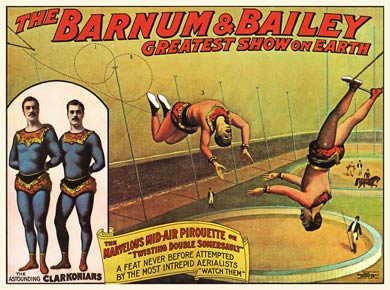
Mr. Joe Cook was born in 1890 as Joe Lopez.  Joe was orphaned at the age of three, and grew up an adoptee.  In 1909, Joe left home and joined the circus.

STCS1016,-Barnum-&-Bailey,-

Joe became a fantastic juggler, he could walk the tightrope, he was a mime, as a matter of fact, he became a major star in the circus.

Joe went on to prosper in Vaudeville, working the stage for fifteen years.  Joe’s nickname at the time was “one man vaudeville,” because he was so versatile.  He could play the piano, the ukulele and the violin.  He told hilarious stories.  The audiences loved him.

In the 1930s Joe became a Broadway musical comedy star.  And in the late 1930s, Joe had his own radio shows, one on which he chose Eddie to make an appearance, and, he was also constantly receiving requests to be a guest on shows other than his own.  He was quite popular.  Let’s not forget Joe Cook.

Neither Joe, nor Eddie, were beautiful girls with their skirts flying up in the air, but they did provide laughter, and that is something that is always welcome.

Thank you, for stopping by.

A BIT OF REHASH AND SOMETHING NEW

Eddie Green-Getty Image  Hello there, today I am going to do a short re-cap of this gentleman’s (my father, Eddie Green) story so far, for those who have just tuned in, or may have forgotten my previous posts, or maybe it’s just for myself while I wrap my head around the fact that I must get back into posting mode, from book writing mode.

This month, if Eddie had still been alive he would be 124 years old on August 16th.   Even though I am way past grown, I still sometimes wish Eddie hadn’t died in 1950.  I mean, people do live a long time.  I know there was a French lady who lived until she was 124, and  Jiroemon Kimura became the oldest man in history on December 28, 2012, at the age of 115.  So, Eddie could have lived until 2015, if Life’s plan had been my plan.

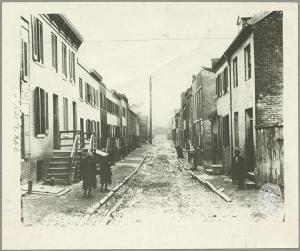
Eddie was born in 1891 in East Baltimore in a poor neighborhood.  He left home when he was nine, became a “Boy Magician” to support himself, and by the age of eighteen, in 1909 he married his first wife.

svf_b_streets_biddle_alley

By 1917, Eddie was living at 1405 Ten Pin Alley and was working at the Standard Theater as a magician, with a little bit of comedy thrown in, and he was also performing handy man chores.

large
Standard Theater

That June, Eddie signed up with the draft board for WWI, I don’t know where he may have been stationed or if he stayed at home because by now he and his wife had a child, my step-sister.

005150793_04693 (2)This is a tiny picture of a 2-page draft card,, but notice that a corner has been torn off, which is how the Government kept track of the Black men that were signed up.  The document says:

Name:Edward Green

City:Baltimore

State:Maryland

Birthplace:Maryland,United States of America

Birth Date:16 Aug 1891

Race:African (Black)

Draft Board: 05

By the year 1921, Eddie had dropped his magic act and had gone into comedy on the Vaudeville and Burlesque stage.

tumblr_inline_mm705itKc41qz4rgp

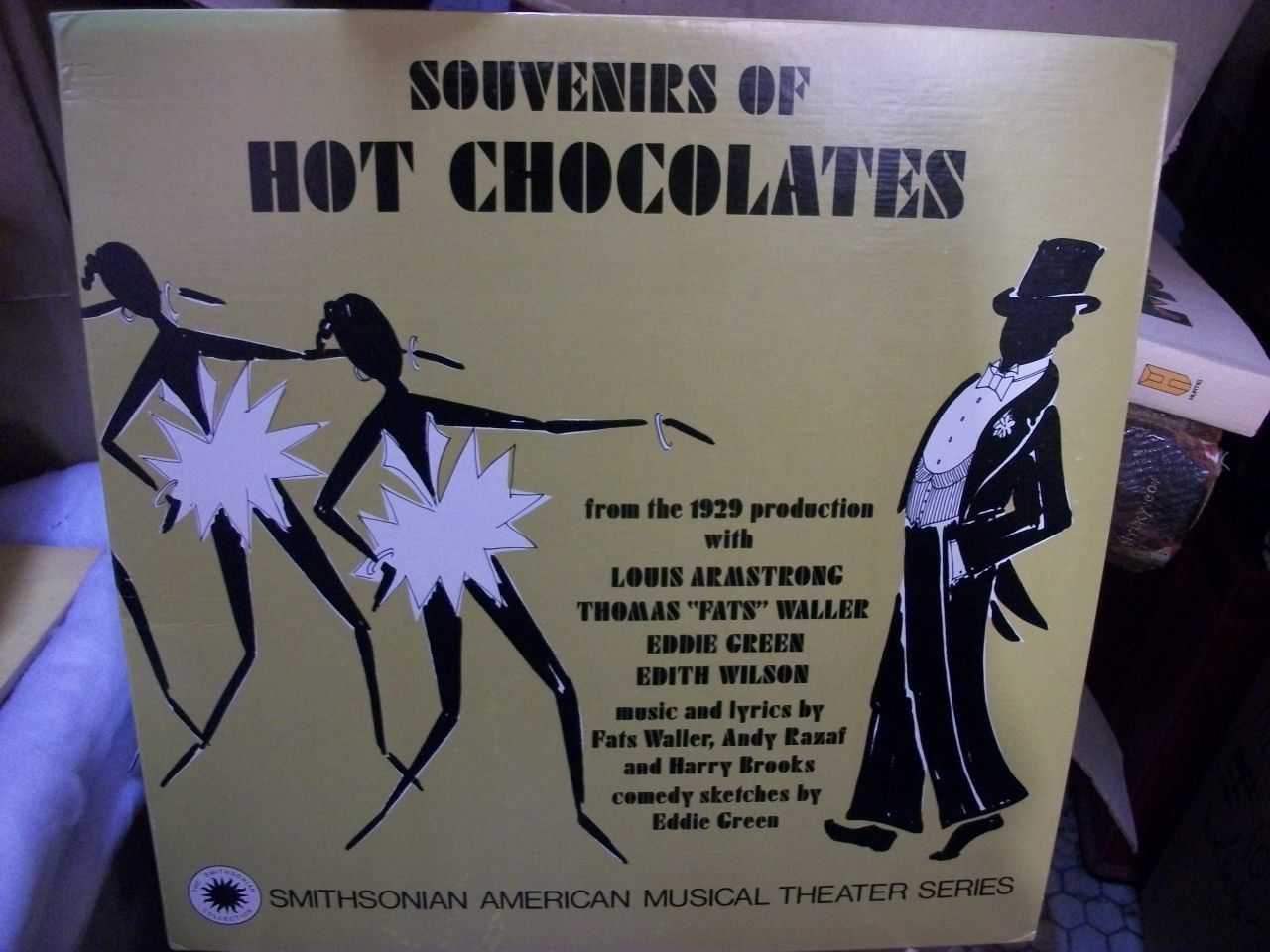
By 1929 Eddie appears in the play “Hot Chocolates” along with Louis Armstrong, and “Fats” Waller, and Eddie also wrote the comedy sketches for “Hot Chocolates”, as listed on this album cover which you can see if you have really good eyesight.

$_57

1939, we find Eddie, as “KoKo”, singing “Tit Willow” in the Mike Todd adaptation of Gilbert & Sullivan’s “Mikado”, “The Hot Mikado.”

On a tree by a river a little tom-tit
Sang “Willow, titwillow, titwillow”
And I said to him, “Dicky-bird, why do you sit
Singing ‘Willow, titwillow, titwillow'”
“Is it weakness of intellect, birdie?” I cried
“Or a rather tough worm in your little inside”
With a shake of his poor little head, he replied
“Oh, willow, titwillow, titwillow!”

hotmikado13

Eddie is “KoKo”, the little guy with the tall white hat.  He was the Lord High Executioner.  Isn’t he cute?

And now we are at the place I left off with my last post (does that make sense?).

By now, late 1939, Eddie is on his third wife, they are living on 138th Street in New York, and at the beginning of 1940, Eddie wrote, directed, produced and starred in his third film “Comes Midnight”, which, per some reviews, was his best film yet.

61FklgttwBL._SY450_ (2)There are some funny stories about the making of this movie, which I will go into in my next post.

I cannot emphasize enough how much pleasure I am getting from researching my father’s life for a book and for this blog.  I encourage you to consider delving into the history of someone in your family, because what I have found is that I am learning so much more about the people who came before me, who worked hard day and night to foster progress in this country and in this world.   And, I continue to be blown away by new people who come into my life via this blog and who provide me with additional information.   Just people who share the same interests.  My father’s hobby was ham radio.  He would talk to people all over the world and I am beginning to be able to understand his enjoyment of simply connecting with people.

Ok, gotta go.  Thank you, for stopping by.

EDDIE GREEN, MOVIE MOGUL IN PALISADES, NEW JERSEY 1939-40

H3257-L74549107 Hi.  Welcome back to my on-going story about my book-writing adventure.  I have thrown out this, and added in that, and I remembered to place (photo) where photos should be instead of the photos themselves. To some people I have spoken with, this part of book-writing seems tedious, but I love it.

The poster I have placed on this post “What Goes Up”, is from Eddie’s second picture, which he wrote, directed, starred in and produced though his Sepia Art Pictures Company.

“What Goes Up” starred Babe Mathews, Dick Campbell, Ho// ney Boy Johnson, Sydney Easton and Carol Pertlow.

Babe Matthews was a singer, dancer and actress who was very popular in the 1930s.  She also appeared in “Paradise In Harlem”, written by Frank L. Wilson.  There is a Youtube video of Babe Mathews, but I have not been able to find any pictures.

Dick Campbel, a successful performer in his own right, as a theater producer and director, helped launch the careers of several black theater artists, including Ossie Davis.   He was also a co-founder of the Negro People’s Theatre in 1935.

Honey Boy Johnson was an actor who also acted in his own short “At the Mike”.

Sydney Easton was an actor, songwriter, composer and author who also appeared in “Paradise in Harlem.”

Carol Pertlow was a Sepia Art Pictures discovery, who had actually been crowned “Miss Sepia New Jersey” at New York’s Rockland Palace.

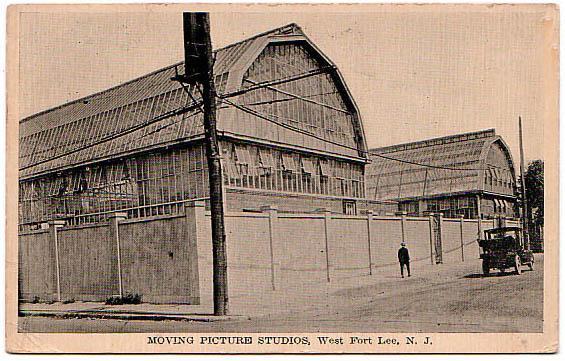
Eddie’s films were made at a studio lot in Palisades, New Jersey, while his office was in New York.  While trying to gather information on the studio lot, I learned all about Fort Lee, New Jersey.  Before Hollywood became the movie making capitol, there was Fort Lee.

fort-lee-studio

In the early days of the American movie industry, the Fort Lee–Coytesville area became New Jersey’s busiest production center. The first permanent film studio built there was the Champion Film Company.  Fort Lee is a borough at the eastern border of Bergen County, New Jersey, United States, in the New York City Metropolitan Area, situated atop the Hudson Palisades.

So, I got caught up in searching for “Sepia Art Pictures Company” in Fort Lee.  What I have found was that today, on-line, I could not find any information about Black-owned film companies in 1939, until I decided to query Oscar Micheaux.

I discovered that in 2008, Fort Lee High School celebrated black history month by showcasing the history of black filmmakers and the borough’s (Fort Lee) extensive role in independent film, and that the borough council were in the works to construct a Fort Lee style “Walk of Fame” celebrating figures like Alice Guy-Blache, the first female filmmaker and Oscar Micheaux, the first major African-American filmmaker, both of whom worked extensively in Fort Lee.

Eddie came along maybe ten years after Oscar’s last full length movie, and since I know his movie studio lot was in Fort Lee (aka Palisades), I am pretty sure Eddie walked in Oscar’s footsteps.  Of course, by the time Eddie got to Palisades, the big studios had moved on to Hollywood.

I found the script for Eddie’s second movie where he has a joke about being late to the set and he is speeding through the Holland Tunnel and gets pulled over by a cop:  The cop says “Didn’t you see me standing in the middle of the street?  And Eddie says “Yea, I saw you and said to myself, that man is going to get runned over standing out there!”

mbholland3

Money, or the lack thereof, was a big problem for blacks in the movie making business in the early 1900’s.  If you were not a Sennett or a Selznick or affiliated with someone like them. you had a hard row to hoe in trying to make an inroad into the business.  But Eddie was making a pretty good effort at realizing his dream.

Eddie was an independent.  When he worked in his craft on stage, on the radio and on early television, he worked with Whites and Blacks, but when he was making his own movies, he insisted on using only black people in every aspect of getting the movie made, in part so that more Black people could have jobs, and he believed that in order to make movies that appealed to Black people, who better to do it.  At his studio, Eddie had positions for scenario writers, photographers, lighting technicians and costume designers.

Eddie believed that Black people’s movie-making efforts were judged by Hollywood standards, the customary yardstick, which were high, and so, he always made sure he had young actors with fresh and interesting talent.

Thanks for visiting and hanging in with me.   Oh, and so far I have a 46,781 word manuscript, hoping for 50,000, we’ll see.

Thanks, Joe Malvasio 2008 Fort Lee School Project