I made a Major Boo-Boo on this my last post. First of all Mr. Vern Smith, an announcer for Jubilee Radio Program was not a Black man. Second, the announcer on this particular video is not Vern Smith as I claimed-he is Emmett “Babe” Wallace. As you read on you will see that I refer to the announcer at the beginning of this video as Mr. Vern Smith. WRONG!
A friend of mine on Facebook, named Bill, sent me the link to this Jubilee Radio Program from 1944 because I sent him a picture of Ernie Whitman, Lena Horne and my father Eddie Green. He could not find a copy of a video with my father so he sent this one with Eddie “Rochester” Anderson (who was actually a good friend of our family). And he introduced me to the announcer at the beginning of this video as Mr. Vern Smith. WRONG!!
The announcer at the beginning of this video was in fact Emmett “Babe” Wallace. According to Jimy Bleu an IMDB biographer, “as an actor, Babe is among the early pioneers of Black Cinema, starring in numerous films alongside some of the finest names in the industry. His career took flight, when in 1943 he co-starred in the 20th Century Fox classic Stormy Weather with Lena Horne and Bill Robinson. He went on to perform in stage musicals such as Anna Lucasta in London during 1947, Les Folies Bergere in Paris during 1952 (appearing as the first Black male star), and Guys and Dolls on Broadway during 1976, with Robert Guillaume and James Randolph. In 1989, he was presented the prestigious Paul Robeson Award by the Black American Cinema Society, along with Marla Gibbs.
Babe is a prolific songwriter, poet and novelist, who has some of his works included in the Schomburg Research Center for Black Culture. Of his thousands of songs, some have been recorded by Benny Goodman, Ella Fitzgerald and Cab Calloway. In 1999, Burger King franchise featured one of his songs “A Chicken Ain’t Nothin But A Bird” in their TV/radio ad campaign.”
Babe Wallace died in 2006.
I did find a Vernon Smith who announced the Ozzie and Harriet radio and television show, who also announced some of the Jubilee Radio Programs.
I claim to believe in finding something out about people I write about, however, in this instance I did not. I wrote about something of which I had no knowledge. I apologize for this and I will make sure to properly research next time.
AFRS Jubilee Radio Program was a show that was an all-Black broadcast of music and comedy skits sent to the Black American forces serving in WWII. Here’s a visual record of the opening of Jubilee.….You’ll see and hear (first) Vern Smith (NO you won’t, you’ll hear Emmett “Babe” Wallace) then Ernie Whitman………and two other familiar folks. I hope you like “Rochester”‘s singing!! Thanx for stopping by 🙂
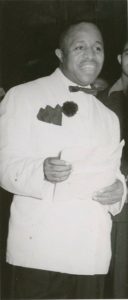
I like to think I am like my father. He was a happy man. He had a great smile. He loved to make people laugh. He was a good friend, with a helpful attitude. And he liked people, period. He was a family man, too. He was married 4 times. Had two daughters, one in 1911 and then me in the 40s. He told the Brooklyn Eagle in 1939 that “the depression doesn’t worry him. He’s happily married (3rd wife), Daughter Hilda is grown up and starting to follow him in show business. He’s got his work, his radio to tinker with and he’s the proud possessor of the first television set in Harlem.” At the time of this interview he was appearing in Mike Todd’s Hot Mikado. As Koko he sang “Titwillow” (Stars Over Broadway, Star Tone (M) ST 214 (Eddie Green with orchestra conducted by William Parson) The Brooklyn Eagle article said he had a “perpetual beaming smile.”
In a 1939 Press Sheet it was said that “Eddie Green still remains one of the greatest of all funny men. He has an irresistible sense of humor and he can squeeze a laugh from the sourest puss in the country!” When making his movies Eddie said that he builds his stories around incidents that are interesting, never offensive. He also said that when working on the radio show Duffy’s Tavern, “It’s grand, working with this show. The informality of it, the tavern setting and the lines which I never have to worry about, turns work into play.”
The Billboard spoke about him in a 1920 article in regard to having a helpful attitude: Eddie sent a note to The Billboard letting them know that if “the boys playing this town (New York) and having a hard time getting rooms they could stop at the Hotel Francis directly opposite the New York City Depot.” The Billboard said his not was an illustration of the many services to one another that actors may accomplish through their news page.
He and my mother were only married for five years and of that marriage I never heard any bad things about my father from my mother. She seemed to have been proud to have been married to him. Eddie was a comedian and as I grew up I always told my mother (whenever I thought I had said something funny) that I was my father’s daughter. I find that most people just want to be happy. And they want to be acknowledged. I like to acknowledge people. It makes me smile to see another person realize they have been heard.
I am a family person, also. My siblings are like parts of my person. This past week I had the chance to see a nephew that I had not seen in over 10 years. He’s not little anymore. He’s grown up (about 6′ 5″, maybe more-so tall!!!). He’s a grown man. I cannot believe how happy it made me to see him. He visited from New Mexico. I have family all over the United States. Some of us have never met in person. I am “working on” putting together a family calendar. I wish I could hug them all at the same time. I LOVE my family. They totally make me smile.
I am working very hard on paying attention to what makes my happy, what makes me smile. There are so many unhappy people in the world today. So many reasons to be unhappy. So much unrest. I am going to try and take how I felt about seeing my nephew (I felt like twirling around in the restaurant!!!) and spread it around.
Thanx for stopping by and for helping to keep a smile on my face. 🙂
Joseph Bologne, Chevalier de Saint-Georges (December 25, 1745 – June 10, 1799) was a champion fencer, classical composer, virtuoso violinist, and conductor of the leading symphony orchestra in Paris. Born in Guadeloupe, he was the son of George Bologne de Saint-Georges, a wealthy planter, and Nanon, his African slave. During the French Revolution, Saint-Georges was colonel of the Légion St.-Georges, the first all-black regiment in Europe, fighting on the side of the Republic. Today the Chevalier de Saint-Georges is best remembered as the first classical composer of African ancestry.
How many people know about this man. In regard to classical music somehow I learned about Mozart, Beethoven, (bugs bunny cartoons, Disney movies, documentaries.) But not this guy. Some scholars call him the Black Mozart, except that he was born 10 years before Mozart and after they met Mozart was said to have echoed a few of Joseph’s bars.
When I went to school I learned a lot about White inventors, musicians (we sang Oklahoma in Glee Club), presidents, television stars. But very little about important Blacks. Well, there was George Washington Carver. But all we learned was that he had something to do with peanuts. We did not learn about the numerous honors he won for his work or that in an era of very high racial polarization, his fame reached beyond the black community.
Seems we heard a lot about Nat Turner though, the guy who led that slave rebellion. According to some scholars, the stereotype of African Americans males as criminals was first constructed as a tool to “discipline” and control slaves during the time of slavery in the United States. More recently , a study examining the news reports from The New York Times, The Washington Post, The Wall Street Journal and USA Today covering the effects of Hurricane Katrina showed that in 80% of the time black evacuees were portrayed in photographs, the word “looting” was mentioned in the captions, suggesting that the black evacuees were criminals. In America we have had the good actions of White people and the emphasis on bad actions of Blacks ingrained into our psyche. Blacks were not celebrated in our education. So I don’t believe in unconscious bias. That we make snap judgments about people and situations based on who we are, how we live, and how we were raised, yes, but it’s not unconscious. I believe we act from ingrained teachings.
The idea that Black men are dangerous exists today. Still. Sitting While Black is the hashtag on Twitter.
It’s sad that this is happening in 2018. My father lived during the early 1900s when Blacks were still being lynched in large numbers. One of the bloodiest race riots in the nation’s history took place in East St. Louis. A Congressional committee reported that 40 to 200 people were killed, hundreds more injured, and 6,000 driven from their home. Fifty-three black Americans are known to have been lynched in 1920. Eddie was in St. Louis in 1919-1920. He performed at the Booker Washington Theatre (a Black vaudeville house) with his Deluxe Players, he had been called back by popular demand. In those days he sang his own songs, danced and told “side-splitting” jokes. I’m sure he saw his share of horrors.
By the 1940s Eddie was appearing in the radio program Duffy’s Tavern. Things in America had progressed enough that The Library of Congress placed Duffy’s Tavern on the Honor Role of Race Relations, because they did not have Eddie resort to stereotypical “Black” language. They said “Green clicks as a waiter, not because he’s a Negro, but because he’s a good comedian.” So, it is clear in this instance that changing how Blacks were treated was a priority.
I wonder what he would think about two Black men being arrested because they were sitting in a Starbucks and asked to use the restroom but didn’t buy anything and wouldn’t leave because they were waiting for a third party. I mean we have not gone back to lynching but it certainly seems that we have at least gone back to the 50s or 60s. Some people today still see Black men as trouble-makers. I don’t think that providing unconscious bias training is going to change that mind set. I think something has to change within the person. Maybe as more time goes by people will be able to just see each other as fellow human beings, floating around in space on a friggin’ planet.
Hey, thank you so much for stopping by. Peace and Love
Check out my Book: Eddie Green The Rise of an Early 1900s Black American Entertainment Pioneer.
My father liked two things for sure: Pretty women and he liked being happy. From the first time he went out on the road with his first song in 1919, through his movie making days in 1939, ’40 and ’41 his ensemble included chorus girls and comedy. He even incorporated dancing girls, tap dancers, singers and comedic skits in his last 1949 movie that depicted Blacks and how they dealt with life after the Atom Bomb. For those new to this blog you can see his last movie on YouTube-it’s titled Mr. Adam’s Bomb. A young lady (Margaret Westfield) sings a song called “You can Always Believe Your Heart” which Eddie wrote. I am still looking for information on Ms. Westfield.
Eddie became a household name as Eddie, the waiter in the radio program Duffy’s Tavern, during the last ten years of his life. Everyone loved Eddie. February is Black History Month. I am going to inundate social media with “fun Eddie stuff”. I want to get him as much exposure as possible. I want to get as many people as I can to experience Eddie’s good nature and for them to get a few laughs as well. I think our world could use uplifting right now. Eddie’s life story is truly inspiring. I will also be pushing the biography I have written about him, “Eddie Green The Rise of an Early 1900s Black American Entertainment Pioneer“, it’s much more fun that that “other” book everyone is talking about these days.
In this still from Eddie’s 4th movie you can see that Eddie (in the striped shirt) liked being silly (which is why, I am sure I like silly jokes: What kind of flower is that on your face? Tulips!!! Hahahahaha!) There were even chorus girls in this movie.
For the last couple of weeks I have been running on empty. It’s not new for me. Periodically, I slow way down. Family issues, world events, self-doubt and other issues overwhelm me. But, my misery does not love company, besides, everybody has problems. The day after Christmas I went out and seemed like everybody was pissed off. And today because of the snow back east a newscaster was talking about a “misery map”. Anywho, this is my reason for not posting lately. So, while looking for a photo on Google Advanced Images for this blog I typed in “Misery Loves Company: and got “the freeze”. Because I have such a weird sense of humor this picture cracked me up. This guy looks miserable. The fact that I laughed when I saw this picture lets me know I am still my old self-silly. And I am not as miserable as he looks. In fact, January has started off well for me (I had the best day with my daughter and her honey) and I do hope this year brings all of you happiness.
I have multiple library presentations coming up. I have met two lovely people, one who is going to help me genealogy-wise, and the other I will be helping with their social media needs. At the end of the month I will have a YouTube video up and running promoting my book. I discovered that a television station in Staunton, Va. aired my father’s last movie Mr. Adam’s Bomb as recent as 1983 and I have sent off an email trying to find out if they have knowledge of a physical copy of the movie. Meanwhile…..
I want to touch on a subject that is important to me. Today is the birthday of Zora Neale Hurston. She was born the same year that my father, Eddie Green, was born. She was born in Alabama, and moved to Eatonville, Florida, with her family in 1894. Eatonville would become the setting for many of her stories and is now the site of the Zora! Festival, held each year in her honor. Incorporated on August 15, 1887, Eatonville was one of the first self-governing all-black municipalities in the United States. I saw this quote from her online today and it touched something in me. She wrote these words in her 1950 essay, What White Publishers Won’t Print. “For various reasons, the average, struggling, non-morbid Negro is the best-kept secret in America.”
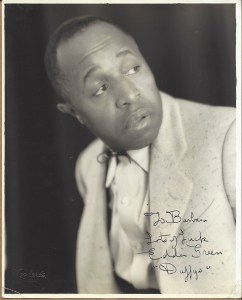
There is more, of course, but these words spoke to me. They said what I feel, that I am simply an average, struggling, female human being who happens to be Black and who just wants to live the best life I can. I go to work. I’ve raised a child. I pay bills. I’m not pissed off because I am Black. I just am who I am. I decide what I want or need to do and I do it. Eddie was like that. When he was asked about Blacks being able to get into radio back in the 30s he said: “Radio for Negroes is a very hard field to get into . . . very hard! But the returns are so great that it’s worth the try.” Commenting further he also said: He found one thing to be true, “Talent is appreciated . . . you get respect if you know your business.” Eddie also said: “If you’ve got the talent, you can’t miss in the long run, even if it’s mighty long!”
It’s about living life. Find something you like to do, and do that the best you know how. Treat others the way you want to be treated. And smile, brother, smile. Because “Misery” does not love company.
Thanks, for stopping by. KCB
Check out my Facebook Book Page: https://www.facebook.com/elvagreenbookpage/
Going slightly off topic here today. Trending is a the subject of a Dove advertisement. Black people are not happy with this ad, on Twitter. There is a video that goes with the ad but at first all I saw was this picture. For the life of me I could not figure out why people were upset. I saw one Black woman in two shots and one White woman in two shots. Black woman before Dove and after Dove. White woman before Dove and after Dove. I thought it was a stupid ad. I stared at it for five minutes trying to figure out why folks were angry. Then I decided to look further and I found the video. And cracked up. The video shows the Black lady in the act of taking off her shirt and changing into a White woman. I laughed out loud because how Dove came up with this idea in this day and age shows how truly out of touch these people are. It’s laughable. Of course they may not see themselves as out of touch. Dove is an old company with perhaps old ideas, still. If they ever wanted to lose business this ought to do it.
What I realized about myself, though, is that the ad did not make me angry. At first I didn’t even get it. I was clueless. When I did get it I still was not angry, just shocked that their ad department thought it up. I realize that I do not react angrily at seemingly racist episodes. As a Black woman I am not constantly seeing racism. Or Black and White. I see people. And being a light-skinned Black person has meant that I experience rude remarks from other Black people. Some call me High-Yellow as in “Oh you high-yellow, you’re too good to speak too me!”. So I got used to it and got over it. I’m just me. Living life. Sometimes struggling and sometimes not, just like a million other people. Besides, one look at the members of my family shows you we represent every skin color, so we fit in everywhere. This picture is my brother (Brad), my niece (from my late brother’s (Lance) first wife, me, my brother (Brian) and my daughter (Melony). Both of my brothers have had to fight over the fact that they look White. But we all look beautiful. Colorful.
Here is my sister and her two daughters (Donna in the middle, Alex and Brittney). Everyone in the family used to tease Donna because she looked so different from us. Hispanic. Her dad even had a name for her that I cannot use in today’s world without backlash. All three of these ladies are beautiful, too.
Here is my late brother’s daughter and grandsons from his second wife. So cute!! She sang on video at my Book Soup book signing. We all have issues, so I did not get to meet this part of my family until last year.
Ah, my cousin, Little Jim. Gone now. Did I have a major crush on him. He has beautiful grand-kids that unfortunately never met him. He was the family hero. Sharp dresser. Fine.
This is my new favorite. Kellan. My cousin Roddy’s grandson. Ain’t he cute!
In the 1940s my father was Eddie, the waiter on the radio program “Duffy’s Tavern”. This program was named to the Honor Roll of Race Relations by the Schomburg Collection of Negro Literature for distinguished effort for improving race relations. Meaning Eddie, as the only Black actor on the show was not portrayed in a demeaning manner. He was on the show because he was good. When Eddie began making movies he used the best cameraman in the business because, he said, “there is a wide variety of skin colors and tints in the colored race”.
Well, there is a wide variety of skin colors and tints in the human race. I would like to believe that someday our focus on color will stem from the need to get just the right camera shot.
Thanx, for stopping by. Hug someone soon.
To purchase my book Eddie Green The Rise of an Early 1900s Black American Entertainment Pioneer:
I have been studying the whys and wherefores of the Declaration of Independence. Studying what was meant by using the words Life, Liberty and the Pursuit of Happiness. On Wikipedia one can read about what others who came along after the signing of the Declaration think about what the word happiness meant to those signers. Happiness these days is alluding me. Not because of the worlds difficulties, though these difficulties add to my sadness. But because of my grandson. His personal grown-man problems. Mainly due to his pursuit of happiness.
I realized today that the Declaration does not say “and Happiness”, it says “and the Pursuit of Happiness.” Meaning this is something we are seeking, or looking for, then we are working toward it, or chasing it, or wooing it.
In a 1940 Baltimore article of my father, Eddie Green, it says: Eddie doesn’t go often (to the movies) as he doesn’t care for pictures about death or suffering. It even makes him sad to see a comedian trying so hard for a laugh which never seems to make any headway with the audience.
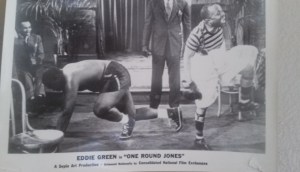
I suppose that is one reason Eddie became a comedian. He was pursuing his own happiness. Here he is being happy. (He is the silly guy in the stripped shirt). This is a scene from his movie One Round Jones (1941). The Press Sheet reads: One Round Jones is the story of a night club owner who undertakes to build his business by offering $50 to anyone who can go one-round with his “mystery fighter.” Of course, Eddie is the goat. He climbs into the ring shaking like a dish of Jell-O but when he climbs out he’s got the money and the other fighter’s girl.”
According to my mom (the lady he married after his wife of 1941), Eddie was an easy-going, fun-loving man. He was a funny man. Life was good for him. No matter what. He climbed out of the slums of East Baltimore in 1900 and his life just got better and better. He was a happy man. He really was a good role-model.
In pursuit of some happiness today I realized that I have a unique sense of humor, ’cause that “You Suck” picture I posted made me laugh out loud. I will just have to continue to work toward Happiness, maybe I can find some more “You Suck!” pictures. Or maybe if I post more often, it does make me feel good to communicate with friends.
This is going to either make me or break me. Which is really not the point here. The point is to show the necessity of yesterday. (thanks, Ben)
Last month a new CD dropped featuring old time black-face cartoon figures. And they were featured in a purposely seemingly demeaning way. The song seems to say that the Black person’s role (even the more affluent Black person) today is not much different than it was then, in some people’s eyes. Seems pessimistic to me. The song went Platinum in a week. One week.
The book I have written about my father has been a hard sell to some Blacks today because of the era in which my father lived. Some people do not see, and do not want to see, the relevance of yesterday’s all-black cast movies or old time radio, or vaudeville as it applies to progress. As for myself, I understand. Seeing my father in blackface has taken some getting used to. It’s still kind of embarrassing to admit my father was a blackface comedian. And if I am embarrassed what do I expect from others?
As you can see in the photo “From Broadway to Okeh”, Eddie performed In Connie’s Hot Chocolates as a blackface comedian. The sketch that he wrote and performed was so funny the Okeh record label recorded it and him.
According to Wikipedia, “it was through blackface minstrelsy that African American performers first entered the mainstream of American show business. Blackface served as a springboard for hundreds of artists and entertainers—black and white—many of whom later would go on to find work in other performance traditions. White audiences in the 19th Century wouldn’t accept real black entertainers on stage unless they performed in blackface makeup. blackface in vaudeville also provided opportunities for Blacks who performed in blackface. From the early 1930s to the late 1940s, New York City’s famous Apollo Theater in Harlem featured skits in which almost all black male performers wore the blackface makeup and huge white painted lips, despite protests that it was degrading from the NAACP. The comics said they felt “naked” without it.”
Eddie’s rise to stardom included not just his talent but his willingness to take the difficult road ahead of him. He climbed the ladder from the bottom rung to success. And he did it well. He became successful because whatever he did he did it the best way he knew how. He was an Actor.
Eddie’s career choice led to a very successful life. Once he appeared in the first public television broadcast as that Harlem Funster, Eddie Green along with his partner George Wiltshire (the first two Black men to appear on television in 1936), his career shot up from there. you can buy the book to read about the rest.
Suffice it to say that by 1948 Eddie was doing swell, the next photo is Eddie from an article announcing his fifth movie, Mr. Adam’s Bomb and my mom, the former Norma Amato, aspiring opera star who married Eddie in 1945.
On June 26, 1948 there was an article in the New York Age newspaper about my father and his thoughts on television:
Eddie Greens Firm Aids Show Business Through Television. The fast growing field of television offers a fertile one for Negro performers, is the opinion of radio comedian, Eddie Green, who revealed that because of this fact his motion picture firm has interested advertising agencies in having their sponsors products sold to the millions who view television via the singing and dancing route.
Designed to catch and hold the attention of the millions who want entertainment on video, Green asserted that instead of the hackneyed manner of selling national consumer goods to the public, his firm will “Deliver the message in a way to keep viewers from turning the dial”. Organized two months ago in Los Angeles with the famed comedian as president, Sepia Productions has already lined up five three-minute skits which they plan to lease or sell outright to ad agencies.
Backstage at the Strand Theatre here, where he’s a member of the “Duffy’s Tavern” radio show, Green said that colored performers have their niche in the television picture and they should demand that their agents establish contacts with those that handle the shows in order not to be left out in the cold when the infant industry attains maturity. He pointed out that the decline of vaudeville witnessed many good Negro acts going out of business and little hope for the birth of new talent was anticipated until television offered vast potentialities.
I hope to be able to create a more optimistic view of our pioneers efforts and achievements from back in the day and how they benefit us today. This may be a long shot, but I want to make their achievements “cool”. As in “yea, that’s cool”. And then if my book were a CD there’s got to be enough optimists out there to make it go platinum!!
This is not a political article, though I have been influenced in part by the fact that our 44th President, Mr. Barack Obama was a proponent of the use of personal initiative. There is a belief in some circles that personal initiative and hard work is enough to overcome obstacles confronting young black men. Others pooh-pooh the “bootstrap” approach. They believe that better living conditions, better education opportunities are also necessary to help a young man achieve his potential. Both are good points.
There is also a modern day belief that Black men born into poverty are good candidates for being drawn into a life of crime other than a life of legitimate success. Some modern day beliefs are that “soundbites” in the news contribute to the mindset that Black men (when arrested in t-shirts and low-cut jeans) are seen as a threat. (Blacks in the News: television, modern racism and cultural change By Robert M. Entman-journalism quarterly, pg 35.)
In 1910, when my father was coming of age Blacks made up only thirteen percent of the population but twenty-seven percent of those were in prison. In the South in 1910, Blacks comprised 30 percent of the population yet made up 60 percent of those incarcerated (US Census Report 1910).
This racial incarceration gap could have had many causes, including discrimination in arrest and sentencing, differences in family background, lack of job opportunities for blacks, higher urbanization rates of blacks, and differences in educational attainment. (Access to Schooling and the Black-White Crime Gap in the Early 20th Century US South: Evidence from Rosenwald Schools. Katherine Eriksson December 31, 2014.)
When my father, Eddie Green, left home at the age of nine in 1900, the presence of structural racism, the after effects of slavery, the lack of education for Black people, and the lack of healthcare was not a problem for him. The constant objections of White Americans to African-Americans was, evidently, not a problem to him. The lack of job opportunities and differences in family backgrounds was not an issue. He had discovered he could thrive on his own without resorting to criminal acts but through his own talents and his ability to take care of business. He had been raised right. HE HAD ACQUIRED PERSONAL INITIATIVE-THE ABILITY TO ACT AND OVERCOME DIFFICULTIES.
For a child born into poverty that life-style is normal. An infant does not realize poverty. I believe Eddie’s mother provided his early nurturing. Eddie did not have a close connection with his father. I hold the idea that Eddie received love and attention mostly from his mother. Eddie had a love for his mother that he spoke of to my mother.
He learned his work ethics from watching his mother washing countless loads of other people’s clothes and he was hurt by this. He saw that no matter how hard his father worked nothing got any better. But he also knew hard work was necessary to survive.
He learned confidence in his ability to take care of himself, he acquired fearlessness, otherwise how could he have gone out into the mean streets alone. His situation at home prepared him for the streets because what could be worse.
Emotionally, he became the “comedian.” With his comedic talent eventually tending dry humor. He would later become known as a “droll” comedian. Drollery according to the dictionary is a natural aptitude for using words and ideas in a quick and inventive way to create humor.” Evidently Eddie tapped into this natural aptitude early enough to boost his rise to success.
Eddie taught himself to read and discovered books on magic. He found that he liked performing magic tricks and that he was good at it. It was a way to take a person out of the mundane and into a world of fantasy and wonder. He had also determined that he could thrive by traveling through the city offering to perform as a “Boy Magician”.
More than likely Eddie would have read about or heard about successful Black magicians such as William Carl, who in 1890 was billed as the King of the Magicians with a minstrel troupe called Boston’s Merry Musicians, or Alonzo Moore (c.1870-c.1914) who joined Billy Kersands’ Minstrels in 1904.
Eddie had grown up, also, during the time of great African American role models. Men like W. E. B. Dubois, a Black historian and sociologist, who was at the forefront of the civil rights movement, or Frederick Douglass who was also born in Maryland, a slave and who became a social reformer and statesman.
When Eddie left home at the age of nine, he was a good, self-confident, eager, willing, forward-looking, honest and talented young person. He left with the love of his mother cradling him. His circumstances had not made him angry but became a source of determination to have a better, happy life. When money permitted he moved his mother into Gotham City to be close to him. Over the years he would become successful as a Broadway and movie star, a filmmaker, a composer and as an Old Time Radio icon. By the time of his death he had risen to become one of America’s most beloved comedians.
As a testament to his feelings about being Black, this is what Eddie wrote to a radio program titled “The Negro Hour” in 1938 regarding their theme music: “Or you might even pick a suitable stanza from the pen of our poets (Dunbar and others), set it to music. Brilliant forceful music, and thus have a theme song that tells the world, “Here comes an upright, fearless, man”
As a testament to his early learning which I am certain came from his mother, he told the radio announcers this: You must remember that you are gentlemen addressing ladies and gentlemen and if for no other reason than that, a gentleman never raises his voice”.
Due to a recent podcast I realized I needed to gain a greater degree of knowledge in regard to how my father, Eddie Green, got into the field of radio. In his words: “Radio for Negroes is a very hard field to get into . . . very hard! But the returns are so great that it’s worth the try.” Eddie was a living example of how one gets ahead in life. He stayed busy, he knew his talents and dedicated himself to making them pay off. His biggest break was in 1929.
I found an article from about 1928, by Chappy Gardner, “Along the Rialto”, in the Pittsburgh Courier: “ Eddie Green, well-known songwriter, electrician, motion picture operator, famed comedian, opened on the Burlesquewheel this season. Played at Newark last week in A Perfect 36. Eddie appeared with the regular cast, being the only race performer, but was at his best in his single that wowed the customers”.
It took him a minute to realize his popularity. In his own words “In the meantime, I was so busy working here and there and doing a bit of writing on the side that I did not notice my own advancement. One indication of the change, I should have noticed, was the fact that I could see my name very frequently in the various trade papers”. Then along came George Immerman and opened a show called Hot Chocolates. I became the featured comic in this show. It turned out that none of the various scenes written for the show were good enough, so I was engaged to write the scenes”.
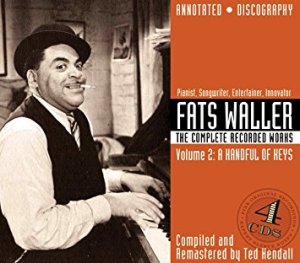
Hot Chocolates was a musical revue that opened at the Hudson Theater in New York on June 20, 1929. The show was staged and directed by Leonard Harper, with songs byand Thomas “Fats” Waller and Harry Brooks and book by Andy Razaf. The revue was touted as being fast, funny and frank. Hot Chocolates had a run of 219 performances.
Eddie double as a performer in the show along with these two gentlemen
Louis Armstrong Ensemble (Armstrong made his Broadway debut with his role in the ensemble as part of the pit band for the show)
Jimmie Baskette Ensemble (Baskette later became well-known as the zip-a-dee-doo-da man, Uncle Remus, in Walt Disney’s movie “Song of the South” (1946)
A big hit from Hot Chocolates was “Big Business” written by Eddie. It was a “talking song,” with Eddie, Billy Higgins and Company, and “Fats” Waller on piano.
Then there was the record that was produced from one of Eddie’s skits titled “Sending A Wire” on the Okeh record label:
And the Warner Bros Vitaphone film “Sending A Wire” (directed by Murray Roth) (courtesy IMDB) that featured synchronized sound. It was said to be the funniestVitaphone comedy act “which has yet been produced,”, and that it “kept thousands shaking with laughter.”
At about the same time in another part of town, Gannett Newspapers decided to put together a stellar list of entertainers to perform over radio stations WGY and WHAM, to be broadcast to “Little America” for the enjoyment of Commander Richard E. Byrd, an America Naval Officer, and his explorers, who had set up the “Little America” base camp on the Ross Ice Shelf. Radio remained a primitive and exciting medium in 1929, and when the stations contacted Little America directly and spoke with Byrd or Hanson, it caused a worldwide sensation. They chose Eddie to be added to the broadcast to perform his “Sending a Wire” skit.
The Brooklyn Daily Eagle said: “The whole town is talking about Eddie Green, prime colored comic, who will put on one of the funniest skits on the stage”. The “whole town” (New York) was talking about my father!! He was Big Time! Of course the radio people wanted him. He was Hot!! The “stellar” cast in this radio show also included: Gov. Franklin D. Roosevelt, Rudy Vallee one of the first modern pop stars and Ted Healy, the creator of the Three Stooges.
Eddie had to perform in both of these venues on the same night. Problem was he had to be on stage at the Hudson at almost the same time the radio broadcast would begin. This was a predicament. In his words this is what happened: “The Police Department solved the problem by giving me a motorcycle escort from the theater to the National Broadcasting Company (NBC) studio”. He said that they went up Broadway on the wrong side of the street with the police sirens screaming. Can’t you just picture it? The police escorting Eddie through traffic trying not to hit the theater crowd, zigging and zagging!! Just to get him on that radio program so Commander Byrd could laugh his head off and forget about the cold in Antarctica!! I salute the New York Police Department!
Broadway about 1926-1929
Eddie was Hot!! They had to have him! If he were alive today he’d be on Ellen, Oprah, Steve, National Public Radio (NPR), Twitter, Internet. Because he was one of the best comedians of his time. THAT is how Eddie got into radio.


 I like to think I am like my father. He was a happy man. He had a great smile. He loved to make people laugh. He was a good friend, with a helpful attitude. And he liked people, period. He was a family man, too. He was married 4 times. Had two daughters, one in 1911 and then me in the 40s. He told the Brooklyn Eagle in 1939 that “the depression doesn’t worry him. He’s happily married (3rd wife), Daughter Hilda is grown up and starting to follow him in show business. He’s got his work, his radio to tinker with and he’s the proud possessor of the first television set in Harlem.” At the time of this interview he was appearing in Mike Todd’s Hot Mikado. As Koko he sang “Titwillow” (Stars Over Broadway, Star Tone (M) ST 214 (Eddie Green with orchestra conducted by William Parson) The Brooklyn Eagle article said he had a “perpetual beaming smile.”
 Joseph Bologne, Chevalier de Saint-Georges (December 25, 1745 – June 10, 1799) was a champion fencer, classical composer, virtuoso violinist, and conductor of the leading symphony orchestra in Paris. Born in Guadeloupe, he was the son of George Bologne de Saint-Georges, a wealthy planter, and Nanon, his African slave. During the French Revolution, Saint-Georges was colonel of the Légion St.-Georges, the first all-black regiment in Europe, fighting on the side of the Republic. Today the Chevalier de Saint-Georges is best remembered as the first classical composer of African ancestry.
 My father liked two things for sure: Pretty women and he liked being happy. From the first time he went out on the road with his first song in 1919, through his movie making days in 1939, ’40 and ’41 his ensemble included chorus girls and comedy. He even incorporated dancing girls, tap dancers, singers and comedic skits in his last 1949 movie that depicted Blacks and how they dealt with life after the Atom Bomb. For those new to this blog you can see his last movie on YouTube-it’s titled Mr. Adam’s Bomb. A young lady (Margaret Westfield) sings a song called “You can Always Believe Your Heart” which Eddie wrote. I am still looking for information on Ms. Westfield.
 Eddie became a household name as Eddie, the waiter in the radio program Duffy’s Tavern, during the last ten years of his life. Everyone loved Eddie. February is Black History Month. I am going to inundate social media with “fun Eddie stuff”. I want to get him as much exposure as possible. I want to get as many people as I can to experience Eddie’s good nature and for them to get a few laughs as well. I think our world could use uplifting right now. Eddie’s life story is truly inspiring. I will also be pushing the biography I have written about him, “Eddie Green The Rise of an Early 1900s Black American Entertainment Pioneer“, it’s much more fun that that “other” book everyone is talking about these days.
 In this still from Eddie’s 4th movie you can see that Eddie (in the striped shirt) liked being silly (which is why, I am sure I like silly jokes: What kind of flower is that on your face? Tulips!!! Hahahahaha!) There were even chorus girls in this movie.
 For the last couple of weeks I have been running on empty. It’s not new for me. Periodically, I slow way down. Family issues, world events, self-doubt and other issues overwhelm me. But, my misery does not love company, besides, everybody has problems. The day after Christmas I went out and seemed like everybody was pissed off. And today because of the snow back east a newscaster was talking about a “misery map”. Anywho, this is my reason for not posting lately. So, while looking for a photo on Google Advanced Images for this blog I typed in “Misery Loves Company: and got “the freeze”. Because I have such a weird sense of humor this picture cracked me up. This guy looks miserable. The fact that I laughed when I saw this picture lets me know I am still my old self-silly. And I am not as miserable as he looks. In fact, January has started off well for me (I had the best day with my daughter and her honey) and I do hope this year brings all of you happiness.
 There is more, of course, but these words spoke to me. They said what I feel, that I am simply an average, struggling, female human being who happens to be Black and who just wants to live the best life I can. I go to work. I’ve raised a child. I pay bills. I’m not pissed off because I am Black. I just am who I am. I decide what I want or need to do and I do it. Eddie was like that. When he was asked about Blacks being able to get into radio back in the 30s he said: “Radio for Negroes is a very hard field to get into . . . very hard! But the returns are so great that it’s worth the try.” Commenting further he also said: He found one thing to be true, “Talent is appreciated . . . you get respect if you know your business.” Eddie also said: “If you’ve got the talent, you can’t miss in the long run, even if it’s mighty long!”
 Going slightly off topic here today. Trending is a the subject of a Dove advertisement. Black people are not happy with this ad, on Twitter. There is a video that goes with the ad but at first all I saw was this picture. For the life of me I could not figure out why people were upset. I saw one Black woman in two shots and one White woman in two shots. Black woman before Dove and after Dove. White woman before Dove and after Dove. I thought it was a stupid ad. I stared at it for five minutes trying to figure out why folks were angry. Then I decided to look further and I found the video. And cracked up. The video shows the Black lady in the act of taking off her shirt and changing into a White woman. I laughed out loud because how Dove came up with this idea in this day and age shows how truly out of touch these people are. It’s laughable. Of course they may not see themselves as out of touch. Dove is an old company with perhaps old ideas, still. If they ever wanted to lose business this ought to do it.
 What I realized about myself, though, is that the ad did not make me angry. At first I didn’t even get it. I was clueless. When I did get it I still was not angry, just shocked that their ad department thought it up. I realize that I do not react angrily at seemingly racist episodes. As a Black woman I am not constantly seeing racism. Or Black and White. I see people. And being a light-skinned Black person has meant that I experience rude remarks from other Black people. Some call me High-Yellow as in “Oh you high-yellow, you’re too good to speak too me!”. So I got used to it and got over it. I’m just me. Living life. Sometimes struggling and sometimes not, just like a million other people. Besides, one look at the members of my family shows you we represent every skin color, so we fit in everywhere. This picture is my brother (Brad), my niece (from my late brother’s (Lance) first wife, me, my brother (Brian) and my daughter (Melony). Both of my brothers have had to fight over the fact that they look White. But we all look beautiful. Colorful.
 Here is my sister and her two daughters (Donna in the middle, Alex and Brittney). Everyone in the family used to tease Donna because she looked so different from us. Hispanic. Her dad even had a name for her that I cannot use in today’s world without backlash. All three of these ladies are beautiful, too.
 Here is my late brother’s daughter and grandsons from his second wife. So cute!! She sang on video at my Book Soup book signing. We all have issues, so I did not get to meet this part of my family until last year.
 Ah, my cousin, Little Jim. Gone now. Did I have a major crush on him. He has beautiful grand-kids that unfortunately never met him. He was the family hero. Sharp dresser. Fine.
 This is my new favorite. Kellan. My cousin Roddy’s grandson. Ain’t he cute!
 I have been studying the whys and wherefores of the Declaration of Independence. Studying what was meant by using the words Life, Liberty and the Pursuit of Happiness. On Wikipedia one can read about what others who came along after the signing of the Declaration think about what the word happiness meant to those signers. Happiness these days is alluding me. Not because of the worlds difficulties, though these difficulties add to my sadness. But because of my grandson. His personal grown-man problems. Mainly due to his pursuit of happiness.
 I suppose that is one reason Eddie became a comedian. He was pursuing his own happiness. Here he is being happy. (He is the silly guy in the stripped shirt). This is a scene from his movie One Round Jones (1941). The Press Sheet reads: One Round Jones is the story of a night club owner who undertakes to build his business by offering $50 to anyone who can go one-round with his “mystery fighter.” Of course, Eddie is the goat. He climbs into the ring shaking like a dish of Jell-O but when he climbs out he’s got the money and the other fighter’s girl.”






 pininthetush