

My last post for Women’s History Month. I really almost forgot about this celebration. I’ve been watching Murdoch Mysteries online and they have been shooting during the Suffrage Movement and it is amazing to me what women have had to go through just trying to live their lives to the fullest. And women are still clawing their way to reach heights their male counterparts have reached. I saw a post on Facebook about Joyce Brown, 1920-2015, pictured above, about a week ago. She was a Broadway musical conductor. I had never heard of her, even though she was the first African-American female Broadway musical conductor. The article I read was written in 2017 for ESPN. The article mentioned a statement she made about being spoken of as a musical prodigy who became Broadway’s first African-American female musical conductor of a show beginning its opening night, in 1970. Setting aside the fact that she was Black she said “I would have gotten the job anyhow because the competency is there.” She said she worked hard and was a reliable person. As this article noted there is not much more information online about Brown, as if she had been totally forgotten or not worth remembering through the years.
So you know I had to do some research. I found a little extra information in the Nassau New York Newsday newspaper from 1970 By Leo Seligsohn. It was about the Broadway play Purlie and it’s “rocking”, “swaying”, orchestra conductor, Joyce Brown. The 1970 program starred Cleavon Little and Melba Moore, with Sherman Hemsley as Gitlow. As you might know, I just finished my book on The Jeffersons where I mention that Purlie is where Norman Lear saw and snatched up Hemsley to play George Jefferson. The extra information I found had this “Purlie” ad.

AN UNCOMMONLY GOOD ORCHESTRA AND A BOUNCY CONDUCTOR, JOYCE BROWN, TO LEAD
THE FESTIVITIES. MISS BROWN RATES APPLAUSE ALONG WITH HER MUSICIANS AND SINGERS.
I am placing a piece of the article that came alongside the ad from 1970 because it celebrates Joyce Brown’s work magnificently:
“Standing in the pit In a state of perpetual motion, she is giving them all the life and spirit within her, rocking, swaying and breathing love into almost every note and syllable of the lyrics and score. Singing and dancing their hearts out there on the stage of the Broadway Theater, the cast members are
giving it back in a mutual transference of psychic energy that is something to see. The woman is Joyce Brown, musical director of “Purlie.” Just before the beginning of the second act the spotlight picks her out and she takes a small bow. At the show’s conclusion, or what should be its conclusion, she
keeps conducting and the orchestra continues playing in a rising crescendo of audience and orchestra-Joyce Brown togetherness. Theatrical? Perhaps. But there is an incandescence and a realness about Miss Brown.”
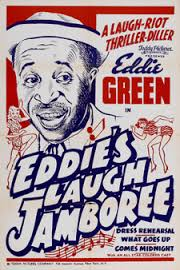
The article goes on the say that Ms. Brown was a bit put off by a note in the program that said she was making history by being the first black woman to conduct the opening of a Broadway show, because, she said, she was simply a woman trying to perform her craft the best she ever had in her life. She said that Race had never hampered her career. Which for me harkens back to what my father, Eddie Green, said about his career in the early 1900s, that if you’ve got the talent, you get respect; and that the best recipe for success is to find something you like to do and do the best you know how. Joyce Brown knew her craft, she liked what she did, she also taught other women by listening and coaching in productions like “Hair” in 1972. She knew she was good at what she did and she had fun with it. Self-assurance is what she demonstrates, still. She will not be forgotten.
Stay safe, you all, and thanks, for stopping by. If you are so inclined you may share this post, good news is always appreciated. 🙂


 I have been asked to do an essay on a Mr. Perry Bradford. Perry was born in 1893. As a vaudeville performer and composer and songwriter, he too worked in theater circuits throughout the South and into the North. I imagine that he had the same worries as every other Black man in the South at that time. But he had a goal in mind. Bradford persevered in getting the recording industry to value recordings of African-American artists. In 1957, Little Richard had a hit with Bradford’s “Keep A-Knockin'”. In 1965 he wrote his autobiography Born With the Blues. Later in 1994 his song “Crazy Blues” was inducted into the Grammy Hall of Fame. Perry lived a long time, too. He died in 1970.
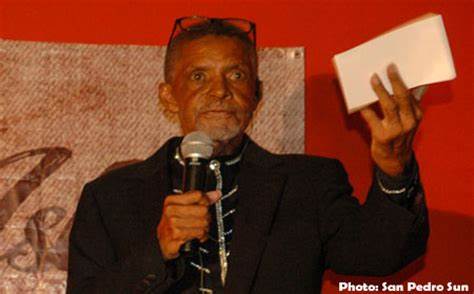 More recently, there was Arlando Smith, born 1952. Arlando came up during the Civil Rights era, police with hoses and dogs and batons. He worked at becoming successful. Arlando was a TV writer and director. During my research for my book on The Jeffersons I learned about this gentleman. He worked on What’s Happening Now, All In The Family, Silver Spoons, 227, The Richard Pryor Show, She’s The Sheriff, The Robert Guillaume Show. The Jeffersons (2 episodes) and Malcolm and Eddie. He was the stage manager for All in the Family, 51st Annual Academy Awards, The Richard Pryor Show, What’s Happening, Sanford and Son, That’s My Mama, Good Times, and The Jeffersons (48 episodes). In 2015 when Arlando Cooper Smith died The San Pedro Sun reported that: “Smith was an award-winning director who directed the first episode of La Isla Bonita Telenovela. He also contributed to several American television series, Arlando Cooper Smith made the Isla Bonita his home, has selflessly supported the island in ways too numerous to count for many years. He will be missed by all those who knew and loved him.”
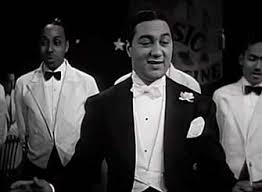 Ralph Wilhelm Cooper, 1908-1992. Actor, dancer, screen writer, emcee, choreographer (Shirley Temple-Poor Little Rich Girl). Ralph Cooper spent five years acting and directing in Hollywood and while there folks began calling him the “Dark Gable” because of his “handsome, rugged good looks and his charm and wit”. * I would like to say instead of giving him a nickname that reminds people of a White man, can we just say that this man was Ralph Cooper, a handsome, charming Black man who was very active in the world of entertainment in the 1920s, 30s and 40s. And beyond.
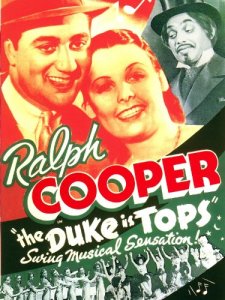 Like my father, Eddie Green, Cooper was also a filmmaker. Meaning he wrote, directed and starred in his own movies. In the late 1930s he was making movies during Oscar Micheaux’s filmmaking time (Micheaux began making films in 1915). He wrote, directed, produced or starred in at least fifteen films. My father began making his films in 1939, right about the time Cooper left filmmaking. In 1937, Cooper formed Million Dollar Productions with black actor George Randol and white producers Harry Popkin and his brother Leo Popkin to produce race films.
 Ralph and my father appeared on the same bill during those early days; their names are kind of close to the bottom of the ad as they had not “blown up” yet. But they must have met backstage. Maybe Eddie talked to him about making movies someday. Both Eddie and Ralph were successful in their chosen pursuits. Through their own talent and hard work. When it was truly a struggle for a Black man to get ahead. I salute my father and Ralph Cooper and their own special uniqueness in bringing a little entertainment into the lives of others.



 Though this picture is very small, I wanted to lead this post with it because in more ways than one it signifies success. From left to right are my mom Norma, my father Eddie, actress Louise Beavers, Louise Beavers’ father, Academy Award Winner Hattie McDaniel, and unfortunately I have not identified the woman on the far right. This photo was taken about 1939. Eddie, Ms. Beavers and Ms. McDaniel were role models of success in the entertainment business, especially in the African-American community. My mom had begun to achieve success as an opera singer. My daughter, Melony (a success in more eyes than just mine), loves this picture.




 pininthetush