

Hi there. When I started this blog at the end of 2014 it was to provide a platform for myself as an author. I was writing my first book. A book about my father, Eddie Green. I have since written the book, had it published and even won an award. As Eddie died when I was 3 years old, researching the book allowed me to become acquainted with him and his life in entertainment. What I have learned is that the writing of the book did not mean that I had all of Eddie’s story.
Once people read the book they started sending me new information about Eddie. At library presentations people came up and told me stories about Eddie. I’ve been introduced to people in the magic entertainment venue because Eddie started out as a magician, and I’ve learned more new stuff. So, I started researching again. In the book I mentioned that Eddie wrote and staged a play titled Playing The Numbers. Just a couple of lines because that was all the information I had. Two weeks ago while reading an old 1920s magazine article I discovered how Eddie was presented with this opportunity.
According to the article, Frank Schiffman, general manager at the time, of the Lafayette Theater, New York, decided to remodel. On June 4, 1925 the theater hardly knew itself when the doors were thrown open for the opening. A new carpet was laid In the lobby. The entire front was scoured, revealing forgotten beauties In the exterior. A new electric lobby display was installed, new flooring was laid on the stage and the Interior repainted. A brand new pipe organ was also installed.
It was decided that Inasmuch as the management was so closely associated with the Apollo Theater which had been so successfully operating for the past year, it was rather natural that a similar policy, somewhat modified, should be given a trial. Therefore Eddie Green who had been an Important comedian in the Apollo cast was commissioned to organize a miniature stock company that each week will present a IS-minute performance that will consist of mutual numbers and burlesque comedy bits. The bits, however, would be revised by Eddie to conform to the special requirements of the neighborhood. the Lafayette Theater reopened Thursday, June 4, with a program of continuous motion pictures and vaudeville.*
LAFAYETTF THEATRE
7th Ave. At 132nd-St.
Thur. Fri. Sat. Sun. JUNE 4-5-6,7
WM. de MILLE’S (Cecil’s brother, btw) MEN and WOMEN Produced by Paramount AND A Big Vaudeville Bill Including PLAYING THE NUMBERS Written and Staged by EDDIE GREEN With Henrietta Lovelace, Grace Smith, Eugene Pugh, Lorenzo McLane and a Chorus of CREOLE VAMPS Matinees 15c & 25c Eves. 25c, 35cf 50c
Midnight Show Every Friday Performances continuous I p.m. to 12 midnight
THE MOST ELEGANT THEATRE IN HARLEM CATERING TO THE BEST COLORED PATRONAGE
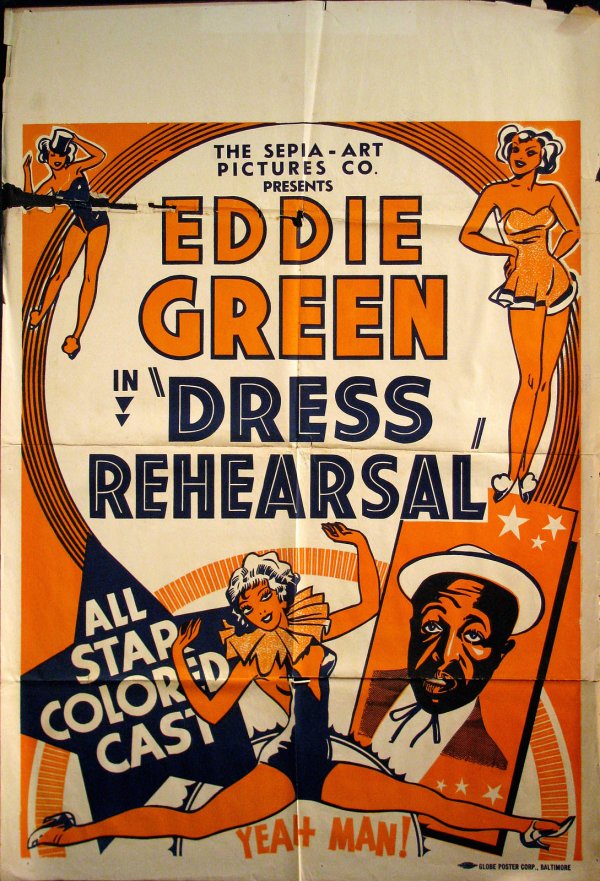
So now I know a bit more of the particulars. Frank Schiffman was also the man who fell in love with Eddie’s first movie Dress Rehearsal and made a deal to debut the movie at the Apollo Theater in April of 1939.
I have also learned a bit more about the star of the vaudeville bit, Henrietta Lovelace (sometimes spelled Loveless). I have really had to dig to get information on this lady. Unfortunately, pulling up Black entertainers names from the early 1900s from the internet is not as easy as 1, 2, 3. However, I did find this in the New York Age:
“HENRIETTA LOVELESS Of Washington, D. C, who went to New York with Irvin Miller’s Blue Moon early this season, is now on tour with Chappelle and Stinette’s Kentucky Sue. They played the Grand Theater in Chicago last week. Miss Loveless graduated from Fisk University in 1921 and studied music and voice culture under Mrs. J. A. Robinson, an Oberlin graduate. She is the wife of Lorenzo McLane, noted comedian, of Montgomery, Ala.”
Then there is this: 1924 Elmore Theater “In McLane and Loveless you will see the greatest musical comedy team that has been played in Dixie. Their comedy is clean and of the highest grade; their songs are snappy and the latest numbers. To hear Henrietta Loveless sing “Mammy Loves Her Child,” will knock one cold”, says J. A. Jackson in the Billboard; and this one: Jack’s Cabaret, on Congress St., officially opened for the summer Saturday night, beginning its 20th year as a local entertainment place. Miss Henrietta Loveless, who sings in the Sophie Tucker style, leads this year’s floor show.
Henrietta Loveless was born on August 26, 1903 in Polk County, Georgia, USA. She was an actress, known for Murder in Harlem (1935) and The Spider’s Web (1927), an Oscar Micheaux film. She died in 1934. Just before she passed away she was the star of the newest Broadway hit Swing Out The News. It was said that “the vehicle gives vent to all that it’s name implies—satire and burlesque on all present day affairs, especially The New Deal Administration. It’s swift gay, exhilarating. crisp and modern in every way. Rex Ingram, and Henrietta Loveless, playing the father and mother of Franklin D. Roosevelt Tones, the Harlem new-born son, on relief under the F. D. R. New Deal Program really steal the show.”
The play itself was supposed to celebrate the fact that there was a change a’comin for the poor and destitute of the country. And the New Deal programs did indeed put millions of Americans immediately back to work or at least helped them to survive, but thousands of blacks were thrown out of work and replaced by whites on jobs where they were paid less than the NRA’s wage minimums because some white employers considered the NRA’s minimum wage “too much money for Negroes”. However, since Blacks felt the sting of the depression’s wrath even more severely than Whites they welcomed any help. (Wikipedia) So I am going to continue to “lift” Black entertainers who persevered but seem to have been erased from history.
My father worked his butt off in order to bring himself out of the poverty into which he was born. He was talented and “a regular guy”. He got along with people. Even though he lived in one of the most dangerous periods of American history for a Black person.
And, of course, I am going to mention the White people who have been instrumental in helping their Black fellows progress. My father was a ham operator and he spoke to people all over the world. I love that!!!
Thanx, for stopping by!!
*Radio Daily, 1925
Eddie Green, The Rise of an Early 1900s Black American Entertainment Pioneer
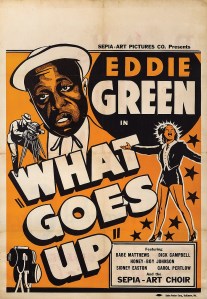 Well, it’s been two years since I published the biography on my father, Eddie Green. During the research period I searched and searched for a physical copy of this movie “What Goes Up“. Eddie wrote it, produced it, directed it and starred in it. The movie was made in Palisades, New Jersey in 1941. I am hoping to find it because, of course, it’s my father’s second movie and also because there is a member of the cast of this movie who has just celebrated her 101 years old birthday and she would love to see the movie one more time. She saw it when it first premiered in 1941 at the Apollo Theater in New York, of course, she and her mother. But not since then.
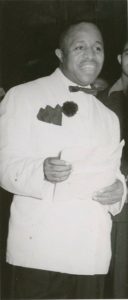 I like to think I am like my father. He was a happy man. He had a great smile. He loved to make people laugh. He was a good friend, with a helpful attitude. And he liked people, period. He was a family man, too. He was married 4 times. Had two daughters, one in 1911 and then me in the 40s. He told the Brooklyn Eagle in 1939 that “the depression doesn’t worry him. He’s happily married (3rd wife), Daughter Hilda is grown up and starting to follow him in show business. He’s got his work, his radio to tinker with and he’s the proud possessor of the first television set in Harlem.” At the time of this interview he was appearing in Mike Todd’s Hot Mikado. As Koko he sang “Titwillow” (Stars Over Broadway, Star Tone (M) ST 214 (Eddie Green with orchestra conducted by William Parson) The Brooklyn Eagle article said he had a “perpetual beaming smile.”
 When I began writing the biography on my father, Eddie Green, I wanted to use a quote from Langston Hughes in the foreword but had to forget that idea as I could not get permission. I can, however, use a portion of an article Mr. Hughes wrote which mentioned my father. James Mercer Langston Hughes (February 1, 1902 – May 22, 1967) was an American poet, social activist, novelist, playwright, and columnist. He was one of the earliest innovators of the then-new literary art form called jazz poetry. Hughes is best known as a leader of the Harlem Renaissance in New York City from the mid-1950s to the mid-1960s.
 In the Hughes article (not the one pictured here) he was writing about “sympathetic outlets to new Negro playwrights”. He wanted to stimulate growth of a real Negro theater. He believed that while White playwrights could be skilled or sincere they could not catch “the little graduation that give a negro life its drama.” He links the comedy stage thus: “Perhaps comedy is the pitfall of the theater. Exaggeration of racial types the overstressing of eccentricities of regional speech frequently dominate comedy especially in music halls”. He goes on to say, “Nevertheless just as out of serious plays has come a Robeson, so from the minstral vaudeville musical stage have come some very talented Negro comedians, Bert Williams, Pigmeat, Jackie Mabley, Eddie Green.” (New York Age May, 1953). Notice in the article to the left Eddie, Jackie, and Pigmeat are all listed as appearing with the sixteen Apollo Rockettes back in the early 1900s.
 Here is a compilation of some of the scenes from Eddie’s movies in 1939. In a 1940 Baltimore article written by Lillian Johnson she headed the article with: As a Comedian, He’s Very Funny; As a Business Man, He’s Very Sensible and Comedy is a Business. Lillian said “The fact that Eddie is so funny on the screen, stage, and radio is due to the highly intelligent and efficient manner in which he conducts his work.”




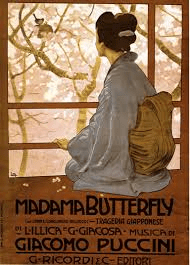 And waits. And waits. Pretty soon some of the people in the audience at the Dorothy Chandler Pavillion start getting a little fidgety. Madame Butterfly hasn’t moved. She’s waiting. After a while we, the audience, begin to understand that we have been invited to participate in order to understand how long Madama Butterfly waited for this man. We were waiting too. By the time her wait was over I had begun to question whether the producer of this play was a genius or a nut for making the audience wait so long. And when I thought of this today while I was standing on the bus stop, I laughed out loud. Which relieved some of the pressure that had begun to build up in me.


 pininthetush