

Merry Christmas, happy holidays and as my mom used to say, a happy 4th of July to you all from my blog celebrating my father, Eddie Green, Comedian, composer, filmmaker, entrepreneur and a good man.
I have posted this article from a 1930s newspaper simply because I waited till the last minute and I just happened to have the article because a Facebook friend found it and sent it to me. So cool! The one thing I like about these articles is that when I research the other people that are mentioned I acquire new knowledge. I’ve learned that sometimes one has to look extra hard in order to find information on these old time entertainers. As you can see my father, Eddie Green performed in this show along with other great Black entertainers of the day. I’ve added pics of Jackie “Moms” Mabley and Ralph Cooper further down.
 Articles like this one here are only to be found in the Black newspapers of the day-once I found out what those were all I needed was the time and patience to go through the archives. This article happens to mention the same program as the first article. The first article mentions a Clarence Robinson and his “Christmas Carols” show. I wanted to get some information about these folks before I typed this post. Well, typing in Clarence’s name into the internet to get some background on him got me nada. So I typed in “Apollo”.
Hurtig&Seamons was purchased in 1933 by Sidney Cohen, and after lavish renovations it re-opened as the “Apollo Theater” on January 16, 1934, catering to the black community of Harlem, previously it had been a whites-only venue. The internet info on the Apollo stated that on February 14, 1934, the first major star to appear at the Apollo was jazz singer and Broadway star Adelaide Hall in Clarence Robinson’s production Chocolate Soldiers, which featured Sam Wooding’s Orchestra. The show ran for a limited engagement and was highly praised by the press, which helped establish the Apollo’s reputation. Well, there you go.
 You’ll notice that Eddie was on this same bill with Jackie “Moms” Mabley. I discovered Moms Mabley when I was about sixteen. She cracked me up. Turns out that at the height of her career, she was earning US$10,000 a week at Harlem’s Apollo Theater. One of her regular themes was a romantic interest in handsome young men rather than old “washed-up geezers”, and she got away with it courtesy of her stage persona, where she appeared as a toothless, bedraggled woman in a house dress and floppy hat. I heard her talk about “George” and that white suit “I bought you”. She was too funny. And my father had once been on the stage with her. Remarkable.
 And this is Ralph Cooper, the originator and master of ceremonies of Amateur Night at the Apollo Theater in Harlem. Ralph, also known as “The Dark Gable” (so handsome) was an American actor, screenwriter, dancer and choreographer. Starred in “The Duke is Tops with Lena Horne” in 1938. Ralph was also a producer and a director and starred in at least ten movies. He was working in this capacity just ahead of Eddie who started his movie making career in 1939. Mr. Cooper was with us until 1992. I would have loved to have met him.
According to Wikipedia (which I love), although the theatre concentrated on showcasing African American acts, it also presented White acts such as swing bandleaders Harry James, Woody Herman and Charlie Barnett during the swing era, and, later, jazz greats Dave Brubeck, Stan Getz and Buddy Rich. Also, Jimi Hendrix won the first place prize in an amateur musician contest at the Apollo in 1964. And even these greats performed at the Apollo: James Brown, George Clinton and Parliament-Funkadelic, and so many more.
Just one big happy family. Happy, happy Holidays everyone!!
And thanks, for stopping by.
Last minute gift: https://bearmanormedia.selz.com/item/eddie-green-ebook
 On September 10, 1942 Eddie Green, my father, opened a dramatic training school in this building at 2352 Seventh Avenue, New York City. The school, called Sepia Artists offered services and classes for both amateurs and professionals. The Pittsburgh-Courier newspaper referred to Eddie in it’s article about the school as a comedian of radio and stage fame. I think it was a short-lived endeavor because in 1943 Eddie filed for bankruptcy. Before this from 1939 through 1941 Eddie was making movies and planning plans, so he had some money.
 An interesting fact is that this tree, The Emancipation Oak, stands near the entrance of the Hampton University campus and is a lasting symbol of the university’s rich heritage and perseverance. The peaceful shade of the young oak served as the first classroom for newly freed men and women, eager for an education. Mrs. Mary Peake, daughter of a freed colored woman and a Frenchman, conducted the first lessons taught under the oak located on the University’s campus. Classes continued with the The Butler School, which was constructed in 1863 next to the oak. One day in 1863, the members of the Virginia Peninsula’s black community gathered to hear a prayer answered. The Emancipation Oak was the site of the first Southern reading of President Lincoln’s Emancipation Proclamation, an act which accelerated the demand for African-American education. And Chauncey Northern was a part of this history. And Eddie was a part of his history. And I am a part of their history. Awesome.
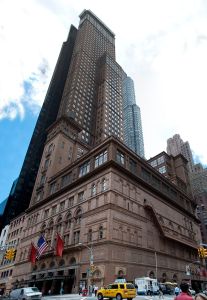 After Mr, Northern’s debut in Naples, he remained in Europe until 1937, when he returned to the United States and established the Northern Vocal Arts School at Carnegie Hall, where he taught until his death in 1992. The main hall of Carnegie Hall was home to the performances of the New York Philharmonic from 1892 until 1962. The building also contains the Carnegie Hall Archives, established in 1986, and the Rose Museum, which opened in 1991. Until 2009 studios above the Hall contained working spaces for artists in the performing and graphic arts including music, drama, dance, as well as architects, playwrights, literary agents, photographers and painters. The spaces were unusual in being purpose-designed for artistic work, with very high ceilings, skylights and large windows for natural light. In 1906 both Mark Twain and Booker T. Washington spoke here. Chauncey Northern had his studio here!


 pininthetush