

The other day I was browsing my facebook friend’s comments and I saw a comment regarding a Black Male Opera Singer. I had not heard of this person before and said so in my reply. My friend sent a message back: “You’ve never heard of George Shirley? Where have you been?” Well, I thought, for the past __-odd years I’ve been right here on planet earth. But I had not heard of Mr. Shirley. He probably had not heard of me, either. Although my mother had been an aspiring opera singer before she married my father back in 1945. So, from the beginning of my life I was immersed in the world of opera through my mom. I saw my first opera at the Shrine Auditorium in Los Angeles-Hansel and Gretel. I still have the memory of my mother practicing Ave Maria on our piano. I was assaulted every day by mom’s opera records that she played loudly while she cleaned. But she either played Marian Anderson or Madama Butterfly or some other female, I don’t remember hearing male opera stars in our house.
As a child it never dawned on me to question the race of the stars I heard. I didn’t really take note of that until I became an adult. Probably not until I saw my first “Porgy and Bess” where I fell totally in love with Porgy, he was handsome, well-shaped, and that voice! Before seeing this guy, I knew of the four tenors, Jose Carreras, Placido Domingo, Mario Lanza, and Lucianno Pavoratti. I knew of Rossano Brazzi, who began early as a child in an operatta, and who I heard in “South Pacific”. I still get chills watching him sing to the woman in the movie. I knew of Nelson Eddy and Jeanette McDonald (I love her voice) from watching them in movies on television. Of course, I heard my mother sing. I found out much later that she had been a favorite back in the day through an article in The California Eagle newspaper that said: Tip to Talent Scouts: Keep your ears on Norma Amato’s delightful thrushing. She has the kind of voice you hear only in a dream.
As I got older I began to realize the presence of Black female opera stars such as Kathleen Battle and Leontyne Price. They began to have a forward presence in my brain. But I just had not taken a lot of notice or even cared about seeing more Black male opera stars. I blame this on my parents. Well, on my mom and my step-father, and my aunt Dot. They didn’t play male opera singers on their record players. They played Big Joe Turner or Joe Williams, Black jazz singers, or Nat King Cole. My aunt Dot was a Dinah Washington fanatic and LOVED Billy Eckstein! Their album covers were always prominent (my relatives did a lot of partying). But I never saw one Black male opera star album in our house. I saw Black boxers on TV ’cause my step-father loved boxing. Plus we never discussed race in our family. Definitely not as it pertained to progress.
Except when it came to sports. Baseball, Boxing, Football, Boxing, Boxing. Basketball. Mom and my step-dad even had a bookie joint going on in one of our houses. Then I was out on my own and the seventies came around and the party was on in my life. Black male opera singers were the furthest thing from my mind. Give me some James Brown, Teddy Pendergrass, Lionel Ritchie, 50 cent, Johnny Mathis, Run DMC, babee. Now, today, I have gained some new knowledge. I’ve been introduced to the singing of Black male opera singer George Shirley.
Mr. Shirley has a beautiful voice. His voice reminds me of what it is I like about the opera. The voices touch my soul, and my heart. They transport me into a different realm. They bring me peace and love. I think my mother should have introduced me to more opera sung by Black men. I think Black parents should tell their kids about Black male opera singers, not just Black sports figures. We have so many talented Black men in this field. They deserve a bit of adoration, too. And a lot more mention, in my opinion.

In 1961, George Shirley won the Metropolitan Opera Auditions thus becoming the first African American tenor to be awarded a contract with the Met as a leading artist, the beginning of an eleven-year association. Over the span of his career, George has had a vested interest in helping African American students reach their full potential. In 1962 Leontyne Price and George Shirley two Negro-American
singers will be featured as stars of two operas that are already sold out.
In 2015, through my research During the writing of my father’s biography I did learn of another Black tenor who was my father’s friend, Mr. Chauncey Northern. Here is a quote from a newspaper article from 1928: Mr. Northern who successfully interpreted the title role of the opera “Othello,” In Naples, Italy, recently, and his four brothers, comprising the Northern’ Brothers Quartet, will be heard in the New York Edison Hour tonight at 8 o’clock on WRNY. The program will Include solos by Chauncey Northern and quartet numbers, spirituals and characteristic negro melodies-which are recognised as true folk music of this country.
Mr. Northern would later work with my father in Eddie’s Sepia-Art Pictures Studio in the 1940s: Chauncey Northern, well-known tenor who is also a recognized voice specialist and coach, has joined the Sepia-Art Motion Pictures Company as head of its music department. In this capacity, Mr. Northern will have charge of the arranging of voices for the choir which will be a permanent feature with this organization. Sepia-Art Pictures expects great things to be accomplished by these young singers under the careful and
comprehensive direction of Mr. Northern. His studios, located in Carnegie Hall, are the mecca of many of the great artists of today.
So, I’ve been exactly where I was supposed to be especially here and now so that I could be the recipient of some wonderful news about a Black male opera singer who has a gorgeous voice that I get to listen to on social media. Thank you for your glorious musical contribution Mr. Shirley.
Thanks, for stopping by, stay tuned for more from me. 🙂
 When I began this blog in 2014 I was still in the process of doing the research for the biography I wrote about my father. I had lots and lots of news articles about Eddie, I had pictures of Eddie that I didn’t even know existed before 2014 and I was finding more and more information about my father than I even suspected. As an entertainer in the early 1900s Eddie was busy. And his doings were routinely printed up in the local newspapers. Mostly the Black newspapers, but also in Billboard (which is still in business today). In the beginning they were just one-liners (Eddie Green at the Gayety), and then as time went by the articles became longer. Then interviews were printed as Eddie got more famous. Five yeas before Eddie died he was featured in the Paramount movie “Ed Gardner’s Duffy’s Tavern” (1945). The popularity of the Duffy’s Tavern radio program seemed like a good idea for a full-length movie in which the principal characters of the radio show were signed to play their same parts in the movie, Ed Gardner as Archie, Charles Cantor as Finnegan, Eddie Green as Eddie the Waiter, and Ann Thomas as Miss Duffy. Paramount used almost their whole roster of stars in this movie:
 Since publishing my father’s biography what I have discovered is that there exists much more information about my father that I did not find, but others have. Fans of my father have sent me pictures, articles and cd’s of Eddie’s radio shows. My publisher told me early on that I would probably find more information and that I should save it up for a second book about Eddie. Well, he was right. Even today 2020 in the past week I have been contacted by someone who has a couple of pictures and a Duffy’s Tavern (DT) beer mug from the 1948-49 season. I didn’t even know DT beer mugs existed. A Twitter friend sent me dozens of articles he found while doing some research. He said in his first email: “It’s been so interesting tracing Eddie’s career – he was really well-known, and liked.” This is so remarkable to me that these people have taken the time to trace Eddie’s career and have held on to items related to Eddie. If you are an old movie fan you will recognize the name Adolphe Menjou in the Lincoln Theatre ad. He was famous! And there’s Eddie Green appearing at the same theater.
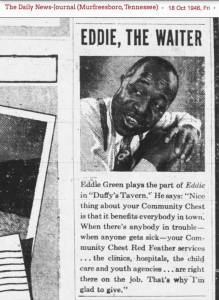 Of course, I could go on and on about my father. Since I don’t really remember him, writing about and talking about him brings me a type of peace. Something that makes me feel good always. This is my Black History. This man though born in 1891 chose to drag himself out of his childhood poverty, taught himself to read and chose a path that he liked and was good at and became quite successful in the field of entertainment. Plus, he was a nice guy while doing so. He became well-known and “liked”.
 I will also be focusing on writing my second book. This will be a non-fiction about the 1970s sitcom, The Jeffersons. I am so tickled!! Someone actually gave me the chance to write another book! Now, when anyone asks me what I do I can say “I am a writer.” I spent my early years pursuing a singing career, then worked 30 years as a Secretary then retired. And now a whole new career has blossomed. I love it. And, I have actually found a connection between one of the characters from The Jeffersons and my father, Eddie Green.
 In 1949, the year before Eddie died this article was printed. “Gosden still speaks the parts of Amos, Kingfish and Lightnin’. Correll enacts Andy and Henry Van Porter. Eddie Green is Stonewall, the lawyer; Ernestine Wade is Sapphire, wife of Kingfish, and Wonderful Smith plays various roles as needed.” Rochester Democrat Chronicle 1949
 I finished the book with news of Eddie’s last movie from 1949 and his death in 1950. The following article appeared in the Los Angeles California Watts newspaper:
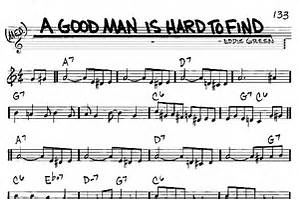 Everyone can enjoy music. Any race or gender. It’s not normally about who is playing it. It really does not matter who is performing the music, only the notes matter. I think, however, what does matter is, who writes the notes and the lyrics. Who gets the recognition. I am happy that despite the fact that my father wrote his first song way back in 1917 his name is still listed as the writer. It’s pretty much a well known fact. And many, many people have recorded or performed Eddie’s song. Just recently a friend played it in a hotel where he works as a pianist. He was surprised how many people recognized the song, “A Good Man is Hard to Find” is still being played by someone, somewhere in the world.
 John Turner Layton, Jr., was an African-American songwriter, singer and pianist. Born 1894, he died in 1978. Turner Layton’s buddy, Harry Sterling Creamer, born 1879, died 1930, was also an African-American song lyricist. He co-wrote many popular songs in the years from 1900 to 1929. These men were talented, dedicated, and also patriotic as you can see by their first album. And like my father, Eddie, also appeared in vaudeville.
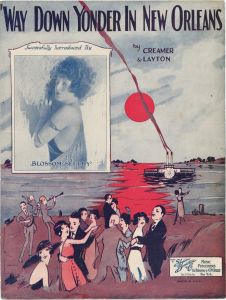 “Way Down Yonder in New Orleans” was also a popular song with music by John Turner Layton, lyrics by Harry Creamer. Sung by The Andrews Sisters (1950) Freddie Cannon, Bing Crosby, Jan and Dean (1963!) among others. Yet, how many people are aware of the fact that these songs were written by African-American men? Where is their recognition?
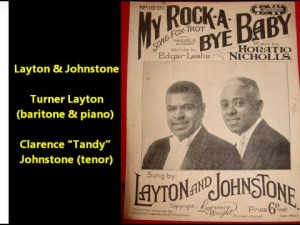 About 1924 Turner Layton went to Europe. He teamed up with a Mr. Clarence “Tandy” Johnstone and enjoyed a great deal of success. Per the Pittsburgh Courier, 1927: “Turner Layton, Clarence Johnstone Are Playing To Big Crowds In London.”
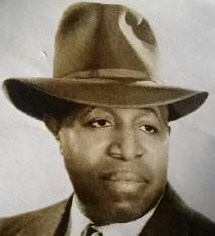 I have a few newer followers to this blog. So I am posting a bit of information, some of which is in my book, for the newer people, though I have added new information in this post that I have only found today. I have also included a YouTube video, so there should be something for everybody. Say Hi to this guy Eddie Green, my father. I began this blog in order to chronicle my research into and my writing of his biography. A rags-to-riches story of a man who was a composer, Broadway and movie star, an Old Time Radio icon and filmmaker. The book has been published and has even won a Foreword INDIES 2016 Bronze Book Award (yay!!). I am in the process now of visiting libraries and Rotary Clubs and other venues to give presentations. I have been interviewed on podcasts and a National Radio program, and on YesterdayUSA. And I am continuing to post on this blog, one reason being that I am still learning new information about my father, another is that I continue to make good friends as well as good contacts. And I continue to discover that there are lots of people in this world who knew of my father and wanted to learn more.
 In 1944, the song was revived by Tin Pan Alley songwriters Hy Zaret and Lou Singer in a more bluesy format as “One Meat Ball”, and the recording by Josh White became one of the biggest hits of the early part of the American folk music revival. The song has been performed by The Andrews Sisters, Bing Crosby, Jimmy Savo, Lightnin’ Hopkins, and others. Hy Zaret lived to be 99 years old, dying in 2007.
 pininthetush