
It’s not always easy to figure out how to begin a post. Especially if my brain wants to think about something else, like going to the store to buy cookies (I just discovered Biscoff Lotus cookies). Or if my brain simply doesn’t want to work at all. But since the pandemic has blown up again it’s good for me to sit here and share. Between this latest virus and the riots across the world I fear for us (people). It’s difficult to see a future of joy and happiness. However, I know that we, as human beings are capable of having such a future. In life today though it seems that Blacks still have to fight the hardest to be happy. It seems that more and more Black men are being shot by police. Can this change for the better? Judging by the past I think that it can, however, it will be a mighty long process. When my father was born, 1891 and as he performed as a comedian through the Southern states of America, Blacks were being lynched on a constant basis.
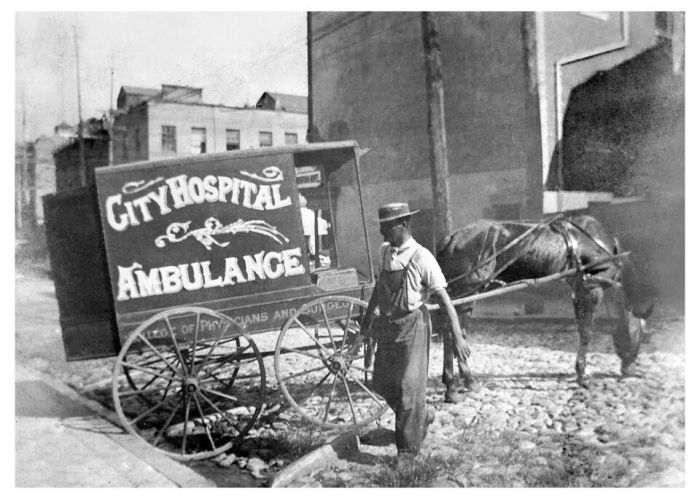
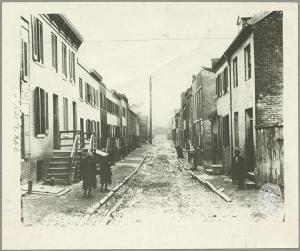
As far as pandemics go, when he was a small child in East Baltimore he lived with typhus due to the fact that there was no sewage system, especially in the poor neighborhoods. By 1890 Baltimore Harbor was a national joke. While other cities in Europe and in the United States had installed sewers Baltimore had not. Outbreaks of cholera, typhoid or other diseases occurred fairly often. City code required indoor toilets, but it was up to individual property owners to build cesspools, cisterns, or gutters. These emptied into an unfortunate stream called the Jones Falls; its polluted course ran from the wealthier to the poorer areas of town and finally into the harbor. As Eddie’s family were desperately poor this was one reason he left home at nine years old-he wanted to find a better life for himself.
 I have been asked to do an essay on a Mr. Perry Bradford. Perry was born in 1893. As a vaudeville performer and composer and songwriter, he too worked in theater circuits throughout the South and into the North. I imagine that he had the same worries as every other Black man in the South at that time. But he had a goal in mind. Bradford persevered in getting the recording industry to value recordings of African-American artists. In 1957, Little Richard had a hit with Bradford’s “Keep A-Knockin'”. In 1965 he wrote his autobiography Born With the Blues. Later in 1994 his song “Crazy Blues” was inducted into the Grammy Hall of Fame. Perry lived a long time, too. He died in 1970.
 More recently, there was Arlando Smith, born 1952. Arlando came up during the Civil Rights era, police with hoses and dogs and batons. He worked at becoming successful. Arlando was a TV writer and director. During my research for my book on The Jeffersons I learned about this gentleman. He worked on What’s Happening Now, All In The Family, Silver Spoons, 227, The Richard Pryor Show, She’s The Sheriff, The Robert Guillaume Show. The Jeffersons (2 episodes) and Malcolm and Eddie. He was the stage manager for All in the Family, 51st Annual Academy Awards, The Richard Pryor Show, What’s Happening, Sanford and Son, That’s My Mama, Good Times, and The Jeffersons (48 episodes). In 2015 when Arlando Cooper Smith died The San Pedro Sun reported that: “Smith was an award-winning director who directed the first episode of La Isla Bonita Telenovela. He also contributed to several American television series, Arlando Cooper Smith made the Isla Bonita his home, has selflessly supported the island in ways too numerous to count for many years. He will be missed by all those who knew and loved him.”
These gentlemen became successful in their fields despite the Race issue, despite lynchings, typhus, and lack of money. Despite hard times. You don’t hear too much about these men. Until I wrote the book about my father few people knew of his many contributions to the entertainment industry. These men were either forgotten or overshadowed. Or simply not known about because of their positions in the background as opposed to being a principal character on a program. Because of who they were-their character-and because of their courage they achieved success, friendship and love.
May we all have courage.
 I will also be focusing on writing my second book. This will be a non-fiction about the 1970s sitcom, The Jeffersons. I am so tickled!! Someone actually gave me the chance to write another book! Now, when anyone asks me what I do I can say “I am a writer.” I spent my early years pursuing a singing career, then worked 30 years as a Secretary then retired. And now a whole new career has blossomed. I love it. And, I have actually found a connection between one of the characters from The Jeffersons and my father, Eddie Green.
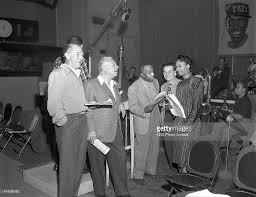 In 1949, the year before Eddie died this article was printed. “Gosden still speaks the parts of Amos, Kingfish and Lightnin’. Correll enacts Andy and Henry Van Porter. Eddie Green is Stonewall, the lawyer; Ernestine Wade is Sapphire, wife of Kingfish, and Wonderful Smith plays various roles as needed.” Rochester Democrat Chronicle 1949
 I finished the book with news of Eddie’s last movie from 1949 and his death in 1950. The following article appeared in the Los Angeles California Watts newspaper:
 When I began writing the biography on my father, Eddie Green, I wanted to use a quote from Langston Hughes in the foreword but had to forget that idea as I could not get permission. I can, however, use a portion of an article Mr. Hughes wrote which mentioned my father. James Mercer Langston Hughes (February 1, 1902 – May 22, 1967) was an American poet, social activist, novelist, playwright, and columnist. He was one of the earliest innovators of the then-new literary art form called jazz poetry. Hughes is best known as a leader of the Harlem Renaissance in New York City from the mid-1950s to the mid-1960s.
 In the Hughes article (not the one pictured here) he was writing about “sympathetic outlets to new Negro playwrights”. He wanted to stimulate growth of a real Negro theater. He believed that while White playwrights could be skilled or sincere they could not catch “the little graduation that give a negro life its drama.” He links the comedy stage thus: “Perhaps comedy is the pitfall of the theater. Exaggeration of racial types the overstressing of eccentricities of regional speech frequently dominate comedy especially in music halls”. He goes on to say, “Nevertheless just as out of serious plays has come a Robeson, so from the minstral vaudeville musical stage have come some very talented Negro comedians, Bert Williams, Pigmeat, Jackie Mabley, Eddie Green.” (New York Age May, 1953). Notice in the article to the left Eddie, Jackie, and Pigmeat are all listed as appearing with the sixteen Apollo Rockettes back in the early 1900s.
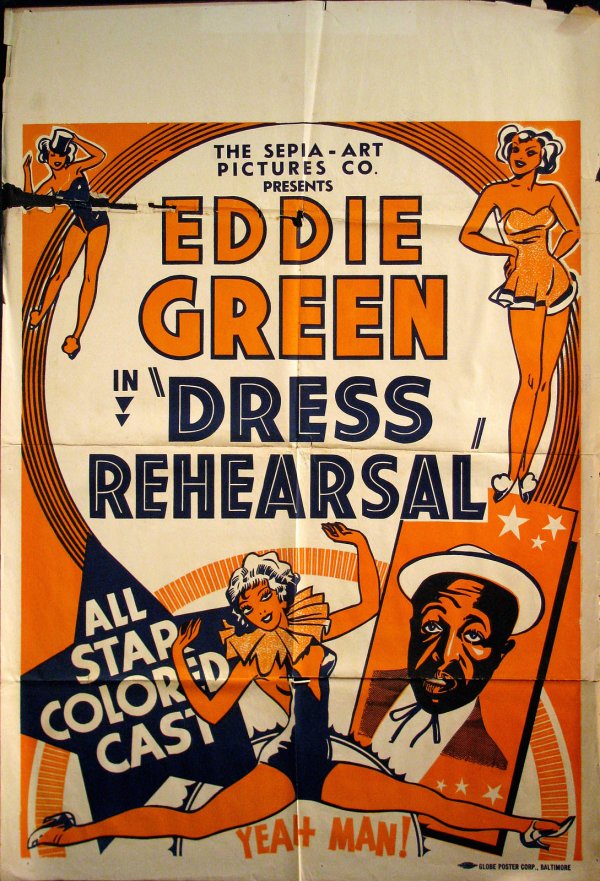
 Here is a compilation of some of the scenes from Eddie’s movies in 1939. In a 1940 Baltimore article written by Lillian Johnson she headed the article with: As a Comedian, He’s Very Funny; As a Business Man, He’s Very Sensible and Comedy is a Business. Lillian said “The fact that Eddie is so funny on the screen, stage, and radio is due to the highly intelligent and efficient manner in which he conducts his work.”










 pininthetush