
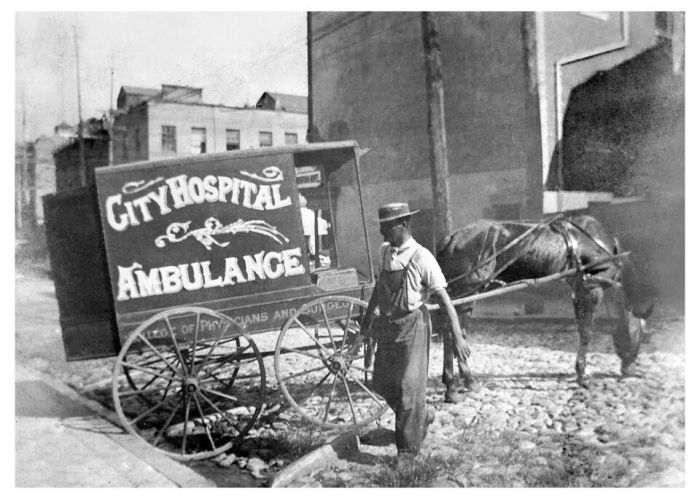
It’s not always easy to figure out how to begin a post. Especially if my brain wants to think about something else, like going to the store to buy cookies (I just discovered Biscoff Lotus cookies). Or if my brain simply doesn’t want to work at all. But since the pandemic has blown up again it’s good for me to sit here and share. Between this latest virus and the riots across the world I fear for us (people). It’s difficult to see a future of joy and happiness. However, I know that we, as human beings are capable of having such a future. In life today though it seems that Blacks still have to fight the hardest to be happy. It seems that more and more Black men are being shot by police. Can this change for the better? Judging by the past I think that it can, however, it will be a mighty long process. When my father was born, 1891 and as he performed as a comedian through the Southern states of America, Blacks were being lynched on a constant basis.
As far as pandemics go, when he was a small child in East Baltimore he lived with typhus due to the fact that there was no sewage system, especially in the poor neighborhoods. By 1890 Baltimore Harbor was a national joke. While other cities in Europe and in the United States had installed sewers Baltimore had not. Outbreaks of cholera, typhoid or other diseases occurred fairly often. City code required indoor toilets, but it was up to individual property owners to build cesspools, cisterns, or gutters. These emptied into an unfortunate stream called the Jones Falls; its polluted course ran from the wealthier to the poorer areas of town and finally into the harbor. As Eddie’s family were desperately poor this was one reason he left home at nine years old-he wanted to find a better life for himself.
 I have been asked to do an essay on a Mr. Perry Bradford. Perry was born in 1893. As a vaudeville performer and composer and songwriter, he too worked in theater circuits throughout the South and into the North. I imagine that he had the same worries as every other Black man in the South at that time. But he had a goal in mind. Bradford persevered in getting the recording industry to value recordings of African-American artists. In 1957, Little Richard had a hit with Bradford’s “Keep A-Knockin'”. In 1965 he wrote his autobiography Born With the Blues. Later in 1994 his song “Crazy Blues” was inducted into the Grammy Hall of Fame. Perry lived a long time, too. He died in 1970.
 More recently, there was Arlando Smith, born 1952. Arlando came up during the Civil Rights era, police with hoses and dogs and batons. He worked at becoming successful. Arlando was a TV writer and director. During my research for my book on The Jeffersons I learned about this gentleman. He worked on What’s Happening Now, All In The Family, Silver Spoons, 227, The Richard Pryor Show, She’s The Sheriff, The Robert Guillaume Show. The Jeffersons (2 episodes) and Malcolm and Eddie. He was the stage manager for All in the Family, 51st Annual Academy Awards, The Richard Pryor Show, What’s Happening, Sanford and Son, That’s My Mama, Good Times, and The Jeffersons (48 episodes). In 2015 when Arlando Cooper Smith died The San Pedro Sun reported that: “Smith was an award-winning director who directed the first episode of La Isla Bonita Telenovela. He also contributed to several American television series, Arlando Cooper Smith made the Isla Bonita his home, has selflessly supported the island in ways too numerous to count for many years. He will be missed by all those who knew and loved him.”
These gentlemen became successful in their fields despite the Race issue, despite lynchings, typhus, and lack of money. Despite hard times. You don’t hear too much about these men. Until I wrote the book about my father few people knew of his many contributions to the entertainment industry. These men were either forgotten or overshadowed. Or simply not known about because of their positions in the background as opposed to being a principal character on a program. Because of who they were-their character-and because of their courage they achieved success, friendship and love.
May we all have courage.

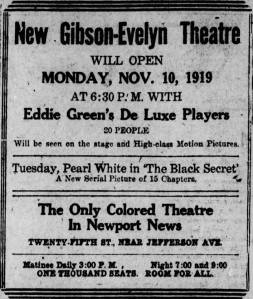 I’ve been doing what I like to do best-researching. I saw a story online about the 1918 Spanish Flu and it dawned on me that my father was alive back then. As a matter of fact, he was married to his first wife, had his first daughter, had signed up for WWI, had written a song and was on the road traveling down south with his “Deluxe Players”. The 1918 pandemic lasted from, I think, August of 1918 through December of 1920. Eddie began his first on stage vaudeville work in 1920. He was a comedian. The 1918 flu was targeting young adults. About half of the deaths were in the 20-40 range. Eddie was about 29. He had already experienced diseases and poverty being born in 1891 in Baltimore during a time of no indoor plumbing and rampant Leukemia in the East Baltimore slums. It’s one of the reasons he left home at nine years old and worked as a boy magician until someone suggested that he was so funny he really didn’t need a lot of props to entertain people. It seems that Eddie never got sick. Vaudeville and Burlesque were pulling people in. Eddie was performing in Tampa, Fla., in 1919 with his Deluxe Players when he applied for and got a job as a comedian in New York in 1920. The flu had hit Haskell County, Kansas In January 1918.
 The “Roaring Twenties”. Booze and parties. Eddie was appearing onstage in “All In Fun”, dancing and singing now along with his comedy. I read he and his partner were encored many times. So everyone must have been having a good time. Duke Ellington was coming along. Eddie opened a publishing business, a movie studio and wrote “King Tut’s Blues” because of the discovery of the tomb in 1923. And better things were yet to come. Even so, there was also the fact that in those early 1900 years racism was also a death sentence for Blacks. And Eddie was touring the country with Burlesque shows. In Blackface. And he was a hit everywhere he went. Fascinating when you think about it.
 Well, unlike George and Weezy I’ve moved on out of my old too expensive place “in” to a cheaper place. And what a relief it is. I’ve had to go backwards to move forward. Meaning I now have a bit more money to work with and I can be more comfortable while writing my second book and while I wait for my ship to come in. I’m sleeping with less stress as opposed to sleeping because of depression. And now I can focus on The Jeffersons. Getting back into doing research for a book helps balance me out.
 Jeff Barry, the co-writer of “Movin’ On Up” is a Songwriters Hall of Fame inductee. He has co-written songs for The Monkees, The Shangri-las, The Ronettes, and he co-wrote “River Deep, Mountain High” recorded by Tina Turner. Wow. He is also the recipient of the Ahmet Ertegün Award from the Rock and Roll Hall of Fame. He has a great online site, too. (Google Advanced Image Search)
 One of my Facebook friends said she liked the episode that featured Sammy Davis, Jr. I did not see that one, didn’t even know he had been a guest. The episode was titled “What Makes Sammy Run”. It aired January 1, 1984. I wonder how I missed THAT one. Sammy even recorded the Theme Song. Let’s see if I can post it here:

 H
H “Radio for Negroes is a very hard field to get into . . . very hard! But the returns are so great that it’s worth the try.”


 Inspire someone today. I chose to write a book “Eddie Green The Rise of an Early 1900s Black American Entertainment Pioneer” to inspire my grandson. He was six when I came up with the idea, he is twenty-six today and the book just published in July of this year.
 My desire to inspire my grandson with his great-grandfather’s story morphed into wanting to inspire any person who thinks “they can’t .” So I was blown away with the interest generated by this book in the Nostalgia field. I have discovered that a lot of people knew about, remembered and have actually seen my father perform. I have been made aware of the fact that there are young people who are fascinated with success stories from the 1900s, for the very reason I wrote the book, inspiration. Also, I have happily realized the interest this book can garner in the Black community as a success story of a Black man, both personally and professionally, in a time of great racial discord.

 pininthetush