
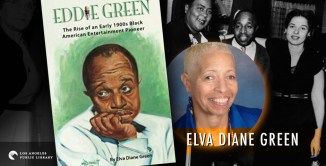
 I’m mortified. I have not posted for almost two weeks. Periodically, my depression gets the better of me, plus it’s been as high as 117 degrees where I live, so, I have isolated. When up I have focused on gaining followers to my other social media sites. This month it has been two years since the biography I wrote about my father, Eddie Green, was published. Approximately one year since I won the Foreword INDIES 2016 Bronze Book Award for the book. I set up this blog in 2014 for the specific purpose of chronicling my book writing journey and to have a “platform” as those in the know suggested.
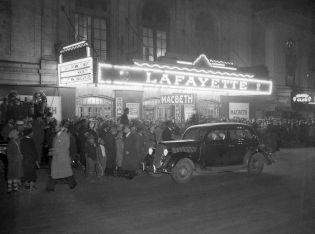 I began the research for the book in the late 1990s. It has all been worth it. And then some. Since the book was published I have begun getting all sorts of new information about Eddie. People have sent me never before seen pictures of Eddie. They have sent me new newspaper articles. I have heard new stories from old timers who showed up at my library presentations. I have met thee nicest, helpful, caring people. Gaining new information and meeting new people has spurred me on to further research about Eddie. The information I have found is adding up to me being able to possibly write another book. For instance, in regard to a play titled Playing The Numbers to be shown at the Lafayette Theater in New York, 1925: “Therefore Eddie Green who had been an Important comedian in the Apollo cast was commissioned to organize a miniature stock company that each week will present a 45 minute performance that will consist of musical numbers and burlesque comedy bits. The bits, however, will be revised by Eddie to conform to the special requirements of the neighborhood.” I knew Eddie had been a part of the play but now I’ve learned how big of a part he really played.
 In order to not share too much of the new stuff here and also to phase out of sharing stories from the first book, I will be posting additional information on little known and sometimes well-known pioneers of the entertainment industry and/or pioneers of civic issues. Earlier this morning on a news site I saw “Today in History”. Out of 24 items listed, only 2 were about Black people. One item was: 1960 Fifteen-year-old Brenda Lee earns a #1 hit with “I’m Sorry”. As you can see she actually also recorded my father’s song! The SECOND item about a Black person was: 1995 Barack Obama’s “Dreams from My Father” is published. Yay!!
 I am adding one more which kind of goes with today’s climate: Lemuel Haynes, first Black to serve as minister to a White congregation, born July 18 1753 to a White mother and an African-American father. At the age of five months, Lemuel Haynes was given over to indentured servitude. He was freed in 1774 when his indenture expired. Haynes was ordained in 1785 and settled at Hemlock Congregational Church in Torrington, Connecticut. He was the first African American ordained in the United States. On March 28, 1788, Haynes left his pastorate at Torrington to accept a call at the West Parish Church of Rutland, Vermont (now West Rutland’s United Church of Christ), where he served the mostly white congregation for 30 years. Fun Fact: Haynes himself was known to say that “he lived with the people of Rutland thirty years, and they were so sagacious that at the end of that time they found out that he was a (insert N-word here), and so turned on him”. (https://www.pbs.org/wgbh/aia/part2/2p29.html). Looking at this gentleman’s picture I can see how he could have been considered White. And, it seems as if he may have been trying to pass if it took 30 years for the congregation to realize he was a Black man.
Anyhow, the one thing I truly like about writing this blog is doing the research. Sharing it with others is my way of Cheering For Trailblazers. Thanks for joining me on this journey.
And thanks, for stopping by.
 Ralph Wilhelm Cooper, 1908-1992. Actor, dancer, screen writer, emcee, choreographer (Shirley Temple-Poor Little Rich Girl). Ralph Cooper spent five years acting and directing in Hollywood and while there folks began calling him the “Dark Gable” because of his “handsome, rugged good looks and his charm and wit”. * I would like to say instead of giving him a nickname that reminds people of a White man, can we just say that this man was Ralph Cooper, a handsome, charming Black man who was very active in the world of entertainment in the 1920s, 30s and 40s. And beyond.
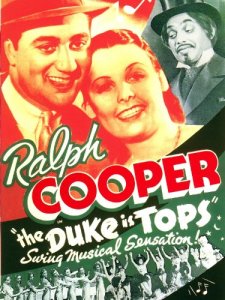 Like my father, Eddie Green, Cooper was also a filmmaker. Meaning he wrote, directed and starred in his own movies. In the late 1930s he was making movies during Oscar Micheaux’s filmmaking time (Micheaux began making films in 1915). He wrote, directed, produced or starred in at least fifteen films. My father began making his films in 1939, right about the time Cooper left filmmaking. In 1937, Cooper formed Million Dollar Productions with black actor George Randol and white producers Harry Popkin and his brother Leo Popkin to produce race films.
 Ralph and my father appeared on the same bill during those early days; their names are kind of close to the bottom of the ad as they had not “blown up” yet. But they must have met backstage. Maybe Eddie talked to him about making movies someday. Both Eddie and Ralph were successful in their chosen pursuits. Through their own talent and hard work. When it was truly a struggle for a Black man to get ahead. I salute my father and Ralph Cooper and their own special uniqueness in bringing a little entertainment into the lives of others.
 “Radio for Negroes is a very hard field to get into . . . very hard! But the returns are so great that it’s worth the try.”
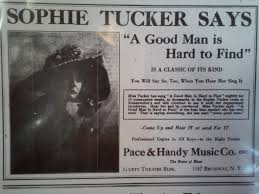 On March 7th I had the best time doing a book talk at a local library here in Los Angeles. There was a nice group of people, snacks and tea and I was prepared. But, I was a bit nervous. I think I was worried about how “cute” I was, or not. I said “uh” a lot. After I shared the Toastmaster tips I was not following I got a laugh and I felt more at ease. I spoke for almost an hour. I passed photos around. One thing I have noticed is that once the audience begins to hear my father’s rags-to-riches story they become truly interested. They are amazed in some instances and sad in others. And they laugh. His story is inspiring. I love it. I have begun to want to be a Cheerleader for Trailblazers, not only Eddie, but others. I find that keeping in mind those that paved the way is a motivating factor for future endeavors. One of the things I talked about was that Eddie wrote the song “A Good Man is Hard to Find” way back in 1917. During the early 1920s Sophie Tucker loved this song so much she sang it in her nightclub act every night for ten weeks.
 Depending on who was talking about it, the song was listed as a Blues song or a Fox Trot or as Jazz. Sophie did a Blues version. As you can see by this poster she was a red hot mamma, so you can imagine how she must have sang that song. After my talk at the library, a few of the people stayed around to talk with me. One of them was a gentleman who just happened to be a big Sophie Tucker fan and an Eddie Green fan. When I got home he had posted this message on my Facebook Book Page: “Dear Miss Green, I attended your talk at Memorial Library yesterday afternoon and enjoyed it very much. I am going to order the book from Amazon and look forward to reading it. Good luck to you and thank you for bringing Eddie Green back to life.” Now, of course, he did not know it but basically this is exactly what I was hoping to do with my book. Bring Eddie back to the fore of the public’s mind because of his many achievements during his lifetime which people have forgotten. What a treat to have spoken with this man.
 The gentleman also told me a story I had never heard before about Sophie Tucker and Alberta Hunter. Alberta Hunter was an American jazz singer and songwriter who had a successful career from the early 1920s to the late 1950s. He saw Alberta Hunter on a late night talk show probably in the 60s or 70s. She was discussing the night she decided to sing “Sophie’s” song-A Good Man is Hard to Find-on stage. And so she did. With Sophie Tucker sitting right there in the audience. So there!! They each participated in making the song a big hit. The gentleman who told me this story also said he looked and looked for a Sophie Tucker recorded version and finally found it just by happenstance. And here he was now talking to the daughter of the man who wrote the song. This is one of the reasons I love doing these talks. I get to meet and connect with people who know about my father or want to know. Since Eddie died when I was three this is so special for me.
 pininthetush