
 My question is “didn’t Black people ever watch old time radio?” I have begun to realize the magnitude of commercialism and how it played into Blacks being ignored in this world in the early 1900s. While researching African-Americans and their relationship to Old Time Radio I did a Google search for “Old Time Radios”. The search engine game me dozens of images of families sitting around the radio listening to a program. Some actually were looking at the radio as if it was a television. However, none of these families were Black. I am trying to wrap my head around the idea that despite all the African-Americans in America at the time, there was little representation in the radio industry. According to J. Fred MacDonald “the industry in its so-called Golden Age offered only limited opportunities for black men and women to develop.” Even though there was a huge need for personnel.
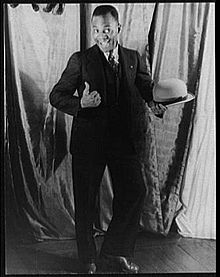
 Of course, there were Blacks working in radio as janitors, or electrical assistants and even an announcer or two. They had to come in the “other” door, though. And there were Blacks performing on the radio, such as my father, Eddie Green, who became Rudy Vallee’s protege’ or Eddie “Rochester” Anderson from the Jack Benny program. My father was evidently so funny that Rudy Vallee would feature Eddie over and over. Then there were shows that were hugely popular with everybody (maybe not the NAACP), such as, Amos n Andy. People everywhere literally stopped what they were doing to listen to this program. Eddie was the lawyer, Stonewall in this program. There must have been some Blacks sitting in front of their radios, or if they did not have one a person could stand in front of their local storefront and listen to the broadcasts. Yes, I am beginning to really see how segregation kept Black people “out of the picture”, except in some rare instances. I mean we were THERE.
 Today, If you look up Old Time Radio (OTR), not the Beyonce’ concert, you will get a lot of information about all the White radio suspense, cowboy, comedy and horror shows.
Old Time Radio shows produced by Blacks got a toehold in maybe the late 30s. The one I have researched so far, though got its start on June 27, 1948. Mr. Richard Durham began a radio program titled “Destination Freedom”. Now….. if you look up OTR shows online you will get a lot of sites that post lists of shows and you will get sites that let you listen to lots of shows. Until two days ago I hadn’t found one site that had a list of a Black OTR program.
Two days ago I found one that has a list and lets you download shows of Mr. Durham’s Destination Freedom. Old Time Radio Downloads. They have won my heart. They actually have clippings of each episode of “Destination Freedom” for my listening pleasure. I love them. Maybe some day this show will appear in the internet search engines under OTR, Old Time Radio, that is.
https://www.oldtimeradiodownloads.com/historical/destination-freedom/the-making-of-a-man-1948-07-25
Hey, thanks, for stopping by.
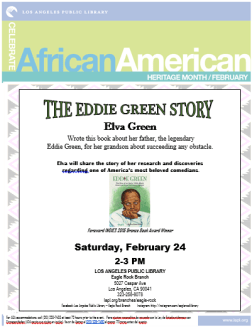 Hello again. Here is a poster announcing my next appearance at a local library here in Los Angeles, the Eagle Rock Branch Library to share my father’s inspirational story. When I started this book writing journey my thoughts never went further than getting the writing done and getting a publisher. The idea of being asked to give a presentation at a library never entered my mind. I simply knew that I wanted to put my father’s story down on paper and present it to my grandson. My doctor asked me the other day how I wrote the book-did I have any help? I realized that this is one of the first questions people ask. So this past week I sat down and wrote out what I did to get this book written. Once I took a good look at what entails getting a book written, I was in awe of myself. I am beginning to realize what a big deal this is.
 Here I am last week speaking about writing the biography of my father. I have pictures, we played a cd of a comedy skit with Lena Horne and I was happy to be there. Especially as there were two grammar school girls sitting in the front row. Paying attention. Sitting still. One little girl would take a photo I handed out, show it to her friend, have a little discussion and place the photo on the table. They even contributed to the discussion when I managed to touch on something currently relevant. I loved talking to them and assuring them that they too could achieve their dreams, like Eddie, if they learned as much as they could and believed in themselves.
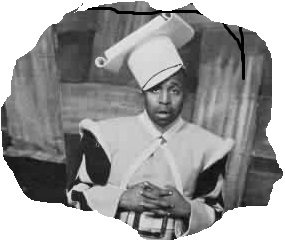
 Of course I told these young girls that I started my research in the Central Library in Los Angeles. That I went to the library a lot when I was little, which I did. And, in fact, the Central Library is exactly where I began my research for my book. My mother actually found the first picture we had of Eddie on stage doing an Amos n Andy radio show back in the 1930s or 40s. This is Central Library.
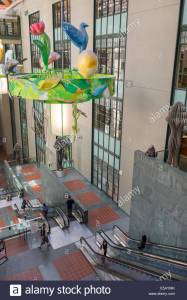 Central Library is beautiful. All of the information I found here about Eddie (and my mom) was housed in the basement level. So I went down this escalator many times. This is where I found the copyright entries for Eddie’s last movie. This is where I found old copies of Black newspapers that had so many articles about Eddie. And my mom. This is where I got carried away with reading those old newspapers. And how I found my aunt mentioned and my Nana. And my godfather. I even began genealogy research here. I made lots of copies here. I usually ate lunch in the building. And of course you can’t just visit one area of this library.
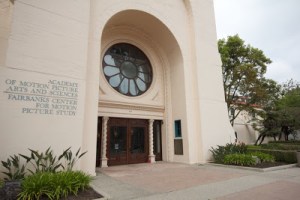 Along the way someone told me they had found information on Eddie at the Margaret Herrick Library in Beverly Hills and suggested I check it out. This is the library for the Academy of Motion Picture Arts and Sciences. It houses the Oscars library. So I went to this library. What an experience. First of all, I would have never thought of going to this library. Even though I knew my father was a filmmaker-I did not realize how big an impact Eddie had in the entertainment field. I must say here that at the time I did not have a car. I used public transportation. L. A. has good public transportation, but, some buses only run once an hour or once every 30 minutes. And visiting these libraries took me from the East to the West side of town. I visited the African American Museum in Exposition Park, the Mayme Clayton Museum in Inglewood, AND I spent hours at the Family History Library in West L.A. (a 2 hour bus ride one-way), I found so many books here on US history.
 The inside of the Margaret Herrick Library is gorgeous. One must leave one’s bags, coats and books in a little locker. When looking at photos or scripts of old papers, one must wear gloves and be very careful when handling delicate items such as old invoices. Oh, and you cannot just walk in, you have to have an appointment. The people that work in here are so nice. You tell them what you are looking for and they get it and bring it to you. I found Eddie’s movie scripts!! Posters of his movies!!! Invoices from Seiden Cinema in New Jersey for the film work they did for Eddie (with signatures). I even found the contract he made with Paramount when he was in the 1945 Duffy’s Tavern movie. Of course,, some of those items I could purchase, some not, but I could write down what I found and pay for copies. I made three trips to this library.
 Visiting libraries and museums was a big part of my journey. There were also conventions. I spent many hours online. There was a lot of reading, emailing, learning how to get with social media. Reading how-to books and articles. Reading other people’s biographies to study writing styles. Studying how to get a publisher. Biting my nails. After my mother passed in 2010 I used my grieving time to focus on the book. I was retired. Footloose and fancy-free. I had time to put into this book. Today, now that it is published I have time to share Eddie’s story in the libraries here in Los Angeles. This photo of Eagle Rock library is where I will be on the 24th of February 2018. I hope to get more kids involved. Because after all, I began this writing venture to try and motivate my grandson who grew up while I was in this process. But I also want to bring Eddie out of the shadows of time and share his many contributions to the entertainment industry and beyond.
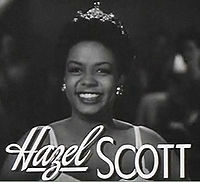
 My father liked two things for sure: Pretty women and he liked being happy. From the first time he went out on the road with his first song in 1919, through his movie making days in 1939, ’40 and ’41 his ensemble included chorus girls and comedy. He even incorporated dancing girls, tap dancers, singers and comedic skits in his last 1949 movie that depicted Blacks and how they dealt with life after the Atom Bomb. For those new to this blog you can see his last movie on YouTube-it’s titled Mr. Adam’s Bomb. A young lady (Margaret Westfield) sings a song called “You can Always Believe Your Heart” which Eddie wrote. I am still looking for information on Ms. Westfield.
 Eddie became a household name as Eddie, the waiter in the radio program Duffy’s Tavern, during the last ten years of his life. Everyone loved Eddie. February is Black History Month. I am going to inundate social media with “fun Eddie stuff”. I want to get him as much exposure as possible. I want to get as many people as I can to experience Eddie’s good nature and for them to get a few laughs as well. I think our world could use uplifting right now. Eddie’s life story is truly inspiring. I will also be pushing the biography I have written about him, “Eddie Green The Rise of an Early 1900s Black American Entertainment Pioneer“, it’s much more fun that that “other” book everyone is talking about these days.
 In this still from Eddie’s 4th movie you can see that Eddie (in the striped shirt) liked being silly (which is why, I am sure I like silly jokes: What kind of flower is that on your face? Tulips!!! Hahahahaha!) There were even chorus girls in this movie.





 pininthetush