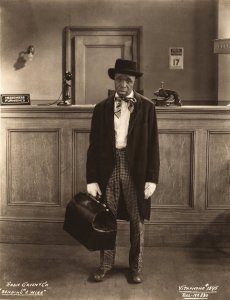
 According to today’s news, a new Black female movie director who has just finished directing Madeleine L’Engle’s “A Wrinkle In Time”, has been chosen to direct Jack Kirby’s “New Gods” for Warner Bros. I have been following her rise, and when I read the words Warner Bros., my father flashed into my mind because he did a Warner Bros. Vitaphone Film.
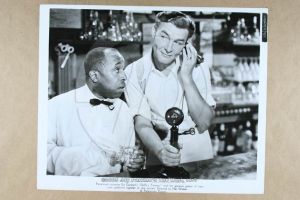
The film is titled Sending A Wire. I felt that here is a connection (if somewhat remote) I can use to help make Eddie relevant to today. You know, Eddie was Black, he was a director, he worked with Warner Bros. and he was a Trailblazer.
I also communicate via Twitter. So I tweeted this information to the female director, yes, hoping for some type of acknowledgement. I am still in the process of promoting the biography I have written about my father and I am trying every way I can think of to get his story seen. I read somewhere that I should “do the same thing everyone else does, but do it differently”. Huh?? So I’m just doing what I think this advice is saying. I want to bring Eddie back to the fore of people’s minds. Because he was a trailblazer who was the best at what he did. His story can provide that pin-in-the-tush type of motivation for others.
Sending A Wire started out as a skit in a play titled Hot Chocolates and went on to become quite popular. From my book:
There was also “Sending A Wire”, written by Eddie, featuring Eddie and Jimmy Baskette, as a customer and clerk, respectively, in a telegraph office. The New York Age called Sending A Wire “riotously funny”. Evidently, Eddie was “knocking them ga-ga” in his telegraph skit at the Hudson.
James “Jimmie” Baskette, born February 16, 1904, would later become best known as “Uncle Remus” singing the song “Zip-A-Dee-Do-Dah” in the 1946 Disney feature film, Song of the South.
Connie’s Hot Chocolates was hailed by critics and was touted as being fast, funny and frank. Hot Chocolates would go on to have 219 performances. The closing date was December 14, 1929.
The skit from “Connie’s Hot Chocolates”, “Sending A Wire”, became a Warner Brother’s Vitaphone film that was said to be the funniest Vitaphone comedy act “which has yet been produced”, and that it “kept thousands shaking with laughter.” The film is registered in the Library of Congress as Sending A Wire, Eddie Green and Co. New York Age February 1, 1930.
“Sending A Wire”, would go on to be shown at Loew’s Main St. New Rochelle Theater, December 7, 8 and 9, billed as “Eddie Green & Co.”, featured between the Hearst Metrotone News and Irene Franklin, and, at the Strand Theater on the same program with a Mickey Mouse cartoon called The Jazz Fool.
Okeh Records would record the song “Sending A Wire” with Eddie Green and Company (which can be found at the Library of Congress under Black Films: Paper Print Collection.)
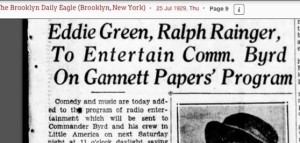
At the time, Commander Richard E. Byrd, an America Naval Officer had started an expedition to the Antarctic, and had set up a base camp named “Little America” in the Antarctic on the Ross Ice Shelf. The Gannet Newspapers, which at the time included the Albany News and The Knickerbocker Press, decided to put together a stellar list of entertainers to perform over radio stations WGY and WHAM to be broadcast to “Little America”, for the enjoyment of the explorers. Commander Byrd would receive the short wave and the broadcast wave lengths to all broadcast listeners in the United States. Amsterdam Evening Recorder: “Tonight’s radio program for Commander Byrd-Radio entertainment, originating in three different cities will be broadcast by WGY and its short wave stations to Commander Richard Byrd and his men in Little America.
Eddie was added to the program specifically to do his “Telegraph Skit” which was said to be “one of the funniest skits on the stage.” Eddie would perform along with Ralph Rainger, the composer of “Moanin’ Low”, who was also invited. Some of the other stellar performers included Rudy Vallee, Fred Allen and comedian Ted Healy. At the end of the program letters and messages from the men’s families were read over the air.
Regarding Eddie Green’s performance on the radio program, The Brooklyn Daily Eagle said “The whole town is talking about Eddie Green, prime colored comic, who will put on one of the funniest skits on the stage. He will dash from the Hudson Theater immediately after the final curtain to the National Broadcasting Company where he will re-enact his side-splitting “Telegraph Office” skit for Commander Byrd and his crew.” (Brooklyn Daily Eagle July 18, 1929).
“The whole town is talking about Eddie Green.” What a wonderful line to read about one’s father in the newspaper.
Thank you so much, for stopping by.
Eddie Green The Rise of an Early 1900s Black American Entertainment Pioneer-BearManor Media publisher



 I know this is too interesting, but I just want to go back a bit to the beginning of my book writing online journey. I think it is amazing and right that the biography that I wrote about my father has a continuous connection to my second and third books. As if I am supposed to be writing these books. I started out by writing about my father who found his fame appearing as Eddie the waiter on the Duffy’s Tavern Radio Program from 1941-1950. They began taping in New York, moved to L. A. and then to Puerto Rico during these years. Duffy’s Tavern was a comedy and each episode (almost every one of them) a different guest appeared and became a part of the shenanigans. Way too many to list here, but a few were Bing Crosby, Dinah Shore, Billie Burke, Adolph Monjou, Charles Coburn, Boris Karloff, Larry Storch, Peggy Lee, Mickey Rooney, Ed Wynn and on and on. Ed Gardner, Jr. was the Bartender and Charles Cantor was the resident oddball guy who hung out at Duffy’s, by the name of Finnegan.
 In 1945 Duffy’s Tavern with made into a movie by Paramount. In the movie they used almost every star on the Paramount lot, plus Ed, Eddie and Charlie. Bing Crosby was in this movie as you can see from this poster. Eddie’s picture is no where on this poster. Maybe he wasn’t famous enough yet. But after being in the entertainment business since about 1901 he was gettin’ there. Anywho, since I have written the book I have received pictures from fans of Eddie. Pictures that are treasures of theirs and now of mine.
 Sometime in the early 40s this picture was taken. This is an old copy from the internet. I now have an original in hand. This is typed on the back of the picture: Produced by the Armed Forces Radio Service. Program: Jubilee. Bing Crosby and Eddie Green “All Armed Forces Radio Service programs are stamped on flexible plastic transcription discs. In addition the the land-based broadcasting outlets ships of the United States Navy and Coast Guard in all oceans will receive the transcription of this show, which is not heard in the United States except in Army and Navy hospitals serving returned casualties.” Need I say more?
 Going on to my second book. While writing The Jeffersons I discovered that a friend of Eddie’s, Lillian Randolph, had appeared in a Jeffersons episode as Mother Jefferson’s sister. Lillian and Eddie had appeared together on The Great Gildersleeves Radio Program and also on the Amos n Andy Radio Program. Lillian’s real life sister was Amanda Randolph who had stared in Eddie’s third movie Comes Midnight. Lillian is the woman who donated her dee-vorce money in It’s a Wonderful Life.
 Hello out there! What a lucky girl am I. I have started researching a third book. Just writing those words down makes me have to stop and ponder. I’ve never considered writing 3 books. Just the one-about my father- a rags-to-riches biography about the legendary Eddie Green, Old Time Radio icon (Duffy’s Tavern once a week radio show and others), composer, filmmaker, singer, dancer magician, TV star. A Black American who made it big despite the travails of Blacks in the early 1900s.
 Duffy’s Tavern was on the air for ten years. It was funny. Especially Eddie the waiter’s lines. Apart from a very few, the weekly guests were White. The cast was White. The announcer was White. Eddie was the only Black cast member on that show. And he was hilarious.
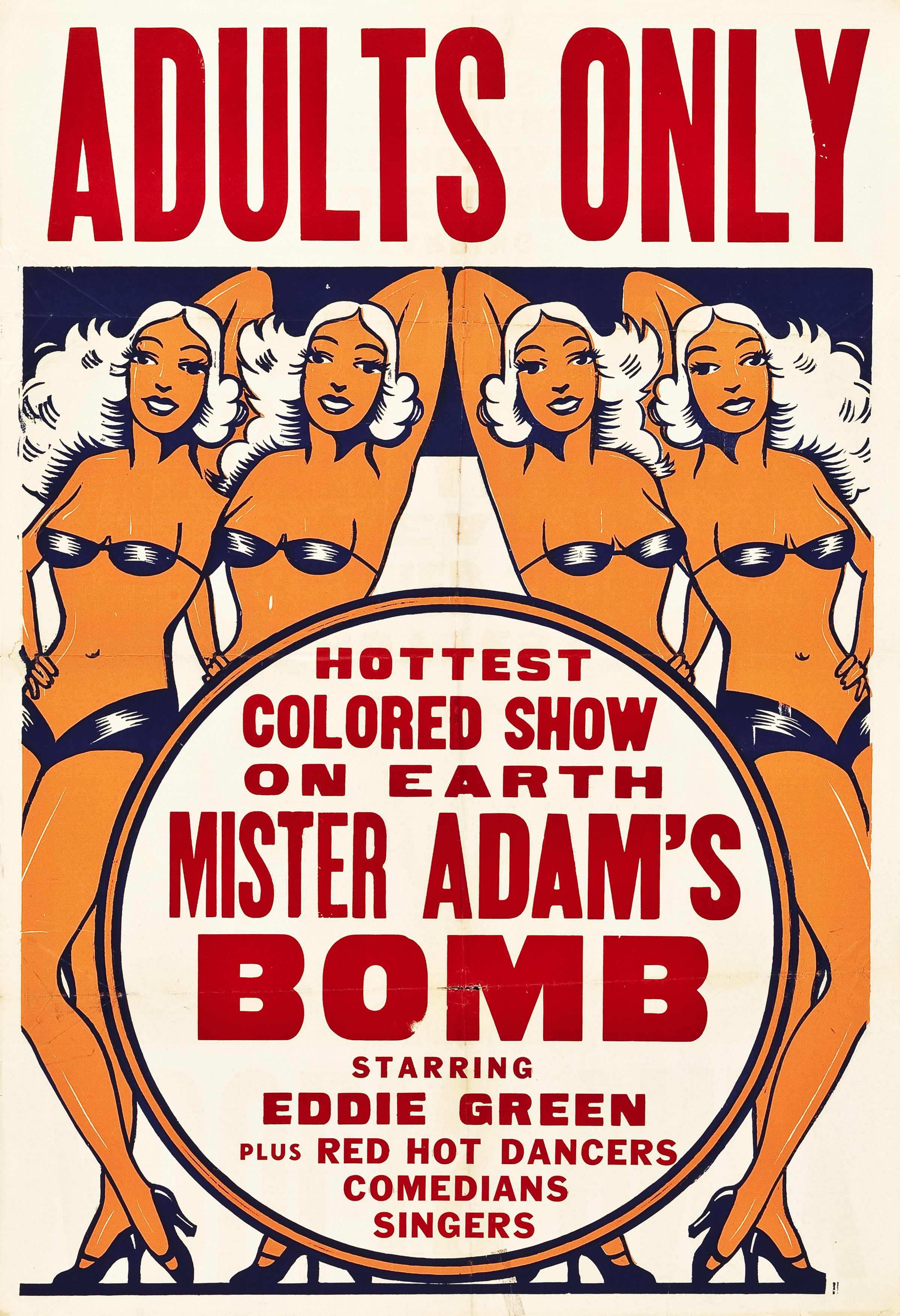 My father made a movie titled Mr. Adam’s Bomb (1949). His idea was to show the world how regular every day Black people reacted to the use of the Atom Bomb. It was a horrible episode in our country. Eddie, as an ex vaudevillian and as a comedian chose to include humor and singing and dancing as in this movie as he had in his first four movies.
 Now here’s a Fun fact: Mr. Bob Schiller and Mr. Bob Weiskoph (both gone now) wrote for Maude. The two Bobs also wrote for Duffy’s Tavern and probably knew my father. I love their picture.
 Every now and then I like to write about random stuff. Stuff not connected to my father’s biography or my latest writing venture. Sometimes I ache to write about politics, however, I would probably burn up my laptop with my furious typing. But today I am going to share with you the conversation I had with myself while “doing” my hair this morning. My daughter says I spend way too much time worrying about how my hair looks. But I have always placed a lot of emphasis on how my hair looks. As I was combing it today I remembered the old childhood story about Rapunzel- “Rapunzel, Rapunzel, let down your hair”. I loved that story as a young girl. But I did not have long hair like Rapunzel, I had frizzy hair, when my mom put my hair up in a rubber band I looked like I had a bunny’s tail.
 “This yam will make a nice dinner, said the farmer. Put me down! Put me down!” said the yam
 SURPRISE!!!! About two weeks ago it Snowed in the Antelope Valley in Sunny Southern California! Real Snow. In Lancaster, where it was hot as the blazes a couple of months ago. Snow in the Valley. I’ve seen snow before, in Manassas, Va. Not here. So all the neighbors were out taking pics and some of them made snowmen and snowwomen (guess how you could tell the difference). All I could think of when I went outside was “Merry Christmas!!!!” So I shouted it out. An early White Christmas. I love it! It hung around for about 3 days before it melted away. I took this pic with my old “free” government phone.
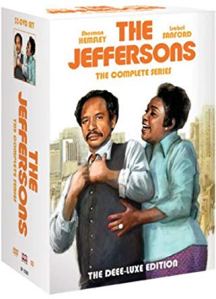 I began researching and interviewing last December 2018. I am THIS close to having a rough draft for my publisher. I’ve spoken to cast and crew members, writers, directors and guests. I’ve spoken to those who cannot be done without – Administrative Assistants (I’ve been one so I know their importance). My self-imposed timeline to finish a rough for my publisher was the end of December 2019. It’s quite possible I may go a tad bit over. But everything about this book writing process is fun, except the proofing (:() Rather tedious, but necessary.
 So I’ve left my OG phone behind (now that I can afford an upgrade). I’m working hard on a new book about a TV sitcom that I loved and I’m looking way back into those yesteryears when you had to read what was on the screen. Which somehow seems to meld in to what we are doing today. Reading our screens. Anybody out there remember telephone party lines? Wishing you all a bunch of good Holiday Surprises!
 Hello friends. The fact that I have begun the process of writing a book about The Jeffersons tv sitcom is beginning to make it clear just how diligent I am going to have to be in getting my facts straight. Somehow it seems a lot more involved than corroborating the information I learned about my father when writing his biography. In researching the actors and their participation in their various shows, I have found out that one person will say what they think things were like, some will say what they heard, and some will assume. Getting the actor’s stories in their own words is difficult, especially if those actors are no longer with us.
 Today I decided to write about actor Mike Evans who played the character Lionel Jefferson, the son of the Bunker’s new Black neighbors. The Bunkers were the family from “All In The Family” or AITF, with Carroll O’Conner, as Archie and Jean Stapleton, as Edith. Mike Evans began portraying Lionel in this AITF in 1971 through 1975 before moving on up to “The Jeffersons”.
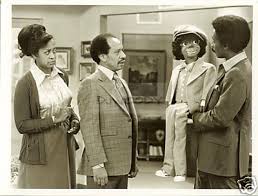 Hi there you all. Well, I’ve spoken to my first person who guest starred on the tv sitcom, The Jeffersons. Mr. Willie Tyler, ventriloquist. Lester, his dummy, was not available. I spoke with Willie for about 20 minutes via cell phone regarding this appearance. I got a big kick out of talking with him. Willie told me he thinks of Lester as real, that way it’s easier to make him real to the audience. About Lester, according to a newspaper article I found on Fulton Postcards: “You would never know that the little fellow is not human once Willie Tyler sets the flashy little man on his knee and commences an act that has been applauded all over the world.”
 I like to think I am like my father. He was a happy man. He had a great smile. He loved to make people laugh. He was a good friend, with a helpful attitude. And he liked people, period. He was a family man, too. He was married 4 times. Had two daughters, one in 1911 and then me in the 40s. He told the Brooklyn Eagle in 1939 that “the depression doesn’t worry him. He’s happily married (3rd wife), Daughter Hilda is grown up and starting to follow him in show business. He’s got his work, his radio to tinker with and he’s the proud possessor of the first television set in Harlem.” At the time of this interview he was appearing in Mike Todd’s Hot Mikado. As Koko he sang “Titwillow” (Stars Over Broadway, Star Tone (M) ST 214 (Eddie Green with orchestra conducted by William Parson) The Brooklyn Eagle article said he had a “perpetual beaming smile.”
 pininthetush