A MOTHER’S LOVE AND PERSONAL INITIATIVE

Mums and Babies

This is not a political article, though I have been influenced in part by the fact that our 44th President, Mr. Barack Obama was a proponent of the use of personal initiative. There is a belief in some circles that personal initiative and hard work is enough to overcome obstacles confronting young black men. Others pooh-pooh the “bootstrap” approach. They believe that better living conditions, better education opportunities are also necessary to help a young man achieve his potential. Both are good points.

There is also a modern day belief that Black men born into poverty are good candidates for being drawn into a life of crime other than a life of legitimate success. Some modern day beliefs are that “soundbites” in the news contribute to the mindset that Black men (when  arrested in t-shirts and low-cut jeans) are seen as a threat. (Blacks in the News: television, modern racism and cultural change By Robert M. Entman-journalism quarterly, pg 35.)

In 1910, when my father was coming of age Blacks made up only thirteen percent of the population but twenty-seven percent of those were in prison. In the South in 1910, Blacks comprised 30 percent of  the population yet made up 60 percent of those incarcerated (US Census Report 1910).

This racial incarceration gap could have had many causes, including discrimination in arrest and sentencing, differences in family background, lack of job opportunities for blacks, higher urbanization rates of blacks, and differences in educational attainment. (Access to Schooling and the Black-White Crime Gap in the Early 20th Century US South: Evidence from Rosenwald Schools. Katherine Eriksson December 31, 2014.)

When my father, Eddie Green, left home at the age of nine in 1900, the presence of structural racism, the after effects of slavery, the lack of education for Black people, and the lack of healthcare was not a problem for him. The constant objections of White Americans to African-Americans was, evidently, not a problem to him. The lack of job opportunities and differences in family backgrounds was not an issue. He had discovered he could thrive on his own without resorting to criminal acts but through his own talents and his ability to take care of business. He had been raised right.  HE HAD ACQUIRED PERSONAL INITIATIVE-THE ABILITY TO ACT AND OVERCOME DIFFICULTIES.

For a child born into poverty that life-style is normal. An infant does not realize poverty.   I believe Eddie’s mother provided his early nurturing. Eddie did not have a close connection with his father. I hold the idea that Eddie received love and attention mostly from his mother. Eddie had a love for his mother that he spoke of to my mother.

He learned his work ethics from watching his mother washing countless loads of other people’s clothes and he was hurt by this. He saw that no matter how hard his father worked nothing got any better.  But he also knew  hard work was necessary to survive.

He learned confidence in his ability to take care of himself,  he acquired fearlessness, otherwise how could he have gone out into the mean streets alone. His situation at home prepared him for the streets because what could be worse.

Emotionally, he became the “comedian.” With his comedic talent eventually tending dry humor. He would later become known as a “droll” comedian. Drollery according to the dictionary is a natural aptitude for using words and ideas in a quick and inventive way to create humor.” Evidently Eddie tapped into this natural aptitude early enough to boost his rise to success.

Eddie taught himself to read and discovered books on magic. He found that he liked performing magic tricks and that he was good at it. It was a way to take a person out of the mundane and into a world of fantasy and wonder. He had also determined that he could thrive by traveling through the city offering to perform as a “Boy Magician”.

More than likely Eddie would have read about or heard about successful Black magicians such as William Carl, who in 1890 was billed as the King of the Magicians with a minstrel troupe called Boston’s Merry Musicians, or Alonzo Moore (c.1870-c.1914) who joined Billy Kersands’ Minstrels in 1904.

Eddie had grown up, also, during the time of great African American role models. Men like W. E. B. Dubois, a Black historian and sociologist, who was at the forefront of the civil rights movement, or Frederick Douglass who was also born in Maryland, a slave and who became a social reformer and statesman.

When Eddie left home at the age of nine, he was a good, self-confident, eager, willing, forward-looking, honest and talented young person. He left with the love of his mother cradling him. His circumstances had not made him angry but became a source of determination to have a better, happy life. When money permitted he moved his mother into Gotham City to be close to him. Over the years he would become successful as a Broadway and movie star, a filmmaker, a composer and as an Old Time Radio icon. By the time of his death he had risen to become one of America’s most beloved comedians.

As a testament to his feelings about being Black, this is what Eddie wrote to a radio program titled “The Negro Hour” in 1938 regarding their theme music: “Or you might even pick a suitable stanza from the pen of our poets (Dunbar and others), set it to music. Brilliant forceful music, and thus have a theme song that tells the world, “Here comes an upright, fearless, man”

As a testament to his early learning which I am certain came from his mother, he told the radio announcers this: You must remember that you are gentlemen addressing ladies and gentlemen and if for no other reason than that, a gentleman never raises his voice”.

My Father and the New York Police Department 1929

Due to a recent podcast I realized I needed to gain a greater degree of knowledge in regard to how my father, Eddie Green, got into the field of radio. In his words: “Radio for Negroes is a very hard field to get into . . . very hard! But the returns are so great that it’s worth the try.” Eddie was a living example of how one gets ahead in life. He stayed busy, he knew his talents and dedicated himself to making them pay off. His biggest break was in 1929.

I found an article from about 1928, by Chappy Gardner,  “Along the Rialto”, in the Pittsburgh Courier: “ Eddie Green, well-known songwriter, electrician, motion picture operator, famed comedian, opened on the Burlesque wheel this season. Played at Newark last week in A Perfect 36. Eddie appeared with the regular cast, being the only race performer, but was at his best in his single that wowed the customers”.

It took him a minute to realize his popularity. In his own words “In the meantime, I was so busy working here and there and doing a bit of writing on the side that I did not notice my own advancement. One indication of the change, I should have noticed, was the fact that I could see my name very frequently in the various trade papers”. Then along came George Immerman and opened a show called Hot Chocolates. I became the featured comic in this show. It turned out that none of the various scenes written for the show were good enough, so I was engaged to write the scenes”.

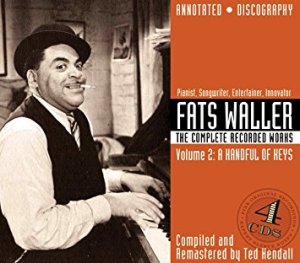
Hot Chocolates was a musical revue that  opened at the Hudson Theater in New York on June 20, 1929. The show was staged and directed by Leonard Harper, with songs by  and Thomas “Fats” Waller and Harry Brooks and book by Andy Razaf. The revue was touted as being fast, funny and frank. Hot Chocolates had a run of 219 performances.

Eddie double as a performer in the show along with these two gentlemen

  • Louis Armstrong  Ensemble (Armstrong made his Broadway debut with his role in the ensemble as part of the pit band for the show)
  • Jimmie Baskette Ensemble (Baskette later became well-known as the zip-a-dee-doo-da man, Uncle Remus, in Walt Disney’s movie “Song of the South” (1946)

A big hit from Hot Chocolates was “Big Business” written by Eddie. It was  a “talking song,” with Eddie, Billy Higgins and Company, and “Fats” Waller on piano.

Then there was the record that was produced from one of Eddie’s skits titled “Sending A Wire” on the Okeh record label:

And the  Warner Bros Vitaphone film “Sending A Wire” (directed by Murray Roth)  (courtesy IMDB) that featured synchronized sound. It was said to be the funniest Vitaphone comedy act “which has yet been produced,”, and that it “kept thousands shaking with laughter.”

At about the same time in another part of town,  Gannett Newspapers decided to put together a stellar list of entertainers to perform over radio stations WGY and WHAM, to be broadcast to “Little America” for the enjoyment of Commander Richard E. Byrd, an America Naval Officer, and his explorers, who had set up the “Little America” base camp on the Ross Ice Shelf.  Radio remained a primitive and exciting medium in 1929, and when the stations contacted Little America directly and spoke with Byrd or Hanson, it caused a worldwide sensation. They chose Eddie to be added to the broadcast to perform his “Sending a Wire” skit.

The Brooklyn Daily Eagle said: “The whole town is talking about Eddie Green, prime colored comic, who will put on one of the funniest skits on the stage”. The “whole town” (New York) was talking about my father!! He was Big Time! Of course the radio people wanted him. He was Hot!! The “stellar” cast in this radio show also included: Gov. Franklin D. Roosevelt, Rudy Vallee one of the first modern pop stars and Ted Healy, the creator of the Three Stooges.

Eddie had to perform in both of these venues on the same night. Problem was he had to be on stage at the Hudson at almost the same time the radio broadcast would begin. This was a predicament. In his words this is what happened: “The Police Department solved the problem by giving me a motorcycle escort from the theater to the National Broadcasting Company (NBC) studio”. He said that they went up Broadway on the wrong side of the street with the police sirens screaming. Can’t you just picture it? The police escorting Eddie through traffic trying not to hit the theater crowd, zigging and zagging!! Just to get him on that radio program so Commander Byrd could laugh his head off and forget about the cold in Antarctica!! I salute the New York Police Department!

Broadway about 1926-1929

Eddie was Hot!! They had to have him! If he were alive today he’d be on Ellen, Oprah, Steve, National Public Radio (NPR), Twitter, Internet. Because he was one of the best comedians of his time. THAT is how Eddie got into radio.

Hey, thanks for stopping by.


Facing Reality

How does one progress through trial and tribulation?

Since the writing of the biography of my father I have been honored by people wanting to interview me. I have found that people are very interested in discovering how “racism” affected Eddie’s progress in his career. My initial reasoning for writing the book was to provide inspiration to those people who think they “can’t” become successful. So I am having to adapt.

However, I believe that Eddie did not waste his energy focusing on racism. Eddie focused on finding what he liked to do and doing it the best he knew how so that he would not have to continue to live the life of poverty into which he was born. It took him a little while to get started but once he did he was on his way.

One hundred years ago my father, Eddie Green, at age 26, was drafted for  World War I.

Because he was a Black man (or African as it says on his registration card) he was asked to tear off the bottom portion of the card. Along with the world, he was introduced to a world at war. And this is when he wrote his first song.

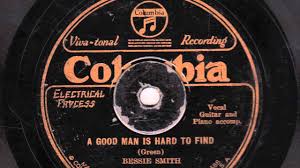
Eddie wrote his first song in 1917. “A Good Man is Hard to Find”. Perhaps President Hoover’s volunteer predicament prompted Eddie to do some writing that would become his first and biggest hit song. When America went to war interest  was not high, men were not volunteering. Good men were hard to find. President Hoover decided to inaugurate the draft. The song had nothing to do with war, but the title was relevant, and the song was written as a blues song, the type of music that was becoming popular.

Life in America in 1917 for Black also included lynchings, and jim crow laws. There were deadly riots in 1917. But Eddie and other Blacks like him persevered. Through  the hardship and prejudice of the Jim Crow era, several black entertainers and literary figures gained broad popularity, such as Bill “Bojangles” Robinson, with whom Eddie worked, and Hattie McDaniel, the first Black woman to win the Best Supporting Actress Oscar, with whom Eddie also worked. They struggled, but they did it. They got work where and how they could. They practiced. They improved their craft.

By 1927 Eddie was appearing at Ciro’s in The Creole Follies(1927) August in Michigan per the Daily Globe, ‘Creole Follies Co.’ At the Ironwood”, as a dancer and singer. He had also begun performing as a comedian. He was funny. He was really funny.

In 1936 you could hear this voice saying: with Milton J. Cross making the following announcement: “Good afternoon, ladies and gentlemen, I am very delighted to be allowed to participate in this demonstration on television. For your dedication, we draw on that droll comic, Eddie Green and his partner, George Wiltshire, offering a little philosophical erudition.

By 1937 Eddie was on the radio co-hosting a show with Louis Armstrong: Mr. Bob Hayes of The Chicago Defender, in his column “Here and There,” began his May 22, 1937 column, thus:, “It was like turning back the pages of yesteryear when we were greeted by our life-long pal, Eddie Green, NBC artist now being featured with Louis Armstrong and his Hot Harlem Review.” His craft was propelling him into bigger things.

Standard Brands Inc. (Fleischmann Yeast) through J . Walter Thompson Co. announced the full talent line-up of its all-negro show which will make its debut over 30 NBC-Blue network stations, April 9 at 9-9: 30 p.m. Eddie Green and Gee Gee James, a comedy team, with Louis Armstrong and his orchestra will be the regular talent. Program will also feature negro guest stars. Octavus Roy Cohen, well known writer of negro fiction, will do the script. Radio Daily April 1937.

Also in 1937 Eddie left Harlem with his (3rd) wife, in August of 1937, to join the Show Boat cast in Hollywood, according to the California Eagle newspaper. Hollywood!

In 1947 the California Eagle did a piece on Eddie in their “Trail Blazers” column. The article spoke of Eddie’s twenty-three years in show business, fifteen years of before-the-mike experience, and thirty years of technical radio knowledge. It mentioned his beginnings with “Fats” Waller in the 1920s and his progress to Duffy’s Tavern. It also spoke a little about his days as a “Boy Magician,”, and of how Eddie began to be booked on all types of radio shows. This article also mentioned the fact that Eddie was a 32ndnd degree Mason and that he had spent the last year working actively with the NAACP.

Born in Baltimore in 1891 to extreme poverty he propelled himself, through talent, determination and willingness into a successful career as an entertainer because he wanted a better life for himself. And along the way he was able to provide laughs with his comedy, entertainment with his dancing and acting, and employment through his production companies and movies. When his career ended at the time of his death in 1950 he was a beloved comedian on one of the most popular radio programs of that era. He had no enemies. He was known as a funny man, a good businessman and a regular guy by everyone he met.

Racism may be a reality, but it can be overcome.

Thanks, for stopping by.

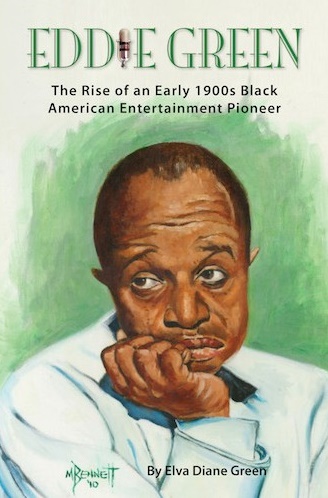
Please check out my book Eddie Green The Rise of an Early 1900s Black American Entertainment Pioneer

http://www.bearmanormedia.com

PRESS RELEASE-SPREAD THE WORD, YAWL!!

Eddie Green Biography Named 2016 Foreword INDIES Finalist

‘Eddie Green: The Rise of an Early 1900s Black American Entertainment Pioneer’ about legendary Black composer, actor, and filmmaker is recognized by independent publishing book award
Eddie Green
Eddie Green
Spread the Word


ALBANY, Ga.March 29, 2017 — BearManor Media is pleased to announce that Eddie Green: The Rise of an Early 1900s Black American Entertainment Pioneer by Elva Diane Green is a 2016 Foreword INDIES Book of the Year Awards finalist in the Biography (Adult Nonfiction) and Performing Arts & Music (Adult Nonfiction) categories.

Eddie Green: The Rise of an Early 1900s Black American Entertainment Pioneer by daughter Elva Diane Green tells the rags-to-riches story of Green’s determination to rise above and triumph against all odds to become a pioneering Black filmmaker, and renowned songwriter, composer, radio icon, and movie actor.

“As soon as I heard [Elva] was working on this book, I sought her out to be her publisher,” said Ben Ohmart, President of BearManor Media. “It’s an important story that deserves telling, and I was determined to be a part of that.”

In an era when Black entertainers struggled to gain a foothold in show business, Eddie Green rose from poverty to prominence. Green wrote Roaring Twenties blues standard “A Good Man is Hard to Find,” which was recorded by Sophie Tucker, Bessie Smith, Louis Prima, Frank Sinatra, and many others; starred in multiple Vitaphone short films and in 1939 Broadway musical The Hot Mikado; headlined at The Apollo; appeared memorably in two of America’s most popular long-running radio series, Amos ‘n’ Andy and Duffy’s Tavern, and rivaled Oscar Micheaux for honors as a pioneering Black filmmaker.

Talent and desire propelled Eddie on stage, over the air, and into films with Louis Armstrong, Lena Horne, Hattie McDaniel, Thomas “Fats” Waller, Jackie “Moms” Mabley, and James Baskette (Uncle Remus in Walt Disney’s Song of the South), Eddie “Rochester” Anderson, and Louise Beavers.

Foreword INDIES winners will be announced during the 2017 American Library Association Annual Conference in Chicago on June 24, 2017.

Eddie Green: The Rise of an Early 1900s Black American Entertainment Pioneer ($31.95, 204 pages, 6″ x 9″, hardcover, ISBN:  978-1593939670 / $21.95, 204 pages, 6″ x 9″, paperback, ISBN: 978-1593939663) is available via Amazon, Barnes & Noble, and BearManor Media.

Elva Diane Green is the daughter and biographer of Black filmmaking pioneer and legendary songwriter and composer Eddie Green. She wrote Eddie Green: The Rise of an Early 1900s Black American Entertainment Pioneer to prove to her grandson that a person can succeed no matter the obstacles. Elva currently resides in Los Angeles.

BearManor Media is the award-winning and Pulitzer-nominated press publishes cutting-edge entertainment books, audio books, e-books, CDs, and DVDs on movies, television, radio, theater, animation, and more. Founded in 2001 by Publisher Ben Ohmart, the BearManor Media catalog now features more than 900 outstanding subjects from the obscure to the eminent.

Eddie Green and Baltimore, 2 Greats

importfromphonejuly 135    importfromphonejuly 138

The two pictures posted here today have brought me much joy recently. The head and shoulders shot is my father Eddie Green with his Amateur Short-wave Radio Operator pin on his lapel, circa 1940, and the other is a still from a Warner Bros. 1929 Vitaphone film titled “Sending a Wire”. That’s Eddie as a customer trying to send a telegram. The headshot is located at the New York Schomburg Center for Research in Black Culture in the Eddie Green Photo Collection. I got the still from The Vitaphone Project where the employees are endeavoring to preserve old Warner Bros. films.

Eddie was born in Baltimore in 1891. So a few days ago I posted these photos on a Baltimore Old Photos website group. I have been blown away by the response I have received from Baltimore residents. As I type this I have received over 600 replies (likes, comments, reactions) and they are still coming in. Of course I have responded to each comment so I’ve been reluctant to leave my computer because I want to answer immediately. So far placing these photos in the Baltimore site had nothing to do with the biography I have written on my father. The people who are reacting to these pictures are simply people who love their city. They love their city history. Judging by the faces on their posts (I guess they are avatars) these are young people, middle age, older folks, and different ethnicities. To me this is a proud community.

I absolutely do not like to fly but it looks like I am going to have to visit my father’s birthplace. I would love to experience the atmosphere. There has got to be a lot of love in that city. I posted a blurb from my book that said Eddie Green was “a feather in the hat of East Baltimore” according to the local newspaper from 1925. Wait until they get the word that I have written a book about him. From the comments I have received Baltimoreans will be happy to learn more about one of theirs.

I am trying not to get too excited here because life is about ups and downs, but I am having so much fun. Since I started this blog however the process has been up all the way.  I’ve written my book, had it published, and gained followers and friends.  Because of my desire to see my father’s story brought back to the fore of people’s minds in order that they might see an example of reaching one’s goals no matter how many obstacles there are, and because Life has shown me that this is what is supposed to happen, I feel this path I am on is only going to bring me and others more happiness. How it will bring happiness to others is that people who visit my site can be encouraged to pursue their dreams and they will feel fulfilled in doing so.

I love this!

Thanx, for stopping by. And please KCB.


Fame, Friendship, and (Some) Fortune

martingramsblogspot

Hi. To those of you new to this blog, welcome. As this blog is meant to chronical my writing of a book about my father, I have to let you know that in the past 3 years I have written and published my book. You can of course read through prior posts to get an idea of the story, or you can start here. The picture I have posted is from the radio program that brought fame to my father Eddie Green.  Taken in the early 1940s  This is a shot from the radio program Duffy’s Tavern. The gentleman on the left is the creator and star of the show Ed Gardner (who is cast as Archie.) The gentleman on the right is my father, Eddie Green, who is cast opposite Ed as Eddie the waiter.

Duffy’s Tavern was one of the most popular radio programs during the years 1941-1950, after which time the program was switched to television. Eddie was a part of this show from the beginning until 1950 when he passed away. In 1941 when he was signed on to this program, Eddie had written a best selling song in 1917, plus twenty-nine more songs, he had performed on Broadway, owned Bar-b-que restaurants, appeared on television in the first ever RCA/NBC variety test broadcast to the public, worked with Bill “Bojangles” Robinson and Louis Armstrong and had written, directed, produced and starred in four all-Black cast movies. He was on the rode to fame.

In 1943 Eddie was fifty-one years old, and at the beginning of the year he filed for bankruptcy. He owed the government $445.00. Probably had something to do with the fact that Eddie had used his own money to start his Sepia Art Pictures movie company and  some of his actors had stared accepting roles with the White owned studios who could pay much more than Eddie. And I think a business deal went awry (meaning “a friend” absconded with some money.) You could still hear him on the weekly Duffy’s Tavern radio program and on other radio programs, too.

In 1945 the money started rolling in again when Paramount decided to make a movie version of Duffy’s Tavern using the regular radio crew in the movie. The movie was titled Ed Gardner’s Duffy’s Tavern, directed by Hal Walker, starring a number of Paramount stars such as, Bing Crosby, Alan Ladd, Dorothy Lamour, Barry Fitzgerald, Veronica Lake and William Bendix, to name a few. Oh, and also Ed Gardner, as Archie, Eddie Green, as Eddie the waiter, and Charles Cantor as Finnegan. The next few years saw Eddie’s continued rise to becoming a popular, beloved comedian.

By writing the biography of my father my hope was to bring his inspiring story out of the dark and into the light of awareness, as a way to provide propelling motivation to others. Eddie said that he found the best way to achieve success, is to find something you like to do and do it the best you know how.

One other thing, Eddie and Ed Gardner became very good friends over the years. Today a Green and a Gardner are still friends, me and Ed’s son. We’re pen pals!

Thanx, for stopping by. KCB

Photo courtesy of Martingramsblogspot and Ed Gardner, Jr.


Loved That Man!

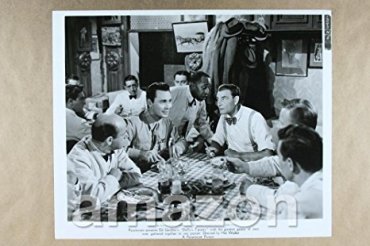
I absolutely loved writing a book about my father’s (Eddie Green) life. As Eddie, the waiter, he became a household name from 1941-1950 in one of the longest running radio shows ever. When Ed Gardner (to the right of Eddie, talking with him) creator and star of Duffy’s Tavern and Paramount got together and made the movie Ed Gardner’s Duffy’s Tavern (1945) Eddie was considered perfect to  fill the waiter roll and Ed Gardner played his radio character, Archie.
I loved researching my father’s life, one because Eddie died in 1950 when I was very little, and also because once I started the process I discovered so much more than I expected which kept me looking. Now I am in the process of speaking at different venues about my book writing venture. Sharing with others bits of the book and how I gathered my information. I like talking with and meeting new people who share my interests and or who are simply looking for something new and fresh to enhance their lives. (Anybody got any info on groups I could speak for let me know).

But, now that I have finished writing the book, I miss the research aspect. I miss that feeling of delving into forgotten documents and discovering a treasure trove of information. I really miss it. This biography I have written has been well-received so maybe I will find another person who has accomplished much but has been lost to the shadows of time and write about them.

In the meantime, today I went on Google Advanced Search and found a photo of the cast of Paramount’s Ed Gardner’s Duffy’s Tavern(1945) movie. One of the actors in this movie was Barry Sullivan (he is to the left of Eddie).  I decided to do a little research on him. His filmography is really long over 100 movies. He died in Sherman Oaks near where I live now in 1994. (I wish I had known he was still alive then.) He was 6ft 3 in. tall and what I didn’t have to look up is that he was very good looking.

The movie that caused me to fall in love with Barry Sullivan was Pyro… The Thing Without a Face (1964). It was so good. Married man has an affair, tries to break it off. Mistress burns his house down and he is disfigured when he returns home unexpectedly, sees the fire and runs in to save his family. The mistress tries to disappear but he is determined to track her down, disfigured face and all. Great movie. I didn’t know in 1964 that my father had appeared in a movie with Barry Sullivan.

I am so impressed with my father today. And I am impressed with technology, too. When I started writing the book I think there was only one picture of Eddie on Google. Now there are new pictures every time I check. Those little spiders are crawling all over the net looking for pictures of Eddie Green. I know he would be impressed, too.

Thanks, for stopping by. KCB

Find my book at Amazon – Eddie Green The Rise of an Early 1900s Black American Entertainment Pioneer.


Black Magician History Month

black-herman

I love researching topics for these posts. One of the ways I pick topics is to check the dictionary to see what words people are looking up currently. Through this process I get the experience of acquiring new knowledge. I have copied information here that I found “really” interesting and is a good fit for Black History Month.

I did a book reading at a local library this past Friday and while I was reading the first chapter of my book I was reminded that my father, Eddie Green, the subject of the book, had begun his entertainment career as a “Boy Magician.” Eddie left home at about age nine, taught himself to read, read books on magic and began performing around Baltimore in churches and halls. By the time he was sixteen he was hiring assistants and he performed his magic acts until he began appearing on stage at the Standard Theater in Philadelphia in 1917 and someone told him that his comedy act was so funny he should drop the magic part, which he did.

So I’m looking up words and I found the word “ruse” had been looked up quite a lot lately.  Hmmm. Ruse means a clever or artful skill, or artifice, i.e. trick. My personal opinion is that in these instances “ruse” was not looked up in regard to magic but I chose to use it that way because of this post.

I also found this article that states, “the methodology behind magic is often referred to as a science (often a branch of physics) while the performance aspect is more of an art form….Dedication to magic can teach confidence and creativity, as well as the work ethic associated with regular practice and the responsibility that comes with devotion to an art.  Hass, Larry & Burger, Eugene (November 2000). “The Theory and Art of Magic“. The Linking Ring. The International Brotherhood of Magicians. Magic is also a form of trickery, artifice or a ruse.

Eddie was very skillful in this art form. I believe magic is what helped Eddie hone his comedic presentation and also helped with his dedication to his career.

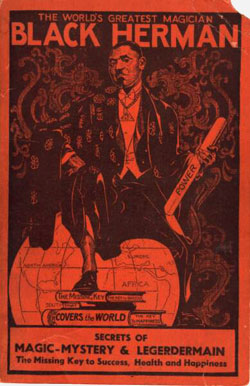
I decided to look up any other Black Magicians (cause I had never heard of any) and Lo and Behold I found a long list of men and one woman. I focused on this first guy Black Herman. So funny. He was born one year later than Eddie. And he was quite famous.

Black Herman was an African-American magician who combined magic with a strong separatist and militant political message, and became one of the most important Black magicians in history. His mission was to promote his view of Black power by attracting attention and support using stage magic, occult magic and superstition.
Born in Amherst, Virginia, Benjamin Rucker learned the art of illusions from a huckster named Prince Herman. The two ran a medicine show, performing magic tricks to attract customers for their “Secret African Remedy”, a tonic that was mostly alcohol with some common spices added for good measure. When Prince Herman died in 1909, Rucker, then only 17 years old, continued to travel with the show, focusing on the magic and dropping the medicine show.
Creating his own stage persona, Rucker took the name “Black Herman”, partially in honor of Prince Herman, and partly as an homage to Alonzo Moore, the famous African-American magician who was known as the “Black Herrmann”. (I never knew this.)

After 1910, Black Herman made Harlem, New York his home base. He was exposed to, and greatly influenced by, the radical racial philosophies of Marcus Garvey and others who were fighting to improve the lives of African Americans. He began to incorporate a political message into his shows, playing to all-Black audiences in the South, but to mixed crowds in the North, a very unusual and great achievement for his time.

Black Herman was an ethnic nationalist, a contemporary of activists Marcus Garvey and Booker T. Washington. Increasingly throughout his career, his shows promoted the message of Black pride. Garvey, Washington and Black Herman all offered talismans for sale to ward off racism. Benjamin Herman Rucker 1892-1934.

Thanks to  MagicTricks.com for providing this information.

Oh yea, one of the names on that list I found was, Eddie Green.

Hey, thanks, for stopping by. KCB

Eddie Green The Rise of an Early 1900s Black American Entertainment Pioneer, bearmanormedia.com


I will not be a “Droopy” Dog

lf

Okay, I’ve had enough. I am tired of reading words such as divisive, feud, and slur when reading about current political events. I do not want to buy into the idea that I should now be fearful of the future of my country or the world for that matter.

I will not look forward to “Doomsday.” I will not live my life by a “Doomsday Clock.” And the Doomsday Clock is trending on Facebook. A New York Times op-ed piece stated the members of the Chicago based bulletin of the Atomic Scientists have moved the Doomsday clock closer to midnight than ever before. They site nuclear weapons, climate change and certain statements of a single person. (Guess who.) We, people, got the idea for this clock back in 1947. A symbolic clock face representing a countdown to disaster. When I opened a page on Facebook I saw an atomic bomb mushroom cloud. What the?

I know there is doom and gloom upon the land, but that does not mean I must give up all hope. Maybe I get this outlook from my father. Who, after living through the dropping of the Atom Bomb decided to make a movie about it from his own frame of mind. Eddie liked to see people laugh. So in 1949 he decided to write, produce, direct and star in a movie that depicts a Black family’s reaction post-bomb but with humor and entertainment thrown in.

The movie begins with the husband and the maid dancing to the latest jive record that they intend to play that evening for the daughter’s coming-out party. Mom comes out and after making hubby sit down they start to discuss their upstairs boarder’s comings and goings. They have a suspicion he is building a bomb because he sneaks in and out and keeps to himself. So they invite a detective (Eddie) to their party that night and ask him to check out Uncle Adam. There is a comedy skit and a chorus line at the party and Margaret Westfield sings a song Eddie wrote titled “You Can Always Believe Your Heart” while the detective investigates Mr. Adam’s room. In the end everything turns out hunky-dorey with a kind of sappy closing shot of Eddie

Most recently in 2008 I found this review of the song Eddie wrote “The audience  is asked to get excited about the daughter singing a boring romantic ballad that could easily have come out of a white sing-along movie of the time (1949.” Well!! I also found another review that contained these words “the avuncular old man (played by the only person in this movie who can actually act!)” Well!!! This same person said the main plot was for people to hear the daughter sing the song. Wrong!

Eddie’s original title for this movie was Mr. Atom’s Bomb. He had to copyright it as Mr. Adam’s Bomb. But he, like so many other people, was deeply affected by past events of the war and being an artist and a comedian he made this movie in reference to how Black people were feeling about the use of the atom bomb and as a way to stay positive. Even “Uncle Sam” gets a positive mention. The movie also starred Gene Ware and Jessica Grayson, both veteran actors. Ms. Grayson also appeared in a Bette Davis movie, The Little Foxes. I think Eddie used up all of his money making this last movie.

I am trying to figure out a way to stay positive today. I am planning to find some way to contribute to a more positive community outlook. Yesterday I went to the VA hospital where I used to work and I visited Bldg. 99 where the older veterans live. There was live music in the hall. The veterans are wheeled out or escorted and lunch is served while the musicians play. I actually saw a couple of familiar faces. So between the hugs and the smiles and conversations with the veteran’s and the music “Honeysuckle Rose”, by Fats Waller, and marching music, I felt pretty good when I left.

When I was little my favorite cartoon character was “Droopy”. He always walked around saying “Woe is me, woe is me”. I though he was funny. But I don’t want to be him.

Thanks, for stopping by. KCB


YES, you can.

yesyoucan2Inspire someone today. I chose to write a book “Eddie Green The Rise of an Early 1900s Black American Entertainment Pioneer” to inspire my grandson. He was six when I came up with the idea, he is twenty-six today and the book just published in July of this year.

My very first post talked about the words “I can’t” because I heard that from my grandson a lot when he was little. Just so happens my father, who died when I was three, found success through talent and determination to escape the poverty he was born into. I figured his story would show my grandson that “you can” despite seeming obstacles.

Eddie’s rise from poverty played out mostly in the world of entertainment, with offshoots into the restaurant business. And the book became not only a book to inspire my grandson but a book about the entertainment business in the 1900s. Because Eddie was Black the book is also filled with information about other Blacks prominent in show business back in the day. It became sort of a Black Entertainment history book. So it became a book  about a Black man in America, as well as an inspirational book. People have told me the book should be required reading for young people in schools. So could also be seen as educational. My main group has proven to be people who follow entertainment nostalgia. Old time Hollywood, Old Time Radio shows, old all-black cast movies. A wide variety of folks, young and not so young.

yesyoucanMy desire to inspire my grandson with his great-grandfather’s story morphed into wanting to inspire any person who thinks “they can’t .” So I was blown away with the interest generated by this book in the Nostalgia field. I have discovered that a lot of people knew about, remembered and have actually seen my father perform. I have been made aware of the fact that there are young people  who are fascinated with success stories from the 1900s, for the very reason I wrote the book, inspiration. Also, I have happily realized the interest this book can garner in the Black community as a success story of a Black man, both personally and professionally, in a time of great racial discord.

I am going to put more energy also into sharing Eddie’s rags-to-riches story with as many people as possible, such as The young adult (YA) age group, or teen-group.  Because they are the future. They need to have access to stories that will give them hope. I hope to make this book available to younger children although it doesn’t have any colorful pictures. I also want to market to Black Ancestry sites because genealogy is a big deal today.

Sure, I want to sell a million books. My father’s first song sold a million copies in one year in 1919 (A Good Man is Hard to Find), and people are still recording it, imagine that! But this book began out of love for my grandson and grew into something I could share with people everywhere which makes me happy. And if I make lots of money I will be able to say that I am self-supporting through my own contributions.

In the late 1930s my father told a reporter that in his opinion “radio was a very, very difficult field for Negroes to get into, but the benefits were worth the try.” If he could see how effort has worked toward America having it’s first black President, I know he would be very proud.

Thanks, for stopping by.