

I wrote my first post in 2014. Beginning with the next paragraph I am going to reprint sections from my first post along with excerpts from other posts I’ve printed along the way. Basically, as a way to remind those who have followed me for awhile and for my new followers. I’ve been on WordPress the whole time and, trust me, I had a lot of learning to do in order to conquer this online technology. But I was determined to get myself on a platform so that people would find me and learn about the book I was writing. Little did I know that, as my brother would say, my book writing career snowballed, into learning marketing, giving talks at Rotary Clubs, Libraries, appearing on podiums (!), winding up all over Google (haha, that’s funny to me) and being asked to write another book and another and another! With my first book, I wrote:
Best-selling author, Dean Koontz said, “I really believe that everyone has a talent, ability or skill that he can mine to support himself and to succeed in life.”
I found this quote while doing some research for a book I will eventually complete. I began my research in about 1998 because my then small grandson’s favorite words seemed to be “I can’t”. Usually in regard to why he did not finish his homework. His homework was always too hard. I came up with the bright idea to enlighten him on what a person can accomplish by telling him about, and by writing a book for him about my father, his grandfather, who was a black man born in poverty in 1896 ( I discovered during my research that Eddie was really born in 1891) and who rose to prominence despite many obstacles.
While doing this research I discovered much more than I could have known, not just about my father’s rise, but also about what motivates people, and about determination and how much work actually goes into achieving one’s goals, and how that work can be extremely rewarding. What I hoped to impart to my grandson morphed into a desire to share inspiration to any person who feels they “can’t”.

Eddie was born in East Baltimore, one of the poorest neighborhoods. At age nine he left home determined to have a better life. He started out as a boy magician, got into vaudeville, burlesque, plays, musicals. He wrote songs. His most famous “A Good Man is Hard to Find”. He went on to radio appearances and became famous through “Duffy’s Tavern” and “Amos n Andy” radio shows. He wrote, produced, directed and starred in five movies. Guest starred in a couple of movies. He became successful. Eddie died in 1950 at the height of his fame. Here is an example of the jokes on “Duffy’s Tavern” – Eddie being Eddie, the waiter:
EDDIE: What is that sign you’re making, Mr. Archie, is it a welcome sign for Mr. Berle? ARCHIE: No Eddie, it’s a resolution, you know, one of those New Years things. Listen to it, “There is a well known golden rule, through the ages it’s been true, always be good to your neighbor, they may live next door to you.” That’s good, huh? EDDIE: Yea, it makes a lot of sense, too. How bout hangin up a sign for the waiter, me. ARCHIE: Like what, Eddie? EDDIE: Like this: “The golden rule has a fine intent, but a ten cent tip will pay the rent.
What motivates us? How do we determine that skill or ability we possess? What does it mean to succeed in life? These are questions I am going to explore in this blog through personal anecdotes, poetry and discussion. I want this experience to be as uplifting and inspirational as possible to those who could use a boost. In a 1939 interview, Eddie was quoted as saying “the best recipe for success that he has, is to find something you like to do, and do that the best you know how”.

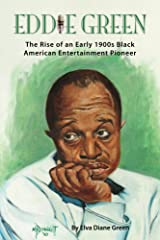
Well, I found something I liked doing and the book has been completed. Eddie Green The Rise of an Early 1900s Black American Entertainment Pioneer was published in July of 2016. On June 24, 2017 I and my book became the 2016 Foreword INDIES WINNER in the Performing Arts & Music (Adult Nonfiction) category!
Upon completion of that book I was asked by my publisher to write another book, this time on the 1970s TV sitcom “The Jeffersons”. When I started the process of interviewing folks for my book on the 1975-1985 sitcom, I spoke with Mr. Norman Lear first. He talked about how he was influenced to produce a show like “The Jeffersons” by a few people who thought it would be a good idea to have a tv sitcom that portrayed affluent Black people who were coming up in the world as opposed to just struggling along, like the family from Good Times. It took a few years, a re-write and some anxious moments (hours, haha), but I did it.

Some great people helped me by granting interviews and sharing their memories. The book contains a lovely Foreword by Marla Gibbs and an Endword by Associate Professor John H. McWhorter, an extremely impressive person in my estimation. I am so happy to share this with you. Mr. McWhorter says it is a good source book for you Jefferson fans. Marla is sure you will find the book as interesting as she did.
The book published on June 22, 2022 and I have since had a couple of book signings and presentations. We had a marvelous surprise when a cast member of the show stopped by! His name is Ernest Harden, Jr., and he played for three (or four) seasons as Marcus Henderson, George Jefferson’s helper in his cleaners. I found out during my research that Ernest played opposite Bette Davis in “White Momma”. And he was in the movie “Cooley High”. He still acts today and has become a good friend.
At present I am working on a book about “Maude” a 1970s TV sitcom created by the brilliant Norman Lear. Brilliant because all of his TV sitcoms were hits. Back then there was one big similarity in his shows, they were all so loud. When I was researching “The Jeffersons,” I found many newspaper articles complaining about how loud the Jeffersons characters were, loud and rude to each other. People wanted to know why a Black family had to be portrayed in such an unfavorable light. Well, starting with the very first episode of “Maud”, I had to turn the volume down on my laptop. Maude hollers at Walter, the husband, Carol (the daughter, hollers at Maude, when their neighbor Arthur, comes over, they all holler at him-during the second episode Arthur shouts that he will never set foot in their house again! The sitcom went on from there for six seasons. Crazy! Of course, 30 some-odd years later I am probably a lot more sensitive to loud noises. Be that as it may, Maude was indeed a hit comedy show, and Bea Arthur was exactly the right choice to play her.
I’ve just remembered, I am writing this post during the beginning of Black History Month. My father’s biography was shared at a number of libraries for Black History Month when it first published, I had signed up to be a presenter. Have not been asked this year, for either of my first two books. But that’s OK. I celebrate Black History everyday. Anyhow, I’ll be posting in celebration of Black History because there is a lot of good information out there about African-American history that needs to be shared. History that has been blended in with the stories of America that make for great reading. And I have what I think is a really good episode from “Maude” to share with you, guest starring Mathew “Stymie” Beard.
Thanks, for stopping by.
Get your books. Through me or Amazon or Larry Edmunds Bookshop in Hollywood. Peace.

 Thank Goodness for rough drafts. One is SUPPOSED to make mistakes, lose paragraphs, misspell words (though I am a spelling champ). I was so excited, no, not excited, emotional. I was so emotional last week the day I printed out my first rough draft of my second book. Such a big deal! Then I realized I had left out a good 10,000 words. And of course I had to figure out where they needed to be inserted. Then I realized “red” does not print because I only have a Black ink cartridge. Then I ran out of Black ink. And of course I have no money so I have to wait until next week to get more ink. But, 2 weeks before this I was on the phone with my daughter crying about my inability to do justice to a second book. Anyhow, I wound up with copy paper here, there and everywhere, making insertion notes, and adding in additional pages I was able to print out.
 But that’s okay because evidently this is what geniuses do. We are messy. So getting messy with a rough draft is perfect. Thinking of myself as a creative genius will keep me from stressing out. Because I know I am a good writer, otherwise I would have never attempted that first book. I also believe that there are many good writers out there, otherwise how would we fill our libraries. Which is one thing that helped me realize I could write a book. Millions of people have written books. Books, songs, screenplays, scripts for TV sitcoms.
 Sitcoms like The Jeffersons. The subject of my newest book. The Jeffersons was a spin-off of All In The Family. George, Louise and Lionel were introduced to the Bunkers during the early 1970s and the sitcom itself aired January 18, 1975. The idea was to annoy Archie Bunker by moving a Black family into the neighborhood. Archie wasn’t too fond of Black people and George wasn’t crazy about Whites and somehow this program was going to use these two characters to provide comedic entertainment for the TV audience. Between Carroll O’Conner and Sherman Hemsley they did just that. I love working on this book, but I do miss writing my first book about my father, Eddie Green. Another well-known and successful comedian who didn’t get the chance to work in television as he died too early.
 This is me at a library in Los Angeles giving a presentation of my father’s biography. I believe I was preparing to play a cd of different people recording my father’s first song written in 1917 “A Good Man is Hard to Find”, or maybe I played “You’ve Got The Right Key, But The Wrong Keyhole”. I know we had fun that day. The cool part about this still today is that I continue to receive pictures, articles, and messages from fans of my father. I was only 3 when he died. I basically have no memory of him, maybe a shadowy lap in a dark suit. So I have only gotten to know my father after I have reached adulthood. I will probably never stop sharing about him, no matter how many other stories I write. Would you believe my daughter actually put the video of me at this library on Youtube?! Genius At Work.
 Ernestine McClendon was a Black woman. Born in 1918. I found out that not only had she been in three movies in the 80s and 90s, she had also appeared in the Schlitz Playhouse in 1952! I finally remembered my newspaper account and that’s when I found her picture. (it pays to be diligent) She had a leading role in a play around 1954 titled Anniversary Waltz (she is second from left).
 To make a point that bothers me, I need to mention that Ann Sothern was also in that Schlitz Playhouse of Stars episode which was titled “Lady With a Will”. Ms. Sothern may be a bit more familiar to some of you. She certainly has more information listed online. Born in 1909 she too was in show business for many years. Worked on stage, radio, film and had her own television show. Her last film was Whales of August in 1987. She died in 2001. Maybe Ms. Sothern has a bigger presence online because she worked in television. There are a lot of pictures of Ann Sothern online also. Somebody took the time to take those pictures. She was pretty. Ernestine’s picture is not the best, but it looks like she was pretty, too.
 What makes you smile before you even know you are smiling? It’s a nice thing to have happen. It’s nice to know that in a world where bad things happen, there exists happenings that make me smile, automatically. My lips turn up at the corners by themselves. For instance, a few days ago I got up, turned on my laptop and checked my mail. There was a message from a friend in England. She started her message with “Hello Dearest Elva”. Since it was early morning I hadn’t had time to become grumpy so I was able to receive this greeting as I know it was meant. My friend is such a nice lady. Someone I met during my book writing journey. She is a good-hearted person. And I know she is genuine. And so it made me feel good to hear from her. It was like an “Awwww” moment.
  The song was sung in the movie by Margaret Westfield. I snapped this while watching the movie on Youtube from the Internet Archives. Unfortunately I have not been able yet to find anything on her. Though she had a lovely voice.
 In the 1940s when my father, Eddie Green, was looking for women to dance as chorus girls or to star in one of his movies, he would put on beauty contests. Beauty contests were not exactly new in 1940, but they were definitely segregated. Which means that these contests only got media attention from the White owned newspapers. If you were to google “beauty contests” from the 1940s, you could find many images of the White ones, but none of the Black ones. This particular contest was for Miss Sepia America. Anyhwho, this is not a post about segregation. Or beautiful girls as it says in the first article from 1940. “Eddie Green Bringing Six Beautiful Girls to Affair At Claver (The St. Peter R. C. Claver Church, located in the Burrough of Brooklyn was hosting their annual post-season Basketball Game and Matinee Dance.) This is a post about communication, then and now.
 As it is next to impossible to read this article from 1941, I will type it out. From the Courier-Post (Camden, New Jersey) – 09 Oct 1941: “Each and every fine cat in Harlem is figgering on draping out in their most much of hard-hitting togs, donning their up-to-date sky pieces and collaring a broom down the midway to Harlem’s Renaissance Casino on the early black of Oct. 9. To dig the most mad lay-out of fine and mellow chicks Eddie Green’s gonna drop on them. Now Eddie is a square (and actually needs some prayer) when it comes to beating up his chops on a bid like this to you. So trilly up Harlem way and dig in on something to gumbeat about . . .Now if that spiel is too panicky for you to latch on, and you’re a Lane from Spokane, or a Home from Rome, may I simply say the date is the early black of Oct 9th. So be on hand to gim those gams…..Dig?”
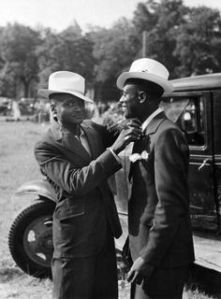 I do know what “fine cat” means (I’m not THAT square) and I know togs are clothes. And back in the 1940s men were always sharp (meaning they always made sure they looked good). If you were going to the Renaissance Casino you definitely had to look good because the Renaissance Casino, provided the backdrop for the area’s most elegant dances and exciting sporting and political events. In the 1940s it was also one of the few places Black people could go to have a good time. And of course I know the article must mean Eddie was bringing some of his beauty contestants for the fellows to ogle.
 Well, it’s been two years since I published the biography on my father, Eddie Green. During the research period I searched and searched for a physical copy of this movie “What Goes Up“. Eddie wrote it, produced it, directed it and starred in it. The movie was made in Palisades, New Jersey in 1941. I am hoping to find it because, of course, it’s my father’s second movie and also because there is a member of the cast of this movie who has just celebrated her 101 years old birthday and she would love to see the movie one more time. She saw it when it first premiered in 1941 at the Apollo Theater in New York, of course, she and her mother. But not since then.

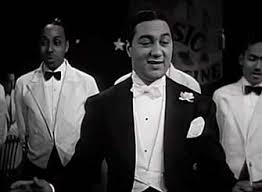
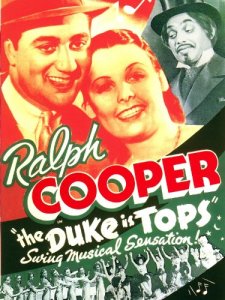 Like my father, Eddie Green, Cooper was also a filmmaker. Meaning he wrote, directed and starred in his own movies. In the late 1930s he was making movies during Oscar Micheaux’s filmmaking time (Micheaux began making films in 1915). He wrote, directed, produced or starred in at least fifteen films. My father began making his films in 1939, right about the time Cooper left filmmaking. In 1937, Cooper formed Million Dollar Productions with black actor George Randol and white producers Harry Popkin and his brother Leo Popkin to produce race films.
 Ralph and my father appeared on the same bill during those early days; their names are kind of close to the bottom of the ad as they had not “blown up” yet. But they must have met backstage. Maybe Eddie talked to him about making movies someday. Both Eddie and Ralph were successful in their chosen pursuits. Through their own talent and hard work. When it was truly a struggle for a Black man to get ahead. I salute my father and Ralph Cooper and their own special uniqueness in bringing a little entertainment into the lives of others.
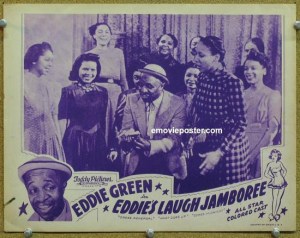 My father liked two things for sure: Pretty women and he liked being happy. From the first time he went out on the road with his first song in 1919, through his movie making days in 1939, ’40 and ’41 his ensemble included chorus girls and comedy. He even incorporated dancing girls, tap dancers, singers and comedic skits in his last 1949 movie that depicted Blacks and how they dealt with life after the Atom Bomb. For those new to this blog you can see his last movie on YouTube-it’s titled Mr. Adam’s Bomb. A young lady (Margaret Westfield) sings a song called “You can Always Believe Your Heart” which Eddie wrote. I am still looking for information on Ms. Westfield.
 Eddie became a household name as Eddie, the waiter in the radio program Duffy’s Tavern, during the last ten years of his life. Everyone loved Eddie. February is Black History Month. I am going to inundate social media with “fun Eddie stuff”. I want to get him as much exposure as possible. I want to get as many people as I can to experience Eddie’s good nature and for them to get a few laughs as well. I think our world could use uplifting right now. Eddie’s life story is truly inspiring. I will also be pushing the biography I have written about him, “Eddie Green The Rise of an Early 1900s Black American Entertainment Pioneer“, it’s much more fun that that “other” book everyone is talking about these days.
 In this still from Eddie’s 4th movie you can see that Eddie (in the striped shirt) liked being silly (which is why, I am sure I like silly jokes: What kind of flower is that on your face? Tulips!!! Hahahahaha!) There were even chorus girls in this movie.
 pininthetush