ANTICIPATION

eddieinoffice
Eddie and his secretary signing talent


Hi. So I have posted a picture of my father, Eddie in his office back in 1939 greeting young ladies who showed up for a chance to appear in one of his movies, produced by his Sepia Art Pictures Company movie studio. Eddie’s office was located on 7th Avenue in New York, which is where a good part of his career took place. He spent some time in Hollywood during 1936-38 appearing on various radio programs, but he did not have a home in California until 1945. Sepia Art Pictures had gone out of business by 1945, but that did not mean his movie making days were over.

Eddie was signed on to play “Eddie, the waiter” in a new radio program titled Duffy’s Tavern in 1941, and when Paramount decided to produce a movie version of the radio program in 1945, Eddie was signed for the role in the movie. Eddie’s movie making money had run out, but I do believe financial difficulties took a turn because he married my mom in 1945, bought his house in Los Angeles and started a new movie/television studio on Western Avenue in 1946.

Today I decided to make this a short post about Eddie because I want to write about me and my book writing journey.  I have a writer friend who is well versed in the etiquette of book writing. Meaning this friend has offered to help make sure I have not printed material that might show someone in a bad light. So my friend is reading my book. The book about my father is the first book I have ever written so I take all the help I can get. But……..the waiting is difficult. Even though I am perfectly aware of the time frame called for. My book is approximately 48,000 words in length. And people have other things to do. My friend has a family, a job, book signings. I am blessed to have this help. I am sharing this because maybe someone else is having the same issue. Learning how to wait with anticipation.

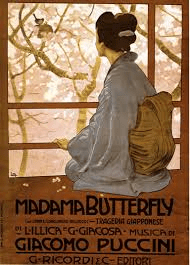
I was reminded today of the last opera I saw with my mom. It was Madama Butterfly. In one scene Madam Butterfly is waiting for her love to come back from the sea. She sits on the floor and waits.waiting 3And waits. And waits. Pretty soon some of the people in the audience at the Dorothy Chandler Pavillion start getting a little fidgety. Madame Butterfly hasn’t moved. She’s waiting. After a while we, the audience, begin to understand that we have been invited to participate in order to understand how long Madama Butterfly waited for this man. We were waiting too. By the time her wait was over I had begun to question whether the producer of this play was a genius or a nut for making the audience wait so long. And when I thought of this today while I was standing on the bus stop, I laughed out loud. Which relieved some of the pressure that had begun to build up in me.
After all, judging by the past few years of this endeavor, everything I have needed I have received. I have no complaints. My grandson told me to remember, that no matter how things turn out, to remember that I said I was going to write a book and I did. I just need to sit back, relax and be prepared for the next phase of marketing this bad boy. Thank you, Jeremy.

Hey, thanks, for stopping by.

Sepia Pride

letterheadcropped

The above is a picture taken of the letterhead my father used during his 1939-41 movie making period. Eddie had two studios during his lifetime, the second studio he had was in Los Angeles in 1946-1950. As you can see, Eddie was very proud of his achievement and he was a man who was intent on furthering the African-American community.

Now that I have written the biography of my father, the manuscript has been sent for editing after which I will get to make any revisions deemed necessary and then the publisher will take over. So, the focus of this blog will eventually shift from writing about Eddie’s life to writing about how the book is received. Whether it will attract readers and whether it will hopefully provide inspiration. I will also write about how this book writing journey has helped to increase my understanding of the struggles that still exist for black independent film makers today.

I have become almost painfully aware of the lack of movies being made by African-Americans, of African-Americans and with African-Americans. Movies written by, produced by, and directed by African-Americans with an all-black cast.

Before 1950 there was The Lincoln Motion Picture Company of George and Noble Johnson. This company is considered to be the first all-black movie production company. The company made and distributed only five films. These films were limited to African American audiences in churches, schools, and “Colored Only” theaters, despite the Johnson brothers wanting a wider audience. Unfortunately production expenses and low sales halted future films to be made and distributed. There was Spencer Williams (he of Amos n Andy television fame), Williams along with a partner formed a movie and newsreel company, the Lincoln Talking Pictures Company. There was Oscar Micheaux of the Micheaux Book & Film Company (probably the most well-known early black film maker, who directed and produced over 40 films.) And there was Eddie Green, who owned two studios, Sepia-Art Pictures and Sepia Production Co. Like the Lincoln Motion Picture Company Eddie produced only five movies, four in 1939-1941 and one in 1949. Eddie directed, wrote, produced and acted in each movie.

Eddie died in 1950. Oscar Micheaux died in 1951. By then black owned studios were becoming a thing of the past, mostly due to production expenses.  White movie producers began producing the so-called “race” movies and were able to woo black actors with bigger paychecks.

Once Hollywood took off, black actors became famous through these mainstream “Hollywood” made movies, movies like  St. Louis Blues (1958) with Nat King Cole, Eartha Kitt, Ruby Dee, Ella Fitzgerald. Superfly (1972) which was produced by Warner Bros.

Then along came Spike Lee in the early 1980s, with his 40 Acres and a Mule Productions. I could be wrong, but from what I have researched he wrote, produced, directed and starred in She’s Gotta Have It, and the movie had an all-black cast in a black neighborhood. Hello!

Now, of course, there are more independent black owned film companies, but you have to stumble upon them. Well, maybe not Harpo, which produced the movie Beloved, which had a white director.

The integration of blacks into movies made by the major movie studios contributed to the decline of all black cast movies. Lack of money was a major factor. The deaths of our pioneers was another major factor. The early independent pioneers struggled. Blacks, whites, women.   Blacks have blended into the movie industry very well on the screen. The so-called “race” movies that were produced, directed, written, and photographed and starred in by only blacks, seem to no longer exist. There are how many black-owned film studios? Few. There is still a struggle going on.

Going forward with this blog, I want to research and write about more people who are working to achieve recognition. Who deserve recognition. There is room at the top and I would like to put some effort into pushing someone up. My book is about my father who happens to be black which gives me a good reason to focus on black progress. But my major desire is to be able to contribute some positivity to anyone’s ability to rise.


Untitled Post

eg

Hello there. If you are new to my blog Welcome and if you are a follower Welcome Back. I wrote early on in 2014 that I had been procrastinating in writing this book and that I needed to either start writing or get off the pot.  My sister-in-law, Christal, sent me a message: Write the book!! Well, once I got started it was full steam ahead, and now today I am working on setting up the cover page for the book. So, I have actually made a decision on which photo of my father to use for the cover of my book. Eddie’s photo in white tux will be the main photo. I still have to order the photo (when I get the $50), which will be soon.

new eddie

The stage picture of Duffy’s Tavern radio program and one or two poster’s of  movies that Eddie produced and starred in will be featured also. Duffy’s Tavern radio program is where Eddie rise took him on his journey from the alley house he lived in as a child in Baltimore. On his way to Duffy’s though he made movies, wrote songs (A Good Man is Hard to Find) owned a string of Barbecue restaurants, and even performed on the very first demonstration of television in 1936. In 1940 Eddie’s movie Dress Rehearsal was the first all-black cast movie to be shown on television, a short (20 mins) which came on right after a film about the World’s Fair.

courtesy live auctioneers

I have put these elements together as a book cover, but I can’t figure out how to paste it into this post.  Of course, when the whole thing is put together, I will announce it here with pictures.

My father’s life is a true inspiration to me, especially as he started out in the early 1900’s when it was a truly difficult world for people of color, but Eddie took the bull by the horns and ran with it. Eddie’s faith in himself and his process secured him his break into burlesque theater in New York.  He was in Tampa, Florida in 1920 touring with his company when he noticed an advertisement in the Billboard for a comedian.  Eddie had an engraver make him a letterhead with a fancy border and big letters that read “De Luxe Players”. There were 18 players in his company so he listed himself as “Eddie Green, owner-comedian-manager-director-organizer”.   He got the job.  He also got the job because he was truly funny. He put in the work to get where he got. Eddie was quoted as saying “You get respect, if you know your business.”

Have faith in yourself, know your business and do the work, and great things will happen in your life.

Thanks, for stopping by.